Commercial shoring supports excavations for basements, underground parking garages, utility trenches, and bridge substructures across Dallas, keeping workers, surrounding soil, structures, and utilities safe and stable while construction proceeds.

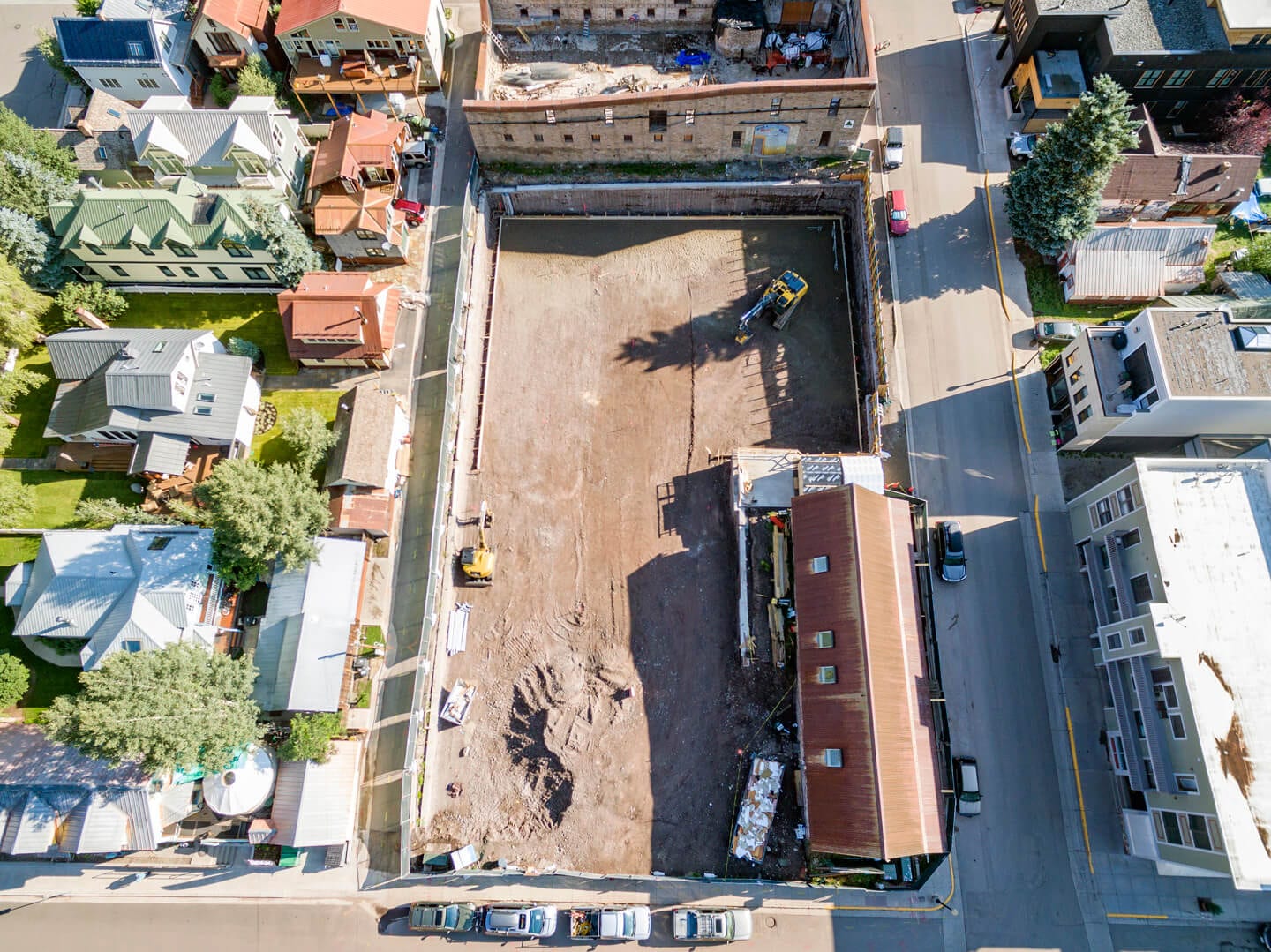
Shoring is a structural support system that holds back the walls of an excavation, trench, or cut so the ground doesn't collapse while crews work below grade. OSHA generally requires it on any excavation deeper than 5 feet, and in Dallas it also has to resist significant lateral pressure from expansive clay, often on tight urban lots with little room for a conventional braced excavation.
Conventional methods like soldier pile and lagging or sheet piling work well on open sites, but they're loud, equipment-heavy, and often need easements from neighboring property owners. GSI designs temporary shoring for the construction phase and permanent shoring — soil nails, reticulated micropiles, and shotcrete — that stays in place for the life of the structure, quieter and without those easements. That range of shoring systems is why Dallas contractors rely on GSI for:
Commercial shoring supports excavations for basements, underground parking garages, utility trenches, and bridge substructures across Dallas, keeping workers, surrounding soil, structures, and utilities safe and stable while construction proceeds.
Generally, yes. OSHA requires that excavations deeper than 5 feet be shored, sloped, or otherwise protected against collapse unless the ground is stable rock, and a competent person must inspect the protection system daily. On tight Dallas job sites where sloping isn't an option, shoring is typically the only compliant way to protect workers below grade.
Temporary shoring supports an excavation only through the construction phase and is removed once permanent structure or backfill is in place. Permanent shoring, built with soil nails, micropiles, or shotcrete, stays in place for the life of the structure and often becomes part of the finished basement or retaining wall.
Shoring systems must meet the International Building Code (IBC), Texas Building Code, and local Dallas permitting requirements. Our in-house PE-licensed engineers design every system, including facing and drainage details, to these standards.
Yes. We offer flexible scheduling and installation methods, like reticulated micropiles, that avoid the easements and noise restrictions common on tight Dallas lots, plus 24/7 emergency response when a shoring issue can't wait.
Cost depends on excavation depth, soil conditions, adjacent structures, and whether the system is temporary or permanent. We provide a free site assessment and a fixed-cost proposal before work begins.
Yes. GSI offers 24/7 emergency response across Texas for shoring failures, retaining wall distress, and excavation issues. Call 855.599.5217 for immediate assistance.
Soldier pile and lagging and sheet piling are common conventional shoring methods, but both typically require large driving equipment, generate significant noise and vibration, and may need easements from neighboring property owners. GSI's soil nail and reticulated micropile shoring systems achieve the same excavation support with smaller equipment, less noise, and no easements, which makes them a practical fit for tight Dallas job sites.
Yes. Shoring systems are specifically engineered to protect adjacent buildings, foundations, and underground utilities from ground movement during excavation, which is critical on dense Dallas job sites close to existing infrastructure.
An excavation without properly engineered shoring can shift, collapse, or damage neighboring structures — and once that happens, costs and delays add up fast. Call 855.599.5217 or request your free assessment now.