West Virginia's subsurface presents two distinct borehole hazards depending on region. In the state's coal counties, including Logan, Mingo, McDowell, and Boone, more than a century of underground mining has left voids typically several hundred feet down, and because mining removes the entire coal seam, predicting how much the overlying strata will eventually collapse into that void is difficult even with good mine maps.
In the state's karst-affected limestone terrain, dissolution has created a similar problem from a different cause: cavities that develop where groundwater has slowly dissolved the Greenbrier limestone and other soluble formations. Either condition can collapse an uncased borehole before concrete is ever placed, and WVDOT and commercial project teams across both belts encounter this obstacle regularly.
GSI sees this alongside other Subsurface Void & Sinkhole Problems work across the state's infrastructure network.
As a cased micropile is drilled, a high-strength steel casing advances just behind the drill bit, keeping the hole open through ground that would collapse an uncased boring immediately, whether that's an old mine void in a coal-region county or a solution cavity in karst terrain. GSI's cased micropiles experience informs this approach.
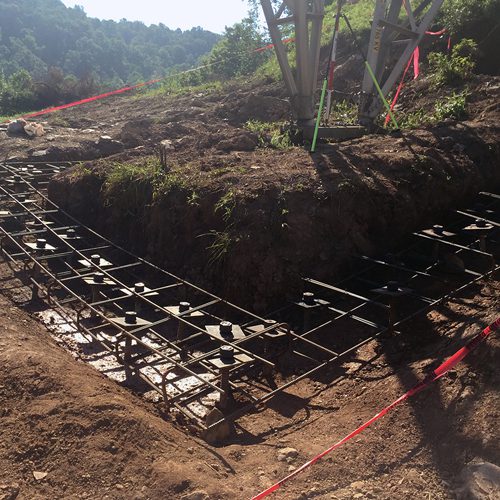
Once the casing reaches competent bedrock below West Virginia's mine-affected or karst-affected zones, a steel bar is inserted and grouted in place, with test borings at each location verifying bearing conditions since void depth can vary considerably even within a single site. This draws directly on GSI's foundation bearing micropiles work.
The steel casing, combined with grout and internal reinforcement, gives West Virginia cased micropiles higher compression, tension, and shear capacity than standard micropiles, and depending on soil stiffness and casing specifications they can extend to depths of up to 250 feet, covering the full range of foundation demand whether a site sits above old mine workings or karst terrain.
Where relevant, GSI's mining operations experience is factored into the West Virginia project plan from day one, with prompt site assessments and fast proposal turnaround so project teams can move from evaluation to design without delay.
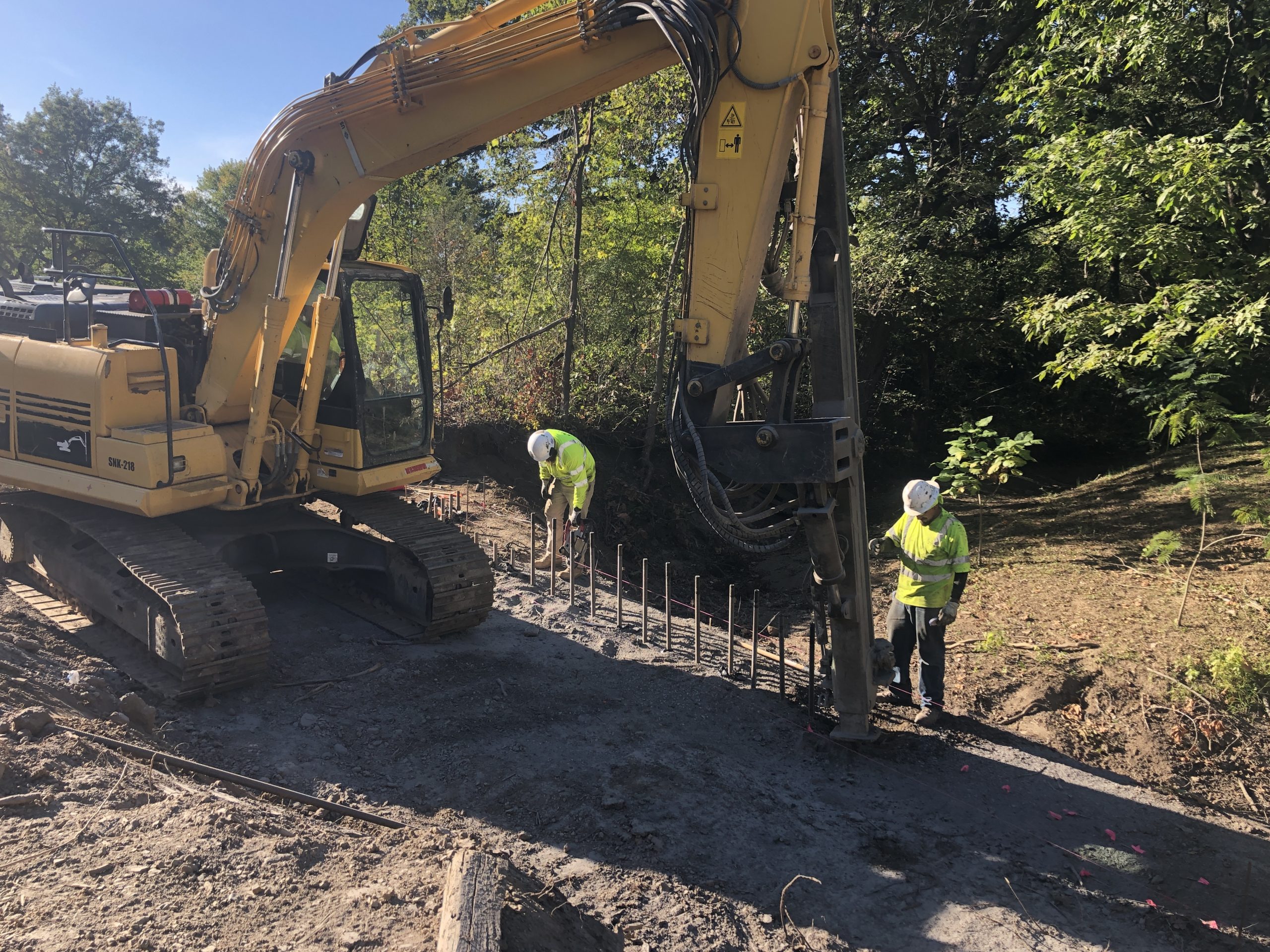
Engineered for West Virginia's conditions. GSI's West Virginia cased micropiles bore through both abandoned mine voids and karst dissolution features, two distinct borehole hazards the state's mining and karst regions each present. This is reinforced by GSI's work in commercial properties and mining operations.
Design/build delivery. The same engineers who design also build, closing the communication gaps that separate design from construction.
WVDOT specification compliance. Project records and installation methods conform to state DOT standards from the initial submission.
Rapid response when conditions demand it. Beyond planned installation work, GSI's emergency response team is available around the clock for sudden ground movement or void collapse affecting roadways and commercial sites.
GSI's engineers deliver a warrantied, design/build cased micropile solution built to bore safely through West Virginia's mine-affected and karst-affected ground.