Rockfall Scaling in Travis County

Rockfall Scaling in Travis County

Beyond Austin's city limits, Travis County's unincorporated Hill Country holds long stretches of exposed Edwards and Glen Rose limestone above county roads, private lakefront property, and rural land, faces that weather along bedding planes and loosen blocks with little regular monitoring. GeoStabilization International performs rope-access rockfall scaling on Travis County's exposed limestone faces to remove that hazard before it falls on its own.

Contact Us
Rock scaling operation at Seminoe Dam

What Is Rockfall Scaling?

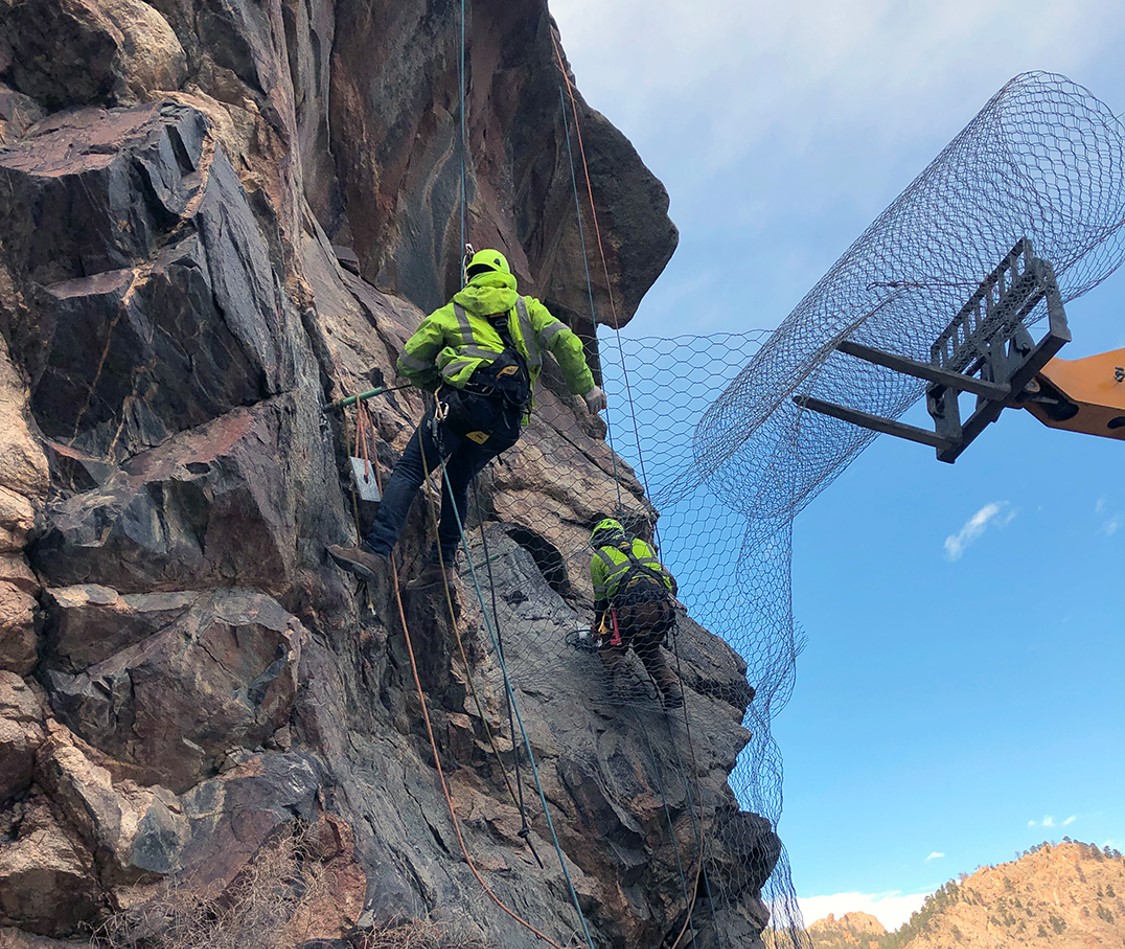
Rockfall scaling is the controlled removal of loose or unstable rock from a cliff face or cut slope, using rope-access technicians who identify individual blocks at risk of detaching and remove them with hand tools, pry bars, or targeted mechanical means before they fall unpredictably. It's typically the first step in a broader rockfall mitigation program, done before installing any permanent barrier or mesh system.

Across Travis County, that loosening most often follows bedding planes and joint sets in the Edwards and Glen Rose limestone exposed along county roads, lakefront bluffs above Lake Travis, and rural land where freeze-thaw cycling and root wedging from cedar growth pry blocks apart over time. GSI's Travis County rockfall scaling work typically includes:

  • Scaling loose limestone blocks along county road cuts in unincorporated Hill Country
  • Removing hazard rock above rural trails and greenbelt areas near exposed bluffs
  • Clearing loosened material above lakefront property along Lake Travis limestone faces
  • Identifying rock loosened by cedar root wedging along bedding plane joints
  • Scaling ahead of permanent mesh or barrier system installation
  • Responding to reported loose rock following heavy rain or freeze events
  • Assessing cliff faces for additional at-risk blocks beyond the initially reported hazard

Geohazard Mitigation in Texas

Our Rockfall Scaling Process

Every Travis County site brings its own ground conditions, so we verify them before committing to a design.

Step 1

Comprehensive Site Assessment

Our rope-access technicians inspect the cliff face to identify loose blocks and the joint patterns making them unstable.

Step 2

Licensed Engineering Design

Our engineers determine which blocks require scaling versus long-term containment with mesh or barriers, based on size, location, and access.

Step 3

Professional Installation

Rope-access crews remove identified hazard rock using hand tools and controlled techniques that avoid destabilizing the surrounding face.

Step 4

Ongoing Monitoring & Support

We inspect the scaled face afterward and remain available for follow-up assessment as new joints continue to weather.

Ready to Secure Your Project?

Request Free Estimate

See Our Success Stories

View Project Gallery

Common Questions About Rockfall Scaling

Most scaling projects complete in a few days to a week depending on the cliff face's height, extent, and access conditions.

Cost depends on the face's size, rope-access requirements, and volume of rock requiring removal, which our engineers assess on site.

Yes. Our engineers coordinate with applicable permitting requirements, particularly for work above trails, roadways, or waterways.

GSI offers 24/7 emergency response and can mobilize a rope-access crew within hours for an urgent rockfall hazard.

Scaling removes the currently identified hazard; because weathering continues, sites with ongoing joint development often pair scaling with periodic inspection or a permanent barrier system.

Rope-access technicians work directly on the face using climbing and rigging techniques, avoiding the need for equipment access roads on remote or steep terrain.

Yes. Root wedging as cedar and other vegetation grows into limestone joints is a documented contributor to rock loosening on Central Texas bluffs and cut slopes.

On sites with a history of recurring rockfall or extensive jointing, scaling is often paired with permanent mesh or catch fencing for longer-term protection.

Loose Rock Doesn't Wait for a Convenient Time to Fall

Get Your Free Assessment Today

A loosened block on a Travis County limestone bluff is a matter of when, not if, without intervention. Call (855) 599-5217 to get a Travis County rockfall assessment from a licensed engineer.

    How Can We Help?

    • Personal Info
    • Contact Info
    • Project Info
    ***Fees May Apply For Residential Site Visits***

    How Can We Help?

    • Personal Info
    • Contact Info
    • Project Info

    How Can We Help?

    • Personal Info
    • Contact Info
    • Project Info

    By using this website, you acknowledge and agree to our Privacy Policy.