Open-hole drilling is typically faster than cased methods since it skips installing and withdrawing casing, though duration depends on hole depth and confirmed rock conditions.

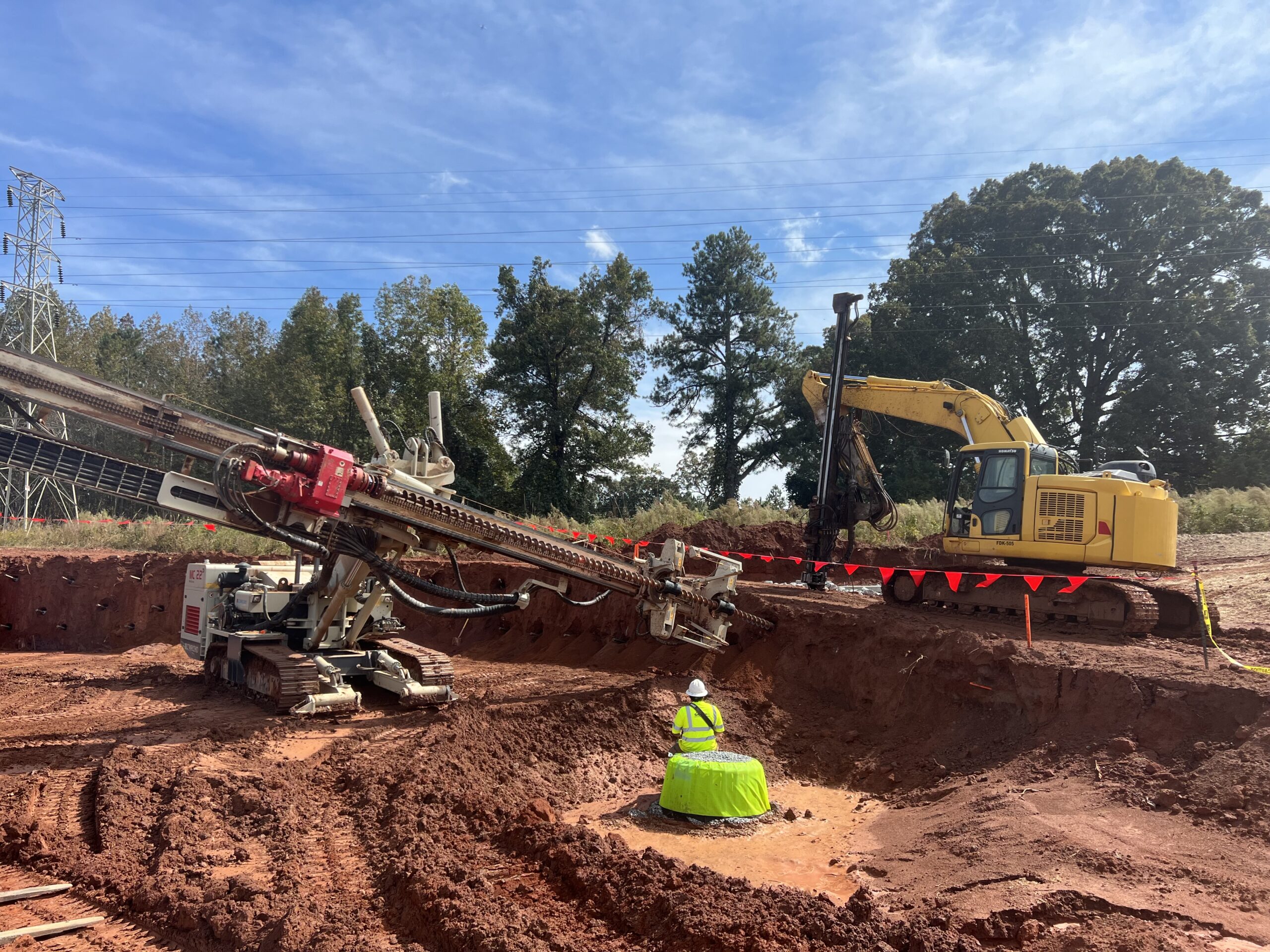
Open-hole drilling circulates grout as the drilling fluid itself instead of supporting the borehole with a temporary steel casing. The grout's density keeps surrounding rock or soil from caving in and carries cuttings out as the hole advances, skipping the step of installing and later withdrawing a casing.
In Travis County's Hill Country, that approach works well through solid, void-free limestone, but a hole that crosses a karst cavern, solution channel, or thin soil pocket needs a cased or duplex method instead, since an open hole through a void won't hold and the grout won't set as designed. GSI's Travis County drilling work includes:
Open-hole drilling is typically faster than cased methods since it skips installing and withdrawing casing, though duration depends on hole depth and confirmed rock conditions.
Cost depends on rock conditions and site access; karst-affected sites requiring cased drilling generally cost more than sites with solid, void-free limestone.
Yes. Our PE-licensed engineers specify the method by zone based on confirmed subsurface conditions, and every design meets applicable code requirements.
We switch to a cased or duplex drilling method for that section immediately, since an open hole through a cavern won't hold and the grout wouldn't set properly.
No. It's reliable in solid, void-free limestone, but karst caverns and solution channels are common enough in the area that every hole needs site-specific confirmation.
We confirm rock conditions with test borings and review any known karst features near the site rather than assuming Hill Country limestone is uniformly solid.
Yes, wherever an anchor extends into confirmed solid limestone, since a competent rock socket holds the hole open without a casing.
Our compact drilling equipment is chosen to fit the site's access constraints, whether that calls for an open-hole or cased approach.
Assuming open-hole drilling will work on karst-prone Hill Country limestone risks a collapsed borehole. Call (855) 599-5217 to get a drilling assessment from a licensed engineer.