Micropiles in Tarrant County

Micropiles in Tarrant County

The distribution and logistics facilities driving Tarrant County's growth along the Alliance Corridor often carry heavier column loads than the clay beneath them can support without deep foundation work. GeoStabilization International designs and installs micropiles across Tarrant County to carry those loads down to a reliable bearing layer.

Contact Us
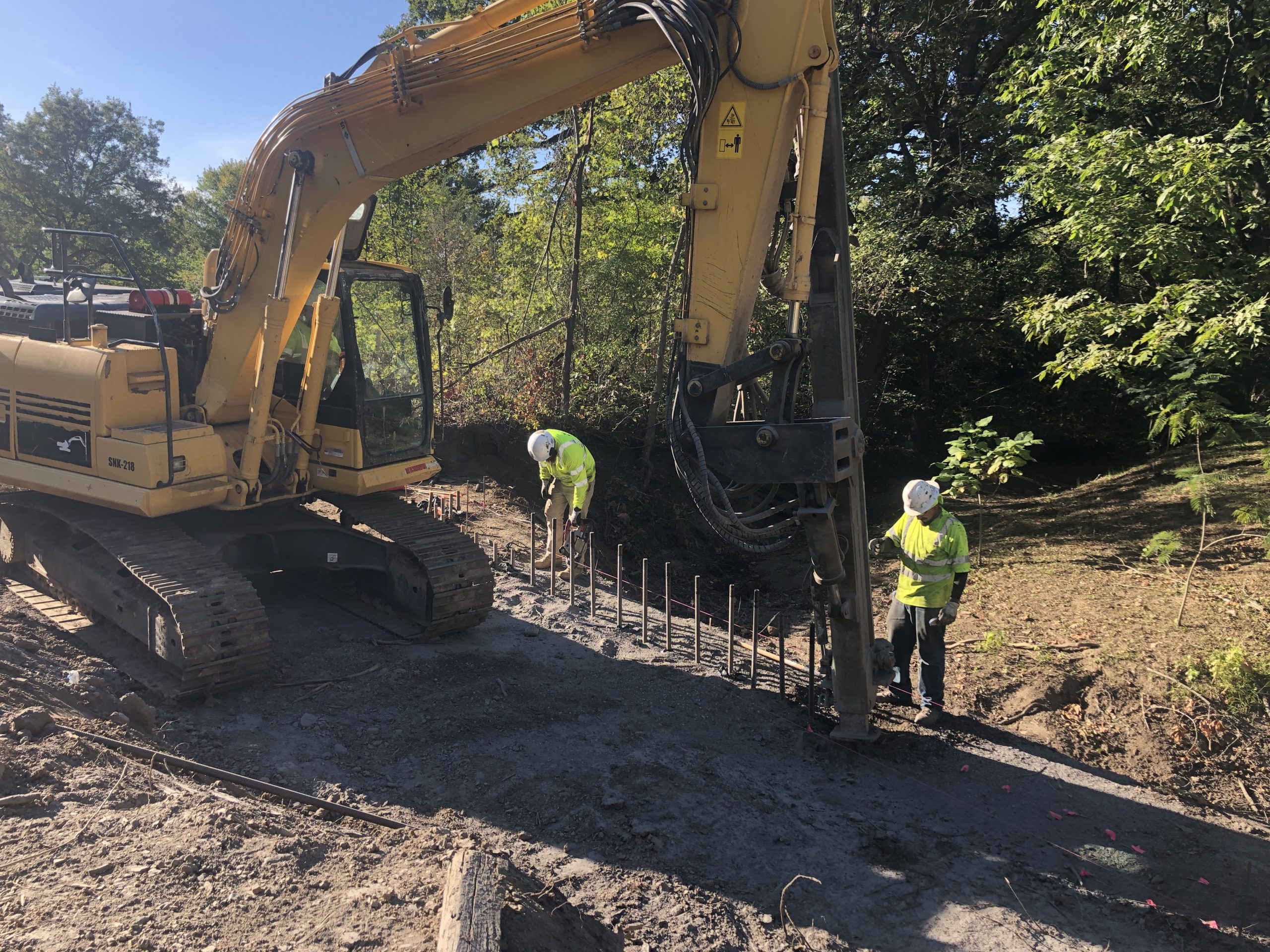
Drilling micropiles for ground improvement

What Are Micropiles?

A micropile is a slender, deep foundation element built by drilling a small borehole, typically under a foot across, inserting a steel reinforcing bar or pipe, and filling the hole with structural grout to depths of 50 feet or more. That depth lets a micropile reach a stable bearing layer that a shallow footing simply can't access.

In Tarrant County, that matters for two different reasons depending on where a project sits: heavy clay in southern growth areas that won't reliably support standard footings, and large industrial and logistics facilities near Alliance Corridor that need higher-capacity foundations than lighter construction requires. GSI's Tarrant County micropile work typically centers on:

  • Supporting heavy-load logistics and distribution facility foundations
  • Underpinning existing structures showing distress from clay movement
  • Reinforcing foundations for highway and interchange infrastructure
  • Anchoring new commercial construction where a geotechnical report calls for deep bearing
  • Correcting settlement in structures built on undocumented fill
  • Providing foundation support in low-headroom or access-restricted retrofit projects
  • Supporting rail corridor and utility infrastructure foundations county-wide

Geohazard Mitigation in Texas

Our Micropiles Process

Every Tarrant County site brings its own ground conditions, so we verify them before committing to a design.

Step 1

Comprehensive Site Assessment

We drill test borings to confirm the depth to competent bearing rock or dense strata beneath the site's clay before finalizing pile depth and spacing.

Step 2

Licensed Engineering Design

Our PE-licensed engineers size pile diameter, steel reinforcement, and grout strength to the confirmed load and bearing stratum, meeting Texas Building Code requirements.

Step 3

Professional Installation

Compact micropile rigs drill and grout each pile in place, working efficiently even on active logistics or industrial sites.

Step 4

Ongoing Monitoring & Support

We monitor load performance after installation and remain available for follow-up inspection as seasonal clay movement continues.

Ready to Secure Your Project?

Request Free Estimate

See Our Success Stories

View Project Gallery

Common Questions About Micropiles

A typical job runs 1 to 2 weeks once drilling begins; larger logistics-facility foundations with more piles can take longer.

Cost depends on pile depth, diameter, and how many piles the load requires, which our engineers determine after reviewing your geotechnical report and structural loads.

Yes. Every design is stamped by a licensed Professional Engineer and meets IBC and Texas Building Code requirements.

GSI offers 24/7 emergency response and can typically mobilize a crew within hours of a call.

Helical piers work for lighter loads on soft soil, but heavy industrial and logistics structures often exceed their practical capacity. Micropiles support heavier column loads by bearing directly on rock or dense strata.

We drill test borings to confirm the bearing stratum and design pile diameter and reinforcement specifically to the confirmed structural load, rather than using a one-size-fits-all pile design.

Micropile rigs are compact and generate minimal vibration, letting crews work around ongoing operations with limited disruption.

Yes. Compact rigs can operate in low-headroom spaces inside existing buildings where larger foundation equipment can't fit.

Foundation Movement Doesn't Wait

Get Your Free Assessment Today

Every season the clay beneath an under-supported foundation in Tarrant County keeps moving, and repair costs climb with it. Call (855) 599-5217 to get a micropile assessment from a licensed engineer.


    How Can We Help?

    • Personal Info
    • Contact Info
    • Project Info
    ***Fees May Apply For Residential Site Visits***

    How Can We Help?

    • Personal Info
    • Contact Info
    • Project Info

    How Can We Help?

    • Personal Info
    • Contact Info
    • Project Info

    By using this website, you acknowledge and agree to our Privacy Policy.