Grouting in Tarrant County

Grouting in Tarrant County

Tarrant County's rapid suburban expansion west and south of Fort Worth has put new commercial and residential development on a wider mix of fill conditions than the older, more established parts of the metro, from freshly graded subdivisions to industrial sites over decades-old reworked ground. GeoStabilization International designs and installs compaction, chemical, and polyurethane grouting programs throughout Tarrant County to match the method to the ground.

Contact Us
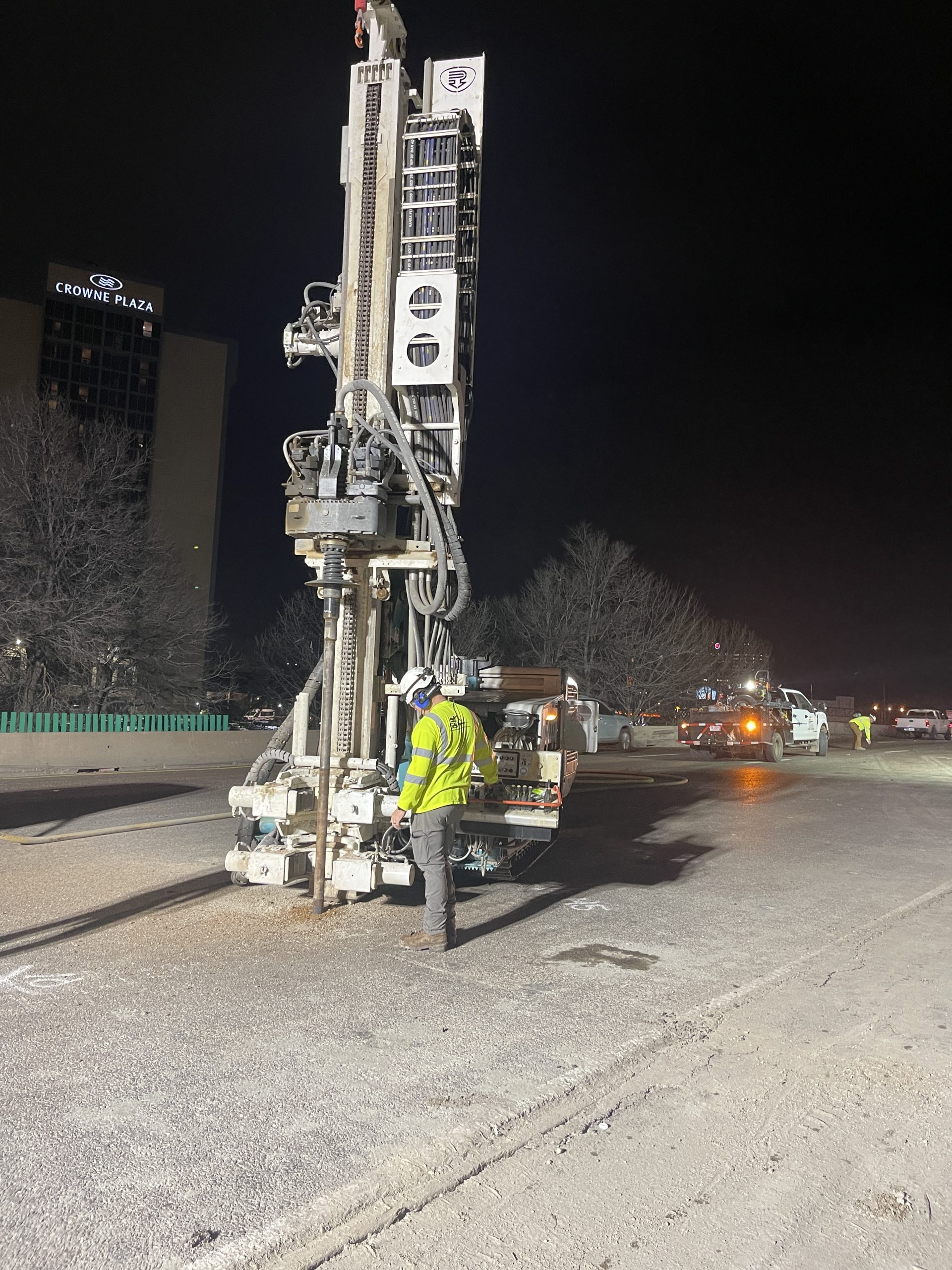
Compaction grouting night work operation on site

What Is Grouting?

Grouting is a family of related techniques rather than a single method: compaction grouting displaces and densifies loose soil with a stiff, low-mobility grout; chemical and permeation grouting inject a low-viscosity fluid into granular soil's pore spaces to strengthen it and control water flow; and polyurethane grouting expands on injection to fill voids and lift settled slabs.

Across Tarrant County, the deciding factor is usually whether the problem is broad soil weakness or a discrete void that's already opened beneath a slab or roadway. GSI's Tarrant County grouting work typically includes:

  • Densifying loose or undocumented fill soil beneath suburban foundations
  • Filling voids beneath slabs and pavement before they collapse
  • Reducing water infiltration through cracked concrete structures
  • Stabilizing soil ahead of an addition or increased structural load
  • Lifting and leveling settled slabs with expanding polyurethane
  • Improving bearing capacity in fill soils that won't support a shallow foundation
  • Sealing groundwater flow paths in below-grade construction

Geohazard Mitigation in Texas

Our Grouting Process

Every Tarrant County site brings its own ground conditions, so we verify them before committing to a design.

Step 1

Comprehensive Site Assessment

We drill test borings to identify what's actually causing the ground's loss of strength or the void beneath it.

Step 2

Licensed Engineering Design

Our PE-licensed engineers select compaction, chemical, or polyurethane grouting, or a combination, based on the confirmed soil type and performance goal.

Step 3

Professional Installation

Crews inject grout in stages, monitoring pressure and volume to confirm the ground is responding as designed.

Step 4

Ongoing Monitoring & Support

We verify the treated zone's performance after injection and remain available for follow-up monitoring.

Ready to Secure Your Project?

Request Free Estimate

See Our Success Stories

View Project Gallery

Common Questions About Grouting

Most projects complete in a few days to a couple of weeks depending on the treated area's size and injection point count.

Cost depends on which method the site needs, treatment area, and injection depth, which we confirm from test borings before a fixed-cost proposal.

Yes. Every grouting program is designed by a licensed Professional Engineer and meets IBC and Texas Building Code requirements.

GSI offers 24/7 emergency response and can mobilize a crew within hours if a void or active settlement threatens a structure or roadway.

Compaction grouting suits larger-scale soil densification where load-bearing capacity is the goal. Polyurethane grouting works faster for lifting a settled slab or filling a smaller, well-defined void.

We confirm soil type and the specific cause of settlement or voids with test borings before selecting a method, rather than defaulting to whichever grout is on hand.

Yes. Grouting is a comparatively low-disruption ground improvement method, which is why it's often used near active or occupied structures.

Yes. Densifying undocumented or poorly compacted fill is one of the more common reasons GSI performs grouting work on Tarrant County commercial sites.

Voids and Loose Soil Don't Fix Themselves

Get Your Free Assessment Today

Untreated voids and loosened soil beneath a Tarrant County structure tend to get worse, not better, over time. Call (855) 599-5217 to get a grouting assessment from a licensed engineer.


    How Can We Help?

    • Personal Info
    • Contact Info
    • Project Info
    ***Fees May Apply For Residential Site Visits***

    How Can We Help?

    • Personal Info
    • Contact Info
    • Project Info

    How Can We Help?

    • Personal Info
    • Contact Info
    • Project Info

    By using this website, you acknowledge and agree to our Privacy Policy.