Most repairs complete in 1 to 3 weeks depending on wall length and which repair method the diagnosis calls for.

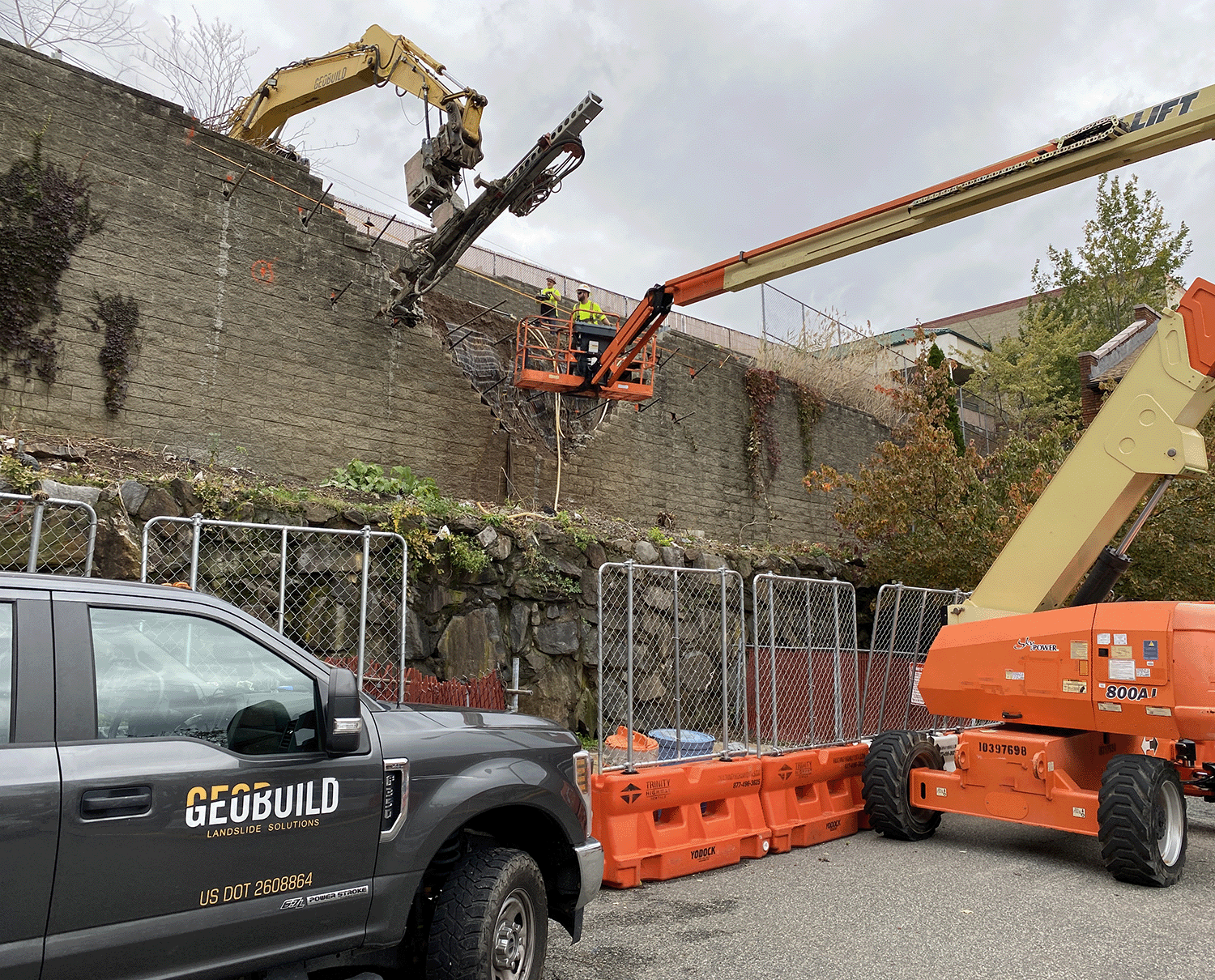
Retaining wall repair addresses a wall already in distress, whether it's bulging, leaning, cracked, or losing backfill, without necessarily tearing it out and starting over. An MSE wall typically gets a tieback or buttress system installed in place; a gabion wall with intact facing can often be restabilized with soil nailing alone.
In Fort Worth, walls sitting directly on the surface Blackland clay tend to fail differently than walls anchored deeper into the Goodland Limestone beneath it, so diagnosing which zone is actually moving matters before choosing a repair method. GSI's Fort Worth retaining wall repair work typically includes:
Most repairs complete in 1 to 3 weeks depending on wall length and which repair method the diagnosis calls for.
Cost depends on wall length, height, and repair method; a helical tieback or soil nail repair typically costs less than full wall replacement.
Yes. Every repair design is stamped by a licensed Professional Engineer and meets IBC and Texas Building Code requirements.
GSI offers 24/7 emergency response and can mobilize a crew within hours if a wall shows active bulging, leaning, or backfill loss.
A helical tieback system works well where access behind the wall is limited. A buttress system adds mass at the base and suits walls with more room to work but limited anchor access.
We inspect the specific failure and confirm whether the wall is founded on clay or limestone before recommending a method, rather than defaulting to one repair type.
We sequence installation to minimize lane or shoulder closure time on active I-30 and I-35W corridor walls.
Yes, if the facing is still intact. Soil nailing can restabilize the slope behind a gabion wall without a full rebuild.
A retaining wall already showing distress typically gets worse with each wet-dry clay cycle, not better. Call (855) 599-5217 to get a Fort Worth retaining wall assessment from a licensed engineer.