Open-hole drilling is typically faster because there's no separate step to install and withdraw a casing. Actual duration still depends on hole depth and diameter.

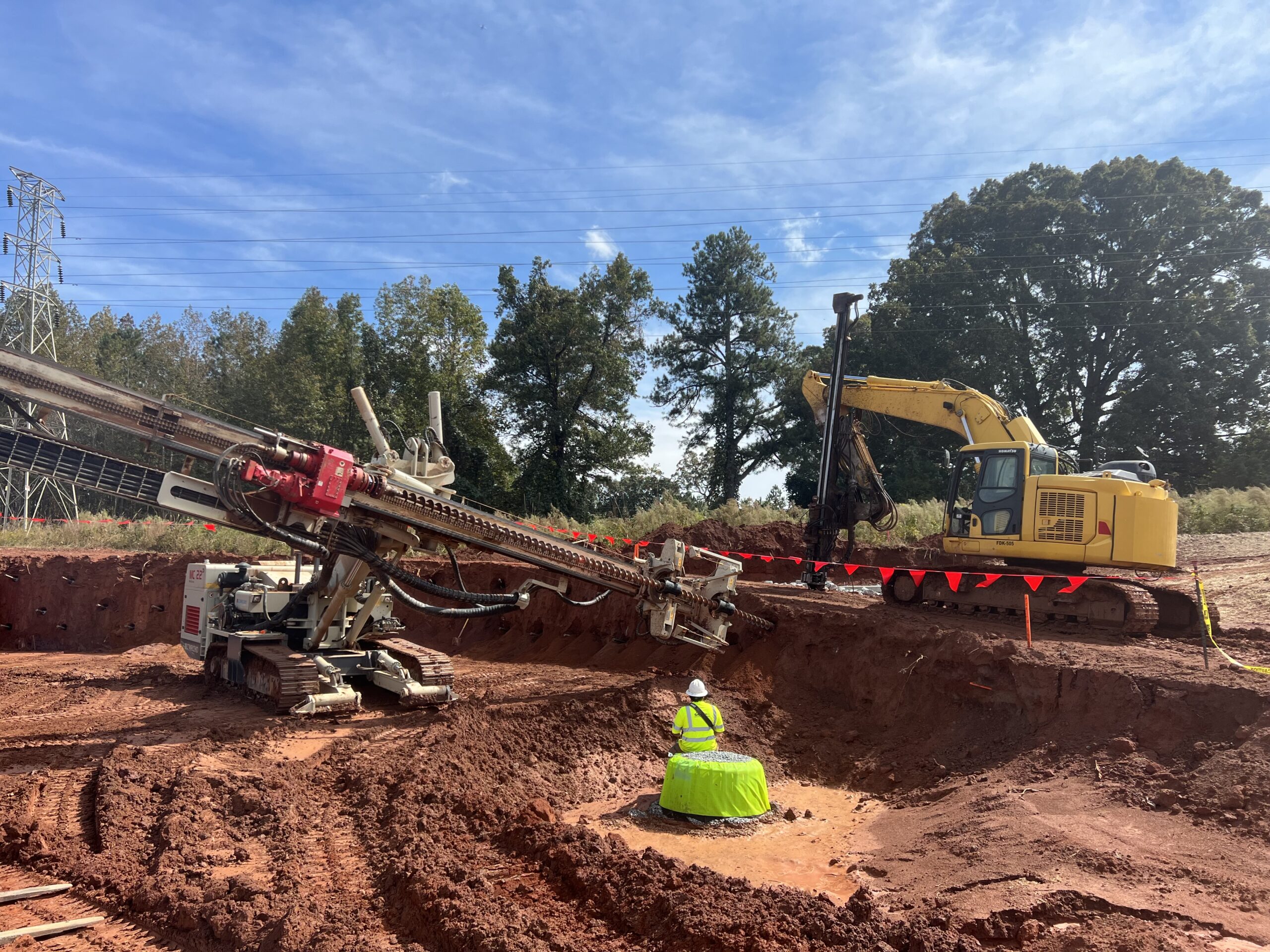
Open-hole drilling uses the grout itself as the drilling fluid instead of installing a temporary steel casing. The grout's density holds the borehole wall in place and flushes cuttings out as the hole advances, so there's no separate step to insert and later withdraw a casing.
Whether open-hole drilling is the right call for a given hole in Fort Worth is an engineering judgment based on what the borings show, not a default choice. It works well once a hole reaches the area's limestone or a sufficiently stiff clay above the water table; a hole through loose fill, sand seams, or badly fractured rock still needs a cased or duplex method to keep from collapsing before the grout sets. GSI's Fort Worth open-hole drilling supports:
Open-hole drilling is typically faster because there's no separate step to install and withdraw a casing. Actual duration still depends on hole depth and diameter.
Open-hole drilling generally costs less than casing-and-withdraw methods because it eliminates casing material and the extra time it takes to install and remove it, when ground conditions allow it.
Yes. Our PE-licensed engineers specify the drilling method by zone based on confirmed subsurface conditions, and every design meets IBC and Texas Building Code requirements for the anchor, nail, or pile being installed.
We switch to a cased or duplex drilling method for that section rather than continuing open-hole, since the whole point of the method is to match it to ground that will actually hold.
It's cheaper where the ground supports it, but it's not the default choice everywhere. Loose fill, sand seams, or heavily fractured rock require a cased or duplex method regardless of cost, because an open hole would collapse before the grout sets.
We confirm ground conditions with test borings before drilling and check that the confirmed rock or stiff clay is above the water table and continuous enough to self-support, rather than assuming based on regional geology alone.
Yes, and it's a common application in Fort Worth wherever anchors extend into the area's limestone, since a stable rock socket holds the hole open without a casing.
In many cases the same grout that flushes the hole during drilling also serves as the bonding grout for the anchor, nail, or pile once drilling is complete, though our engineers confirm this per application.
Using the wrong drilling method for the ground beneath your site risks a collapsed borehole and a stalled project. Call (855) 599-5217 to get a Fort Worth drilling assessment from a licensed engineer.