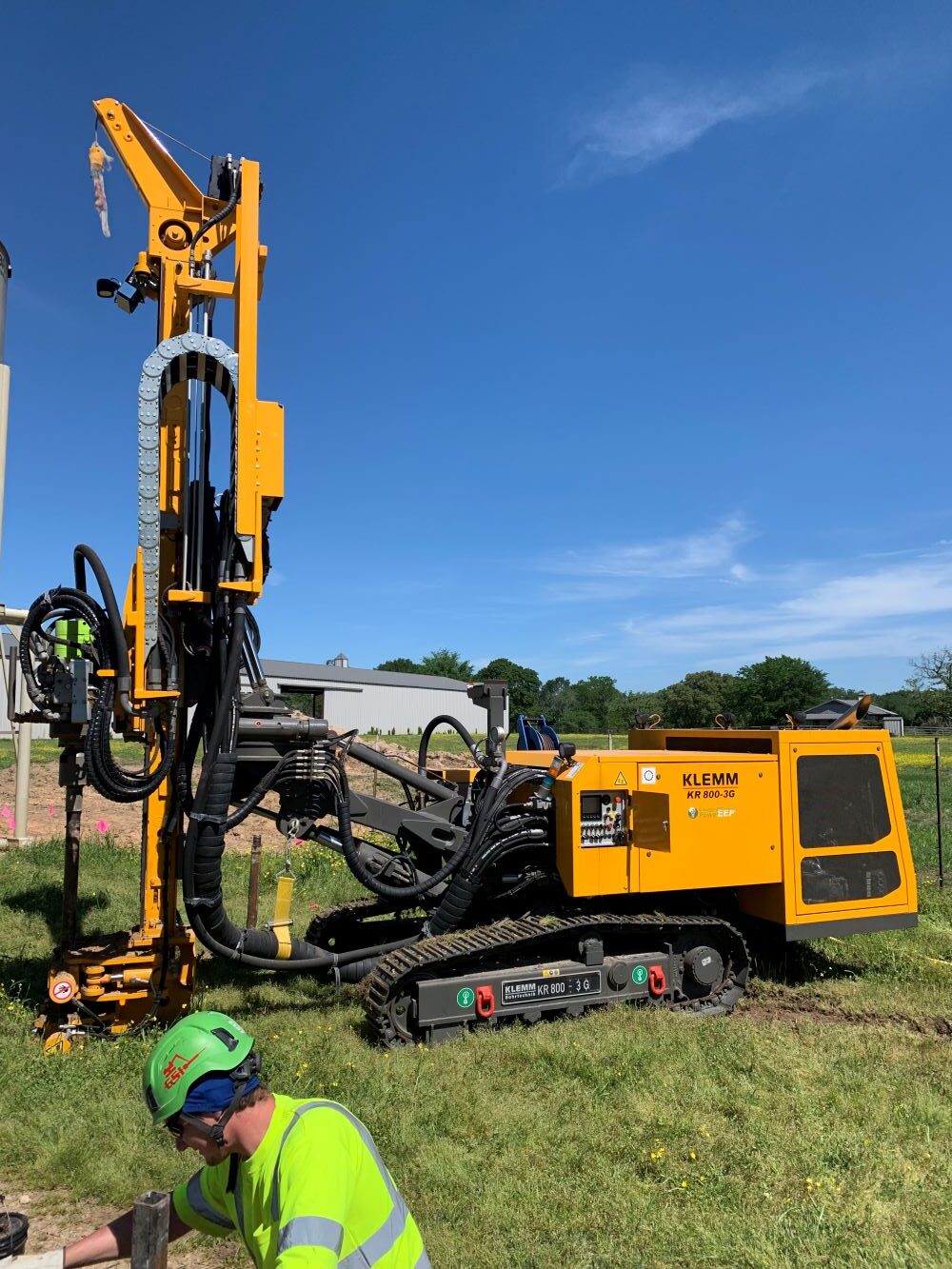
What Are Micropiles?
Micropiles are small-diameter, drilled and grouted deep foundation elements, typically 5 to 12 inches across, reinforced with a central steel bar or pipe casing and installed to depths of 50 feet or more. Unlike a poured spread footing or a driven pile, a micropile transfers structural load through the soil column and into a deeper, more competent bearing stratum — rock, dense sand, or, in Fort Worth's case, the limestone and shale beds beneath the surface clay.
In Fort Worth, that distinction matters because the Blackland Prairie clay at the surface can swell and shrink by several inches a year, a movement that a shallow foundation or a helical pier anchored in the clay itself can't reliably resist. Drilling through the unstable clay to bear on the Goodland Limestone and the underlying Fredericksburg Group formations gives a structure a foundation that doesn't move with the seasons. GSI's Fort Worth micropile work typically centers on:
- Underpinning existing foundations showing distress from seasonal clay movement
- Supporting building additions and infill construction on tight urban lots
- Reinforcing bridge and overpass foundations along Fort Worth's highway corridors
- Stabilizing retaining walls and slopes near the Trinity River floodplain
- Anchoring new commercial foundations where a geotechnical report calls for rock bearing
- Correcting settlement in structures built on undocumented fill
- Providing shoring support for excavations near existing utilities or property lines
Geohazard Mitigation in Texas