Retaining Wall Repair in Dallas

Retaining Wall Repair in Dallas

Dallas has decades of retaining walls built into Blackland clay along its highway and toll-road corridors, and clay that swells and shrinks every year eventually finds the weak point in an aging wall. GeoStabilization International repairs failing retaining walls throughout the Dallas metro, from MSE and gabion structures to older pile and timber walls.

Contact Us
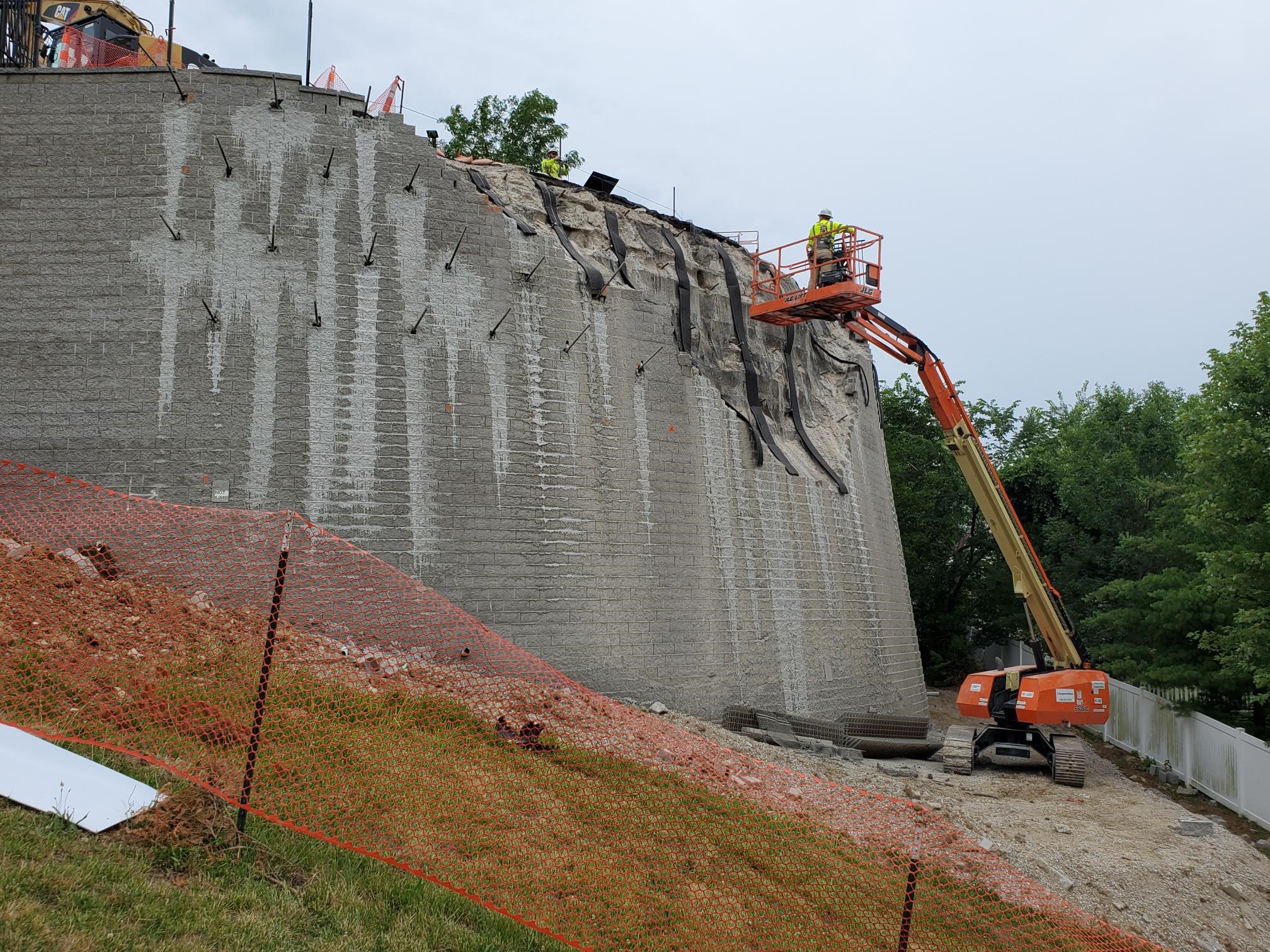
Tall shotcrete retaining wall construction with boom lift, Arnold Missouri

What Is Retaining Wall Repair?

Retaining wall repair addresses a wall that's already showing distress, bulging, leaning, cracking, or losing backfill, rather than building a new wall from scratch. For an MSE wall, that usually means a tieback system or a buttress system installed in place; for a gabion wall with intact facing, soil nailing can restabilize the slope behind it without full replacement.

In Dallas, the most common trigger is the same Blackland clay that makes new construction difficult: repeated swelling and shrinking gradually works backfill loose, overloads drainage, and stresses connections the wall wasn't designed to absorb over decades of cycles. GSI's Dallas retaining wall repair work typically includes:

  • Stabilizing MSE walls along NTTA toll corridors showing bulging or panel displacement
  • Restoring gabion walls with intact facing using soil nailing
  • Correcting drainage failures behind walls before backfill washes out further
  • Reinforcing older pile and timber walls near Trinity River Corridor development
  • Addressing walls undermined by nearby excavation or utility work
  • Repairing walls showing differential settlement from uneven clay movement
  • Extending the service life of walls nearing the end of their design lifespan

Geohazard Mitigation in Texas

Our Retaining Wall Repair Process

Every Dallas site brings its own ground conditions, so we verify them before committing to a design.

Step 1

Comprehensive Site Assessment

We inspect the wall's facing, drainage, and connections to diagnose the specific failure mode before recommending a repair method.

Step 2

Licensed Engineering Design

Our PE-licensed engineers design a helical tieback, buttress, or soil nail repair sized to the confirmed loads and Texas Building Code requirements.

Step 3

Professional Installation

Crews install the repair system with minimal disruption to the roadway, corridor, or property the wall serves.

Step 4

Ongoing Monitoring & Support

We monitor the repaired wall's performance and remain available for follow-up inspection as clay movement continues seasonally.

Ready to Secure Your Project?

Request Free Estimate

See Our Success Stories

View Project Gallery

Common Questions About Retaining Wall Repair

Most repairs complete in 1 to 3 weeks depending on wall length and which repair method the diagnosis calls for.

Cost depends on wall length, height, and repair method; a helical tieback or soil nail repair typically costs less than full wall replacement. We provide a fixed-cost proposal after inspection.

Yes. Every repair design is stamped by a licensed Professional Engineer and meets IBC and Texas Building Code requirements.

GSI offers 24/7 emergency response and can mobilize a crew within hours if a wall shows active bulging, leaning, or backfill loss that threatens what's behind it.

A helical tieback system works well where access behind the wall is limited. A buttress system adds mass at the base and suits walls with more room to work but limited anchor access.

We inspect the specific failure, whether it's bulging, drainage failure, or lost backfill, and confirm soil conditions before recommending a method rather than defaulting to one repair type.

We sequence installation to minimize lane or shoulder closure time, which matters most on active NTTA corridor walls.

Yes, if the facing is still intact. Soil nailing can restabilize the slope behind a gabion wall; if the facing itself is eroded, we combine that with facing restoration.

A Bulging Wall Doesn't Fix Itself

Get Your Free Assessment Today

A retaining wall that's already showing distress typically gets worse with each wet-dry clay cycle, not better. Call (855) 599-5217 to get a Dallas retaining wall assessment from a licensed engineer.

    How Can We Help?

    • Personal Info
    • Contact Info
    • Project Info
    ***Fees May Apply For Residential Site Visits***

    How Can We Help?

    • Personal Info
    • Contact Info
    • Project Info

    How Can We Help?

    • Personal Info
    • Contact Info
    • Project Info

    By using this website, you acknowledge and agree to our Privacy Policy.