What Is Open-Hole Drilling?
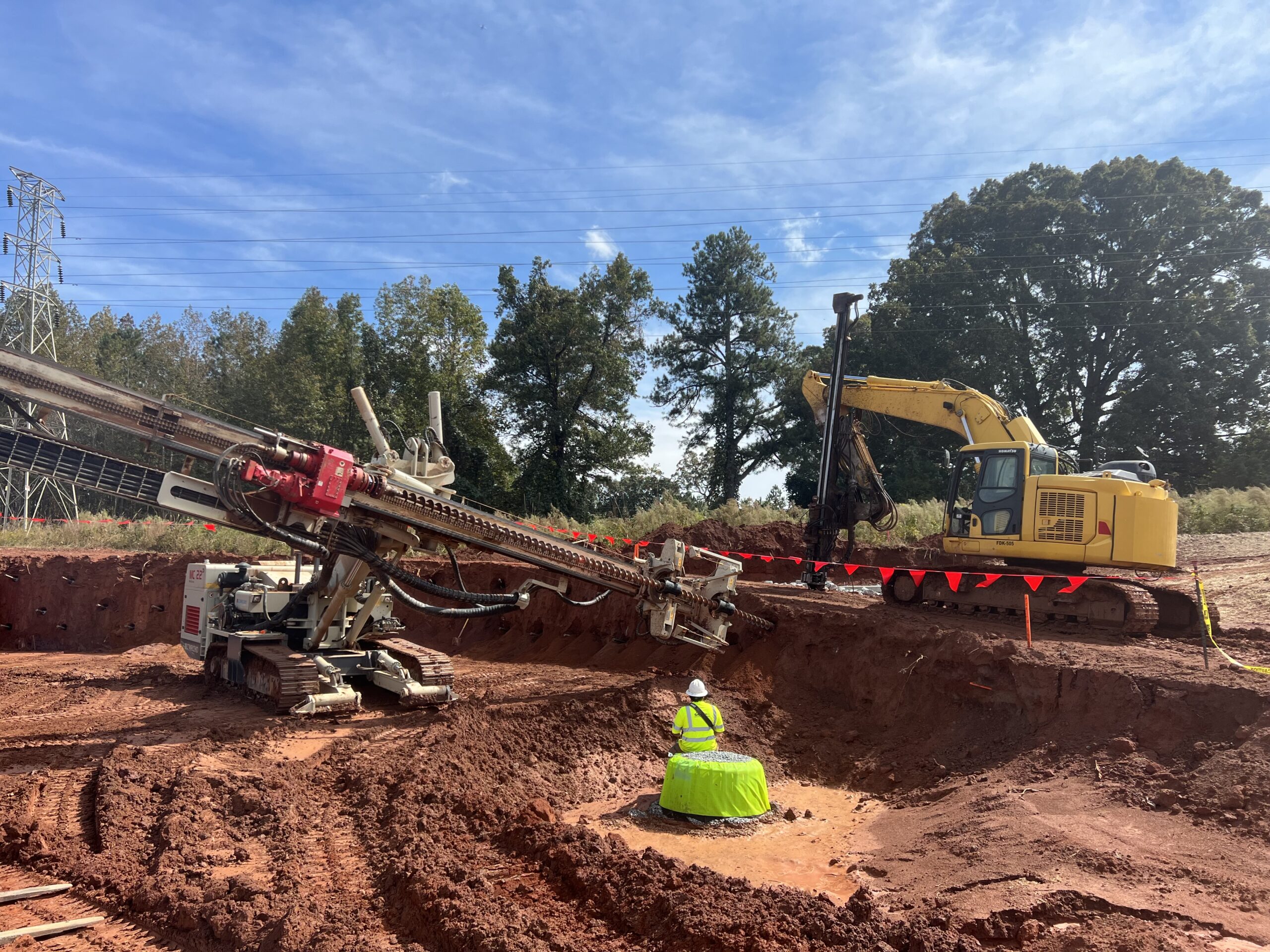
Open-hole drilling installs a foundation or earth retention element, like a micropile, soil nail, or tieback, without a steel casing holding the hole open. Grout is pumped down the hole as the drilling fluid to keep it from collapsing, then cures in place to bond the steel reinforcement to the surrounding ground. Skipping the casing step generally makes open-hole drilling faster and more economical than cased drilling, but it depends on the ground staying open on its own.
Much of Dallas sits on competent Blackland Prairie clay or Austin Chalk limestone below the near-surface active zone — ground stable enough for open-hole methods on many projects. Where fill, sand seams, or collapsing soil show up instead, our engineers switch to cased drilling to keep the hole, and the schedule, intact. That judgment call is why Dallas contractors trust GSI's open-hole drilling for:
- Open-hole micropiles for foundation support and underpinning in stable strata
- Open-hole soil nails for slope stabilization and excavation shoring
- Tiebacks and ground anchors for retaining walls and below-grade construction
- Faster, single-pass installation that combines drilling and grouting in one step
- Cost-effective foundation elements where casing isn't structurally required
- Rock-socketed elements bearing into Austin Chalk or other competent strata
Geohazard Mitigation in Texas