Underpinning in Dallas County

Underpinning in Dallas County

Suburban commercial and institutional buildings across Dallas County settle for the same underlying reason structures inside the city do, Blackland clay shifting unevenly beneath different sections of a foundation, but often on sites built more recently over engineered fill pads that haven't yet fully proven out under load. GeoStabilization International underpins foundations throughout Dallas County to stop that settlement and transfer load to stable bearing ground.

Contact Us
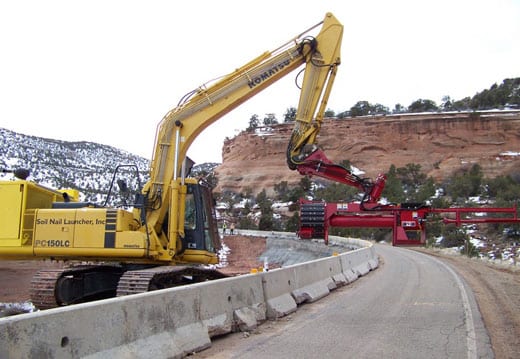
Launched supermicropile installation for underpinning and foundation work

What Is Underpinning?

Underpinning extends an existing foundation's support down to a deeper, more reliable bearing layer, without necessarily rebuilding the foundation itself. Depending on the structure and load, that might mean micropiles, tieback-anchored brackets, or a combination transferring load past the failing soil near the surface.

Across Dallas County, underpinning almost always means getting load transfer past the active Blackland clay zone and onto the Austin Chalk or a comparably stable stratum beneath it. GSI's Dallas County underpinning work typically includes:

  • Stopping progressive settlement in suburban commercial foundations before it worsens
  • Transferring load past clay fill to stable bearing rock
  • Supporting foundations near excavation or construction activity next door
  • Correcting differential settlement between sections of the same structure
  • Reinforcing foundations ahead of an addition or increased structural load
  • Restoring bearing capacity in structures built on undocumented or engineered fill
  • Supporting institutional and commercial foundations throughout the county

Geohazard Mitigation in Texas

Our Underpinning Process

Every Dallas County site brings its own ground conditions, so we verify them before committing to a design.

Step 1

Comprehensive Site Assessment

We drill test borings and survey existing settlement patterns to confirm the cause and depth of the foundation's support problem.

Step 2

Licensed Engineering Design

Our PE-licensed engineers design the underpinning system, sizing piles or brackets to the confirmed load and Texas Building Code requirements.

Step 3

Professional Installation

Crews install the underpinning system in stages, working section by section to avoid destabilizing the structure during construction.

Step 4

Ongoing Monitoring & Support

We monitor the foundation's elevation and performance after installation and remain available for follow-up inspection.

Ready to Secure Your Project?

Request Free Estimate

See Our Success Stories

View Project Gallery

Common Questions About Underpinning

Most projects run 1 to 3 weeks depending on the foundation's size and how many support points the design requires.

Cost depends on foundation size, the depth needed to reach stable bearing ground, and how much settlement has already occurred, which our engineers confirm from test borings.

Yes. Every design is stamped by a licensed Professional Engineer and meets IBC and Texas Building Code requirements.

GSI offers 24/7 emergency response and can mobilize a crew within hours if settlement is actively progressing and threatening structural integrity.

Micropiles are one of the tools used to underpin a structure; underpinning is the broader process of extending an existing foundation's support.

We confirm the actual depth to stable bearing ground and the specific cause of settlement with test borings before designing the system.

Underpinning is typically installed section by section from outside or beneath the structure, which limits disruption compared to more invasive foundation replacement.

Yes. Underpinning is specifically designed to stop progressive settlement and prevent existing cracking from worsening.

Settlement Rarely Stops on Its Own

Get Your Free Assessment Today

A foundation that's already settling unevenly tends to keep moving until it's underpinned. Call (855) 599-5217 to get a Dallas County underpinning assessment from a licensed engineer.


    How Can We Help?

    • Personal Info
    • Contact Info
    • Project Info
    ***Fees May Apply For Residential Site Visits***

    How Can We Help?

    • Personal Info
    • Contact Info
    • Project Info

    How Can We Help?

    • Personal Info
    • Contact Info
    • Project Info

    By using this website, you acknowledge and agree to our Privacy Policy.