Open-Hole Drilling in Dallas County

Open-Hole Drilling in Dallas County

Dallas County's geology shifts from Blackland clay to Austin Chalk limestone to soft Trinity River floodplain soil within a single county boundary, so no single drilling method applies everywhere. GeoStabilization International evaluates open-hole and cased drilling for every site across Dallas County based on what the ground actually shows.

Contact Us
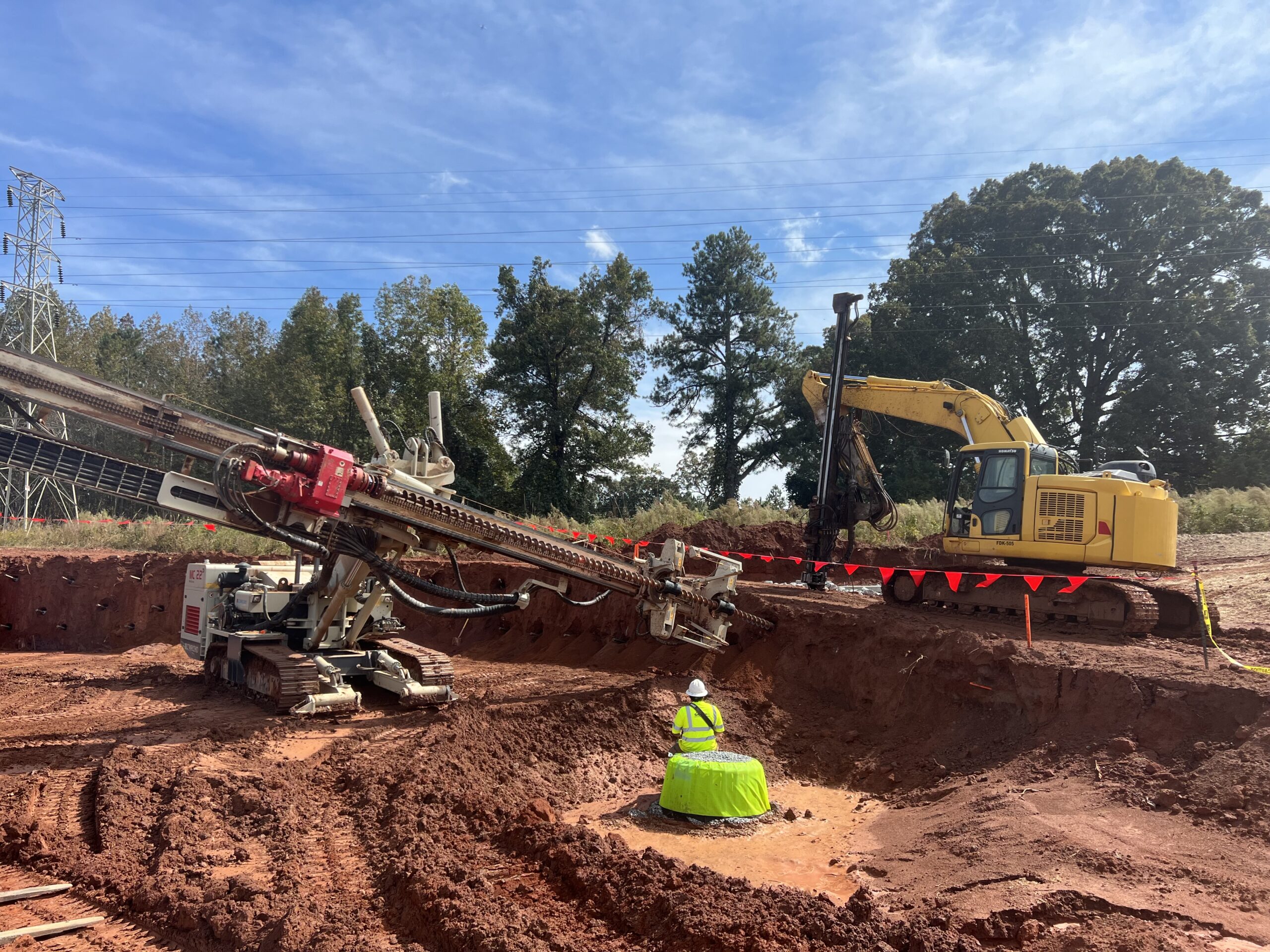
open hole drilling for data center wall construction

What Is Open-Hole Drilling?

Rather than supporting a borehole with a temporary steel casing, open-hole drilling circulates grout as the drilling fluid itself. The grout's own density keeps the surrounding soil or rock from caving in and carries cuttings out of the hole as drilling advances, so there's no casing to install or later withdraw.

In Dallas County, that approach works well once a hole reaches solid Austin Chalk limestone in the western part of the county, but a hole through soft floodplain soil along the Trinity River Corridor typically still needs a cased or duplex method to keep from collapsing before the grout sets. GSI's Dallas County drilling work includes:

  • Installing ground anchors and tiebacks into confirmed solid limestone
  • Drilling soil nail and micropile boreholes where the rock is self-supporting
  • Using cased or duplex drilling in floodplain and other loose or saturated soil
  • Reducing installation time and cost wherever an open-hole approach is viable
  • Confirming ground conditions directly from cuttings and grout take while drilling
  • Switching methods mid-hole if conditions change unexpectedly
  • Supporting anchor, nail, and pile installations across varied county geology

Geohazard Mitigation in Texas

Our Open-Hole Drilling Process

Every Dallas County site brings its own ground conditions, so we verify them before committing to a design.

Step 1

Comprehensive Site Assessment

We drill test borings to confirm whether the site sits on Austin Chalk, Blackland clay, or floodplain soil, since each calls for a different drilling approach.

Step 2

Licensed Engineering Design

Our PE-licensed engineers specify open-hole or cased drilling by zone based on those confirmed conditions.

Step 3

Professional Installation

Crews drill using the specified method, switching from open-hole to cased immediately if unstable ground appears.

Step 4

Ongoing Monitoring & Support

We verify grout take and hole conditions throughout drilling to confirm the installation meets design specifications.

Ready to Secure Your Project?

Request Free Estimate

See Our Success Stories

View Project Gallery

Common Questions About Open-Hole Drilling

Open-hole drilling is typically faster since it skips installing and withdrawing a casing, though duration depends on hole depth and confirmed rock conditions.

Cost varies by location; floodplain sites requiring cased drilling generally cost more than upland sites where open-hole drilling into limestone is viable.

Yes. Our PE-licensed engineers specify the method by zone based on confirmed subsurface conditions, and every design meets IBC and Texas Building Code requirements.

We switch to a cased or duplex drilling method for that section immediately, since continuing open-hole through unstable ground risks the borehole collapsing.

No. It works where solid rock supports it, typically in the western county, but floodplain and other saturated soils require cased or duplex methods.

We confirm ground conditions with test borings specific to the site rather than assuming county-wide geology applies uniformly.

Yes, wherever an anchor extends into confirmed solid limestone, since a competent rock socket holds the hole open without a casing.

Yes. It's common for different zones of the same site, especially one spanning clay and rock, to call for different drilling methods.

Every Hole Deserves the Right Drilling Method

Get Your Free Assessment Today

Using the wrong drilling method for the ground beneath a Dallas County site risks a collapsed borehole and a stalled project. Call (855) 599-5217 to get a drilling assessment from a licensed engineer.


    How Can We Help?

    • Personal Info
    • Contact Info
    • Project Info
    ***Fees May Apply For Residential Site Visits***

    How Can We Help?

    • Personal Info
    • Contact Info
    • Project Info

    How Can We Help?

    • Personal Info
    • Contact Info
    • Project Info

    By using this website, you acknowledge and agree to our Privacy Policy.