Most repairs complete in 1 to 2 weeks depending on the void's size and whether grouting alone is sufficient or excavation and backfill are needed.

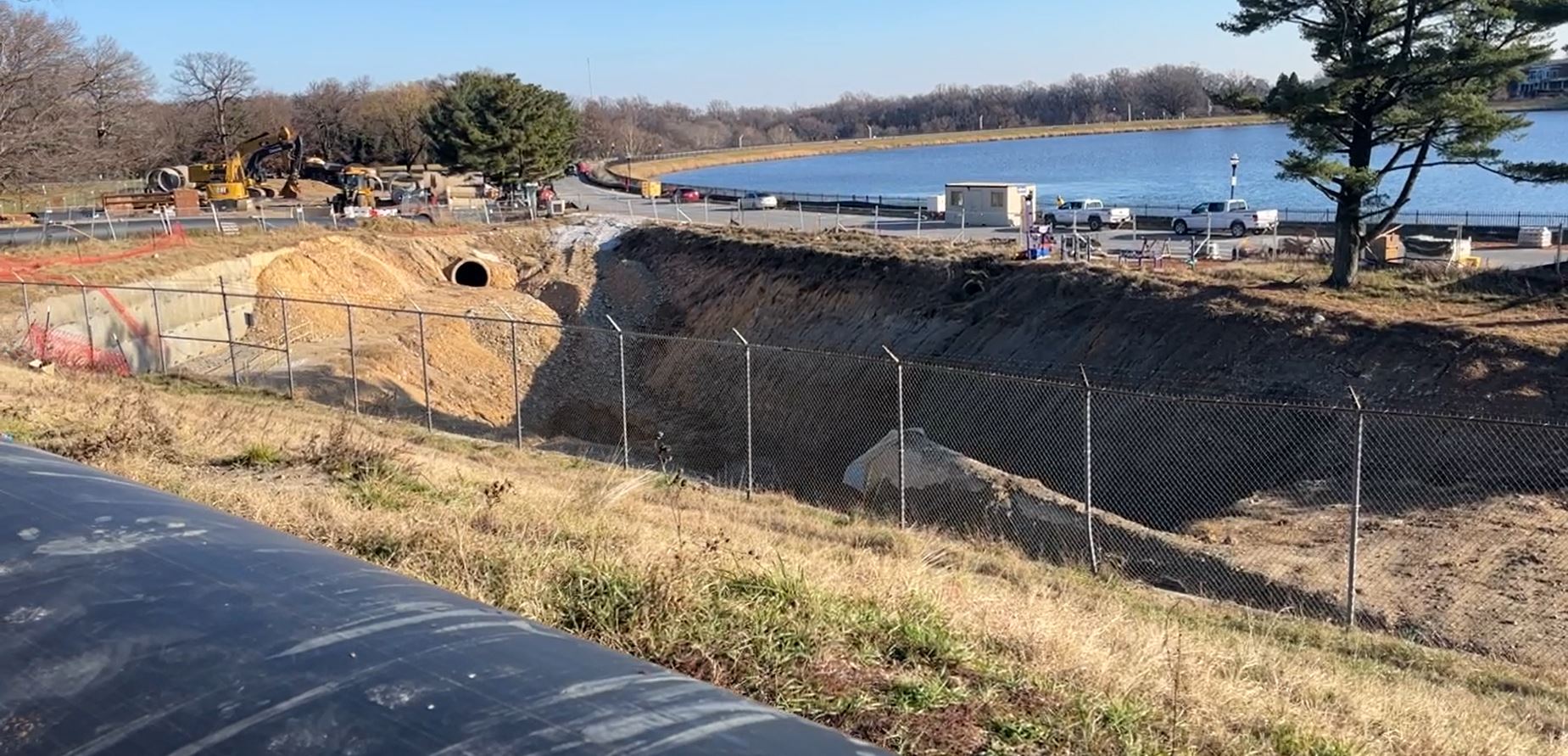
Sinkhole repair starts with identifying which type of failure occurred, a sudden cover-collapse where a void's soil ceiling gives way all at once, or a slower cover-subsidence sinkhole where the ground gradually settles as fines ravel into an underlying karst conduit, before selecting a fix. Repair typically combines excavation and structural backfill, compaction or chemical grouting to consolidate the surrounding soil, and sometimes a soil nail wall where the sinkhole has undercut a slope or roadway edge.
In Austin, that repair has to account for the Edwards Limestone's dissolution features west of I-35 and for the Barton Springs segment of the aquifer running beneath the Recharge Zone, which limits which grouts and fill materials can be used near the water table. GSI's Austin sinkhole repair work typically includes:
Most repairs complete in 1 to 2 weeks depending on the void's size and whether grouting alone is sufficient or excavation and backfill are needed.
Cost depends on void size, depth, and repair method, which we confirm with subsurface investigation before a fixed-cost proposal.
Yes. We select fill and grout materials and construction methods that meet the environmental requirements governing work within the Recharge Zone.
GSI offers 24/7 emergency response and can mobilize a crew within hours if a sinkhole opens beneath or near a structure, driveway, or roadway.
A localized depression, especially near limestone outcrops or in the Hill Country, that continues to grow or that develops a circular pattern warrants inspection before it progresses to a cover-collapse.
Much of West and Southwest Austin sits directly over the karstified Edwards Limestone and its Recharge Zone, where dissolution features form voids that other Texas geology, like Blackland clay, doesn't produce.
No. Our repair methods and materials are selected specifically to avoid contaminating or obstructing recharge into the Edwards Aquifer beneath the site.
A properly engineered repair addresses the void and consolidates surrounding soil to prevent recurrence, though we recommend monitoring nearby ground where karst conditions suggest additional cavities may exist.
A cover-subsidence sinkhole in Austin's karst terrain tends to keep growing until the void beneath it is addressed. Call (855) 599-5217 to get an Austin sinkhole assessment from a licensed engineer.