A typical residential or small commercial job runs 1 to 2 weeks once drilling begins; larger commercial jobs with more piles or karst-affected ground can take longer.

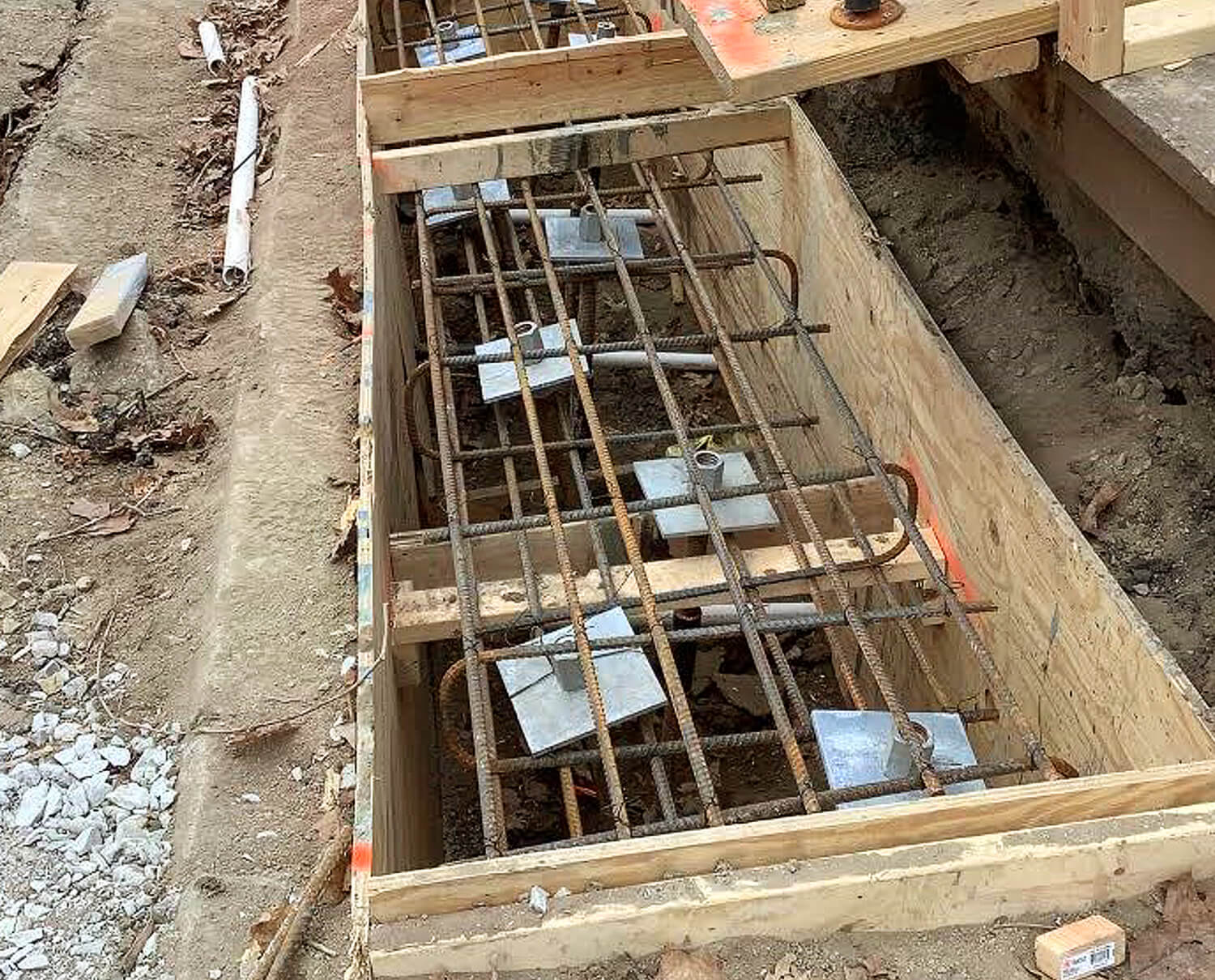
Micropiles are small-diameter, drilled and grouted foundation elements, typically 5 to 12 inches across, reinforced with a steel bar or pipe casing and installed to depths of 50 feet or more. Rather than spreading load across a shallow footing, a micropile carries it down to a deeper, more reliable bearing layer, whether that's rock, dense soil, or a zone confirmed clear of karst voids.
In Austin, that deeper bearing point often means drilling through unstable Blackland clay to reach the Austin Chalk, or confirming a rock-bearing zone free of the karst voids common west of the Balcones Escarpment. Because micropile rigs are compact, they can also work on tight infill lots or inside existing structures where a larger foundation rig can't maneuver. GSI's Austin micropile work typically centers on:
A typical residential or small commercial job runs 1 to 2 weeks once drilling begins; larger commercial jobs with more piles or karst-affected ground can take longer.
Cost depends on pile depth, diameter, and how many piles the load requires, which our engineers determine from your geotechnical report, including any additional borings needed to confirm karst-free bearing.
Yes. Every design is stamped by a licensed Professional Engineer and meets IBC and Texas Building Code requirements, and we coordinate with the City of Austin on permitting where applicable.
GSI offers 24/7 emergency response and can typically mobilize a crew within hours of a call.
Helical piers install faster and cost less on soil that doesn't require deep penetration, but they lose reliable capacity once they need to pass through the area's hard limestone. Micropiles are drilled rather than screwed in, so they pass through that rock and bear directly on it.
We drill test borings to confirm the bearing zone is free of voids before finalizing pile depth, rather than assuming the Austin Chalk beneath a given lot is solid rock throughout.
Micropile drilling generates minimal vibration and a small volume of spoils compared to driven piling, which is why it's a common choice for additions built close to an existing foundation in Austin's tightly built neighborhoods.
Yes. Compact micropile rigs can operate on sloped sites and in low-headroom spaces where conventional pile-driving equipment would need a graded platform first.
Every season the clay or karst beneath an under-supported foundation keeps shifting, and cracks widen while repair costs climb. Call (855) 599-5217 to get an Austin micropile assessment from a licensed engineer.