Timelines depend on wall height and depth, but most commercial shoring installs in stages alongside excavation over several weeks. Karst-affected sites can take longer if a void requires a design change mid-project.

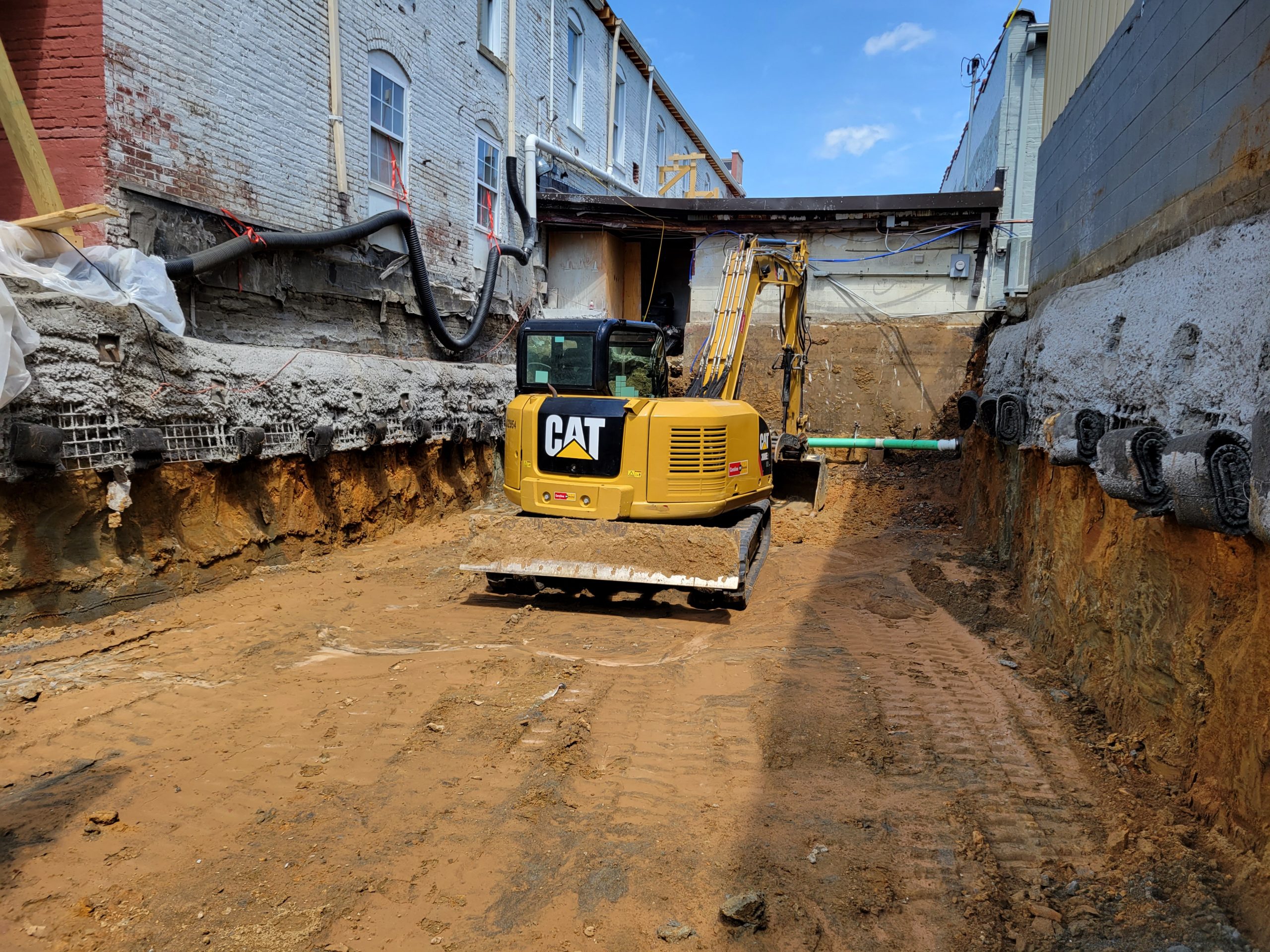
Commercial shoring supports the walls of an excavation while crews work below grade, using one of several systems depending on ground conditions: driven or drilled soldier piles with lagging between them, interlocking sheet piling, or a soil nail wall that reinforces the excavation face directly with grouted bars and a shotcrete finish.
In Austin, that decision often turns on whether the excavation cuts through expansive clay east of the Balcones Escarpment or shallow limestone riddled with karst voids to the west, since a void discovered mid-excavation can change the shoring plan on short notice. GSI's Austin shoring work typically includes:
Timelines depend on wall height and depth, but most commercial shoring installs in stages alongside excavation over several weeks. Karst-affected sites can take longer if a void requires a design change mid-project.
Cost depends on wall height, ground conditions, and whether karst voids are present, which our engineers confirm from your geotechnical report before providing a fixed-cost proposal.
Yes. Every design is stamped by a licensed Professional Engineer and meets IBC and Texas Building Code requirements, and we coordinate with the City of Austin on any applicable review.
GSI offers 24/7 emergency response and can mobilize a crew within hours if a wall shows signs of movement or an unexpected void destabilizes the cut.
Soldier pile and lagging tends to fit sites where the excavation needs to stay open for later utility or anchor work. A soil nail wall costs less and can become permanent with a shotcrete face, but it isn't the right call where a karst void is confirmed within the nailed zone.
We review available karst feature mapping for the site and confirm subsurface conditions with test borings before finalizing a shoring design, rather than assuming the Austin Chalk beneath a given lot is solid.
It depends on the site's location relative to mapped recharge zones and karst features. We coordinate shoring plans with that review process where a project falls within its scope.
Yes. Our engineers can revise pile spacing, grouting, or the shoring approach for the affected zone if drilling or excavation reveals a void that wasn't apparent in the original borings.
An excavation without a shoring plan built for Austin's mixed clay and karst geology risks a costly mid-project redesign. Call (855) 599-5217 to get an Austin shoring assessment from a licensed engineer.