
South Dakota's ground improvement needs split between the Black Hills' fractured granite and schist and the Badlands' interbedded sedimentary formations, and SDDOT infrastructure on either side of the state encounters fundamentally different ground weakness requiring different treatment strategies.
GSI sees this alongside other Ground Settlement work across the state's infrastructure network.
Compaction grouting in Badlands clay and sedimentary interbeds densifies soft, compressible material, distinct from its role treating fractured-rock overburden in the Black Hills. GSI's compaction grouting experience informs this approach.
Chemical grouting in Black Hills fractured granite seals joint-related water pathways, a different application from the pore-space treatment the same technique performs in Badlands granular interbeds. This draws directly on GSI's chemical grouting work.
Void filling addresses fracture-related voids in Black Hills granite and settlement voids in Badlands sedimentary fill — genuinely distinct problems that South Dakota's split geology presents. GSI's Subsurface Void & Sinkhole Problems capability supports this step.
Where relevant, foundation solutions is factored into the South Dakota project plan from day one.
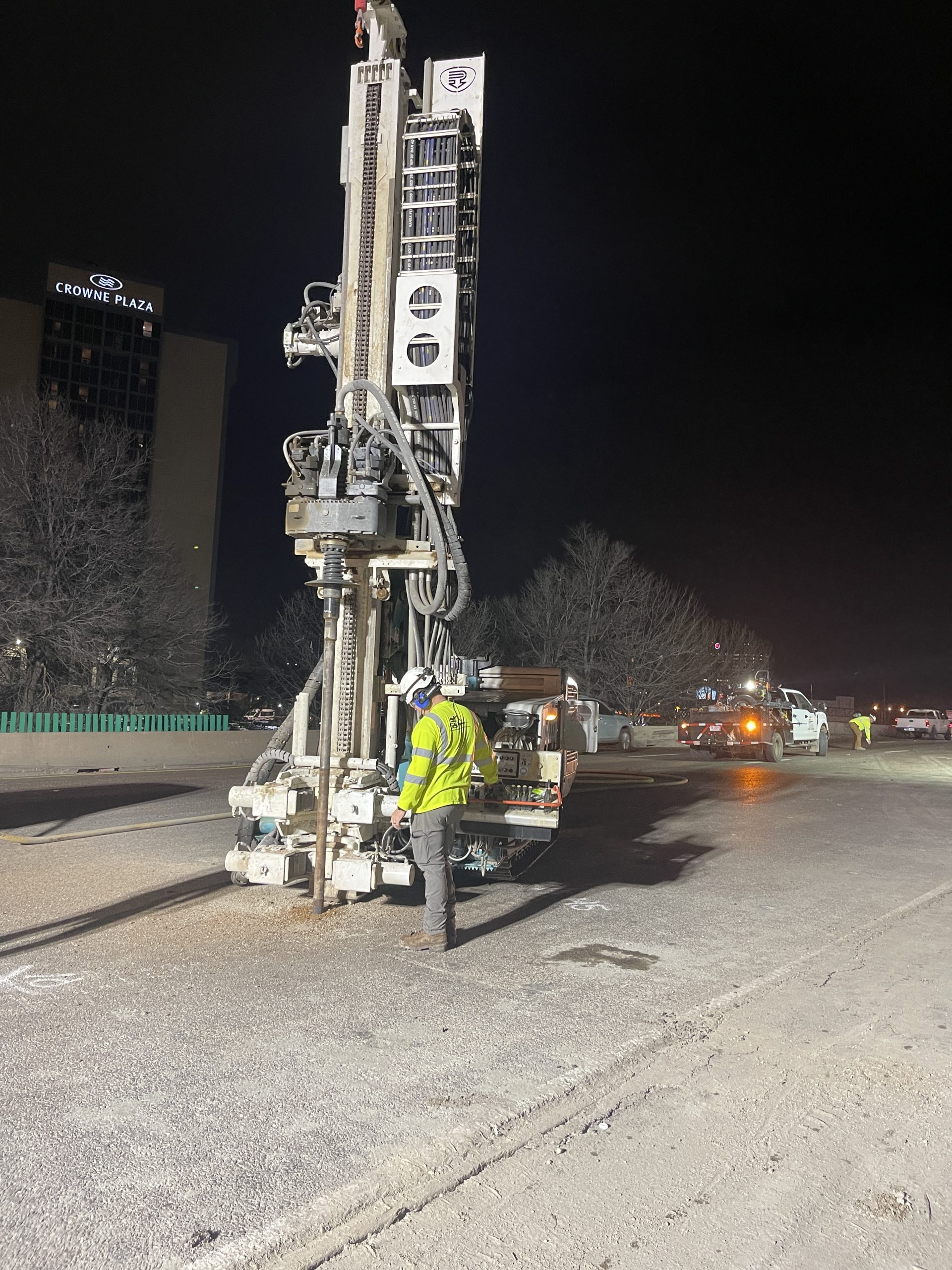
Engineered for South Dakota's conditions. GSI recognizes South Dakota's real geologic split — Black Hills fractured rock versus Badlands sedimentary interbeds — engineering ground improvement for whichever condition a site actually presents. This is reinforced by GSI's work in engineers and commercial properties.
Design/build delivery. Engineering and construction remain under one team — closing the gap between what's designed and what's built.
SDDOT specification compliance. Documentation and construction methods meet state DOT standards from initial design submittal.
SDDOT partners and South Dakota infrastructure owners describe GSI's ground improvement results.
GSI's engineers are ready to assess ground improvement conditions at your South Dakota site.