
More than half of Kentucky's bedrock is capable of developing karst features, and that risk is concentrated in the Pennyroyal Plateau, home to Mammoth Cave, and the Inner Bluegrass region around Lexington, where dissolving limestone creates caves, sinking streams, and cover-collapse sinkholes — the same mechanism behind the widely reported 2014 collapse beneath the National Corvette Museum in Bowling Green.
In eastern Kentucky's coal fields, a separate hazard applies: abandoned underground mines can subside or collapse, settling the ground surface through mine-roof failure rather than limestone dissolution. KYTC and Kentucky commercial property owners across both regions manage foundation movement tied to one of these causes, and Kentucky's own transportation research notes that karst terrain often requires deeper excavations and additional or longer piling to extend foundations through voids into competent bedrock.
GSI treats this as one of several Foundation Settlement Issues issues the state's infrastructure owners regularly face.
Micropiles are small-diameter, high-capacity piles — typically 5 to 12 inches across — that are drilled and grouted in place, bearing past confirmed dissolution zones and using geophysical investigation to distinguish genuine void risk from ordinary soil settlement. Because Kentucky's undulating, karst-affected bedrock often requires deeper excavation and longer piling to reach competent rock, this approach is well matched to the state's geology. This draws directly on GSI's foundation bearing micropiles work.
Helical piers provide verified bearing capacity for Kentucky structures where limestone dissolution has created uncertainty about long-term ground stability beneath conventional footings. GSI's foundation footings for sinking structures capability supports this step.
Hydraulic releveling restores Kentucky structures affected by karst-related settlement, executed once underpinning has confirmed adequate long-term bearing in the underlying rock. This is one application of GSI's broader ground improvement solutions expertise.
GSI's engineers' experience is factored into how Kentucky projects are scoped, with prompt site assessments and fast proposal turnaround so project teams can move from evaluation to design without delay.
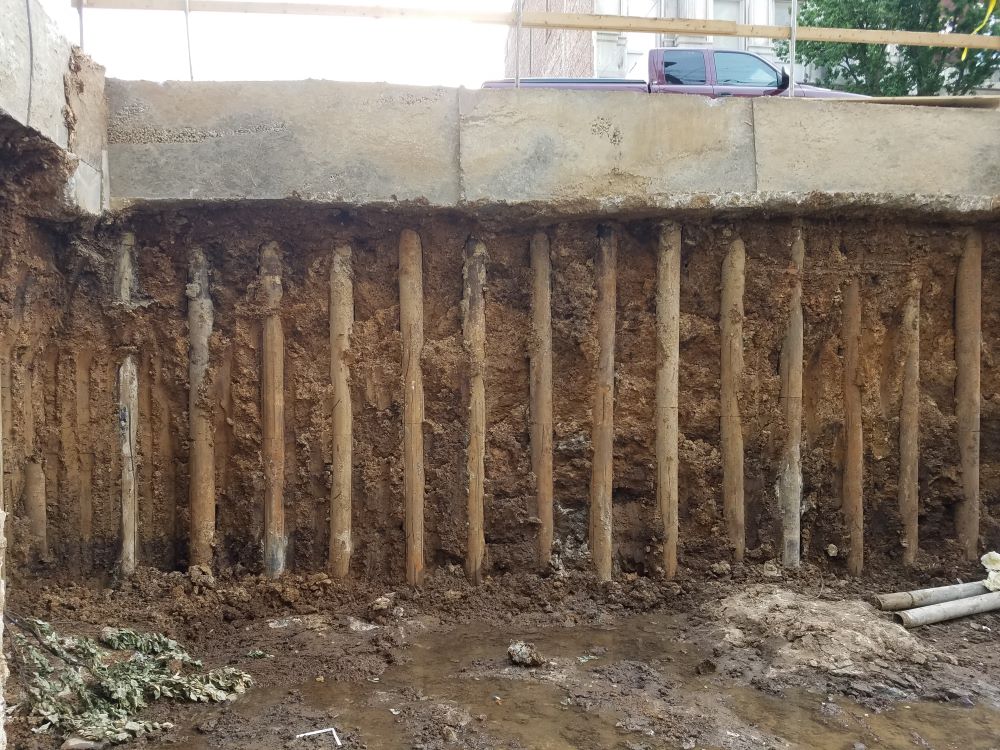
Engineered for Kentucky's conditions. GSI verifies Kentucky underpinning against confirmed karst conditions specific to the state's central and western limestone belt. GSI's commercial properties and asset owners experience backs this approach.
Design/build delivery. A single accountable team delivers design and build, avoiding the miscommunication between separate design and build firms.
KYTC specification compliance. Project records and construction methods conform to DOT requirements beginning with the first engineering package.
Rapid response when conditions demand it. Beyond planned underpinning work, GSI's emergency response team is available around the clock for sudden sinkhole activity or structural distress affecting roadways, bridges, and commercial facilities.
GSI's engineers deliver a warrantied, design/build foundation solution built to reach past Kentucky's karst and mine-affected ground.