
The 300-kilometer Front Range Urban Corridor, running through the Denver Basin, is underlain by Cretaceous-age clay-shales — the Pierre Shale, Niobrara, and Benton formations — that contain frequent bentonite beds capable of swelling dramatically when wet and shrinking sharply when dry. The Colorado Geological Survey has measured swell pressures in these formations as high as 30,000 pounds per square foot, and estimates that roughly a third of construction in the corridor is affected, with foundation repair costs across the Denver metro area running well into the tens of millions of dollars annually. CDOT and Colorado commercial developers alike treat this bentonite-driven swell-shrink cycle as a routine geotechnical consideration rather than an unusual condition.
This pattern is consistent with the broader Foundation Settlement Issues challenges GSI addresses across the state.
Micropiles are small-diameter, high-capacity piles — typically 5 to 12 inches across — that are drilled and grouted in place, transferring load past the active swelling zone to stable bearing material below, the same isolation strategy needed wherever Colorado's bentonite-rich clays are present. GSI's foundation bearing micropiles capability supports this step.
Helical piers reach past Colorado's active clay zone to provide immediate bearing capacity, avoiding the multi-season wait conventional foundation repair in expansive soil often requires. This is one application of GSI's broader foundation footings for sinking structures expertise.
Hydraulic releveling restores Colorado structures displaced by expansive clay swelling, completed after underpinning has isolated the foundation from continued soil volume change. GSI's ground improvement solutions experience informs this approach.
GSI's engineers' experience shapes how Colorado projects are scoped from the first visit, with prompt site assessments and fast proposal turnaround so project teams can move from evaluation to design without delay.
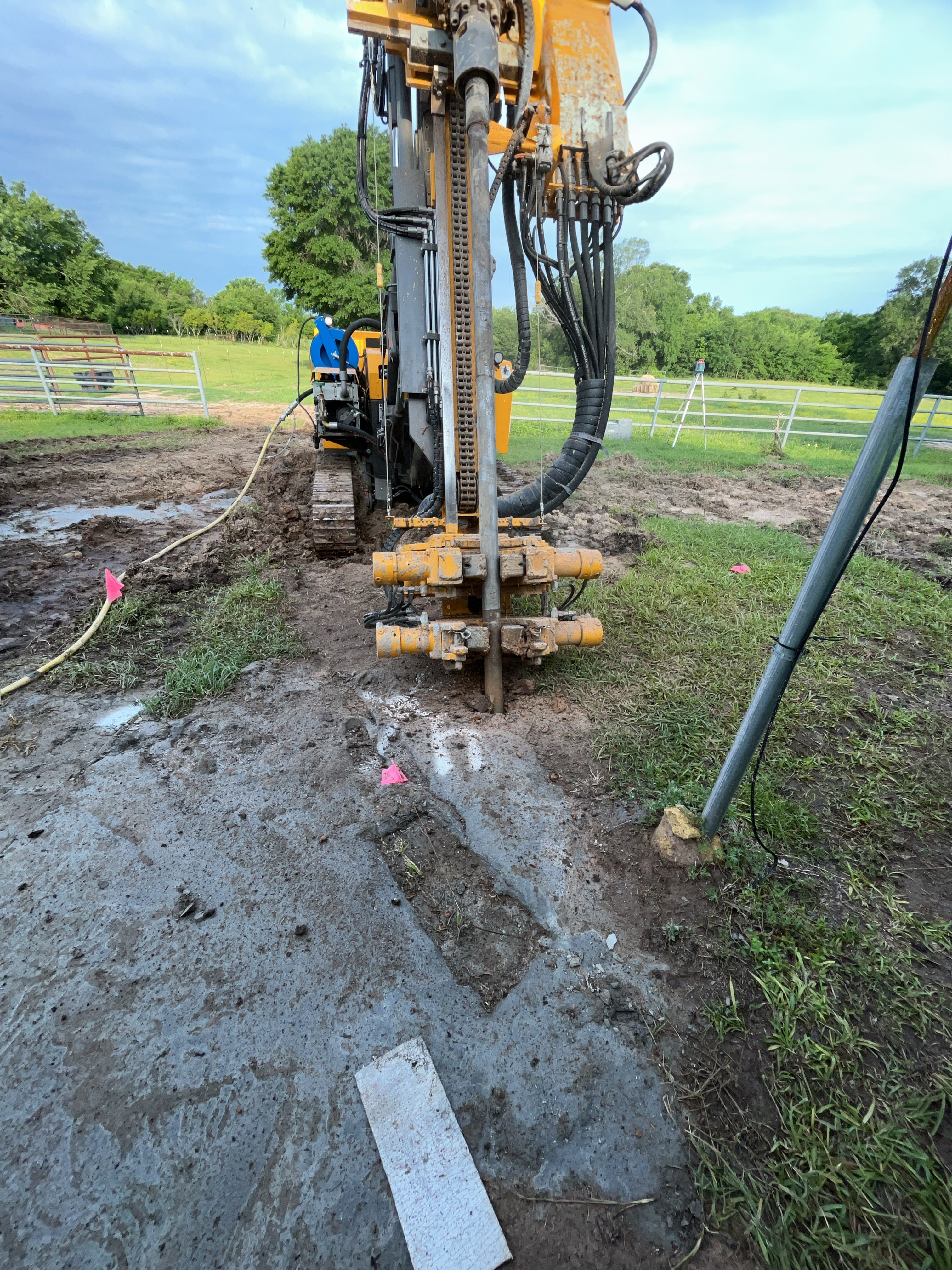
Engineered for Colorado's conditions. GSI's Colorado underpinning targets the Front Range's specifically aggressive bentonite-rich clay, among the most expansive soil conditions found anywhere in this program. It's backed by GSI's broader commercial properties and asset owners capability.
Design/build delivery. Design and construction stay under one roof, removing the friction between design and construction phases.
CDOT specification compliance. Engineering and construction documentation meets applicable DOT requirements starting from first design review.
Rapid response when conditions demand it. Beyond planned underpinning work, GSI's emergency response team is available around the clock for sudden ground movement or structural distress affecting roadways, bridges, and commercial facilities.
GSI's engineers deliver a warrantied, design/build foundation solution built to isolate Colorado structures from Front Range clay swelling.