
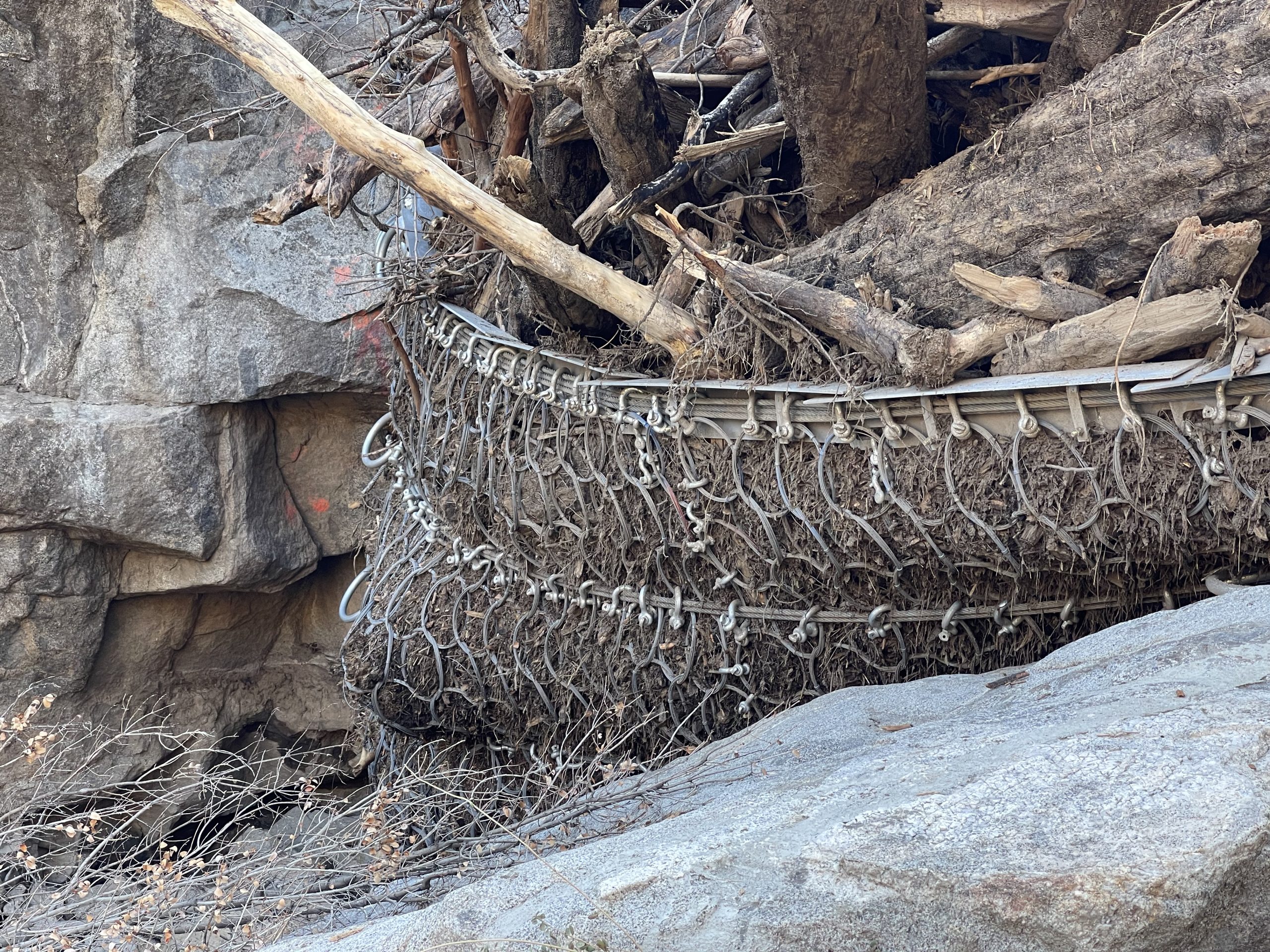
Debris flow mitigation is one of the most technically demanding specialty scopes in geotechnical construction. The barrier system must be sized to the site's debris flow volume and velocity — values derived from watershed analysis, channel geometry, and post-fire erosion modeling, not from a standard specification. A sub who installs a barrier without that design basis either overbuilds or installs a system that the first major flow event overtops.
GeoStabilization International performs the hydrologic and hazard analysis that sizes debris flow barrier systems before recommending a solution. Our engineers calculate flow volume and velocity from your watershed data, select the barrier system type and energy rating, and manage the manufacturer's design approval process.
GeoStabilization International provides debris flow mitigation specialty subcontract services on post-fire recovery, highway channel protection, and watershed infrastructure projects — integrating hydrologic analysis, barrier engineering, and self-perform installation under one subcontract.
Flexible debris flow barriers intercept channelized debris flows, trapping the debris mass while the water fraction passes through. GSI installs Geobrugg and Trumer debris flow systems sized to your watershed's design flow event with full foundation anchor engineering and manufacturer certification.
Burned watersheds generate debris flow hazards in the first two to five post-fire years. GeoStabilization International has deployed post-fire debris flow barriers on highway, residential, and municipal infrastructure following major wildfires in California, Colorado, and the Pacific Northwest.
Grade control check dams in steep channels slow velocity and reduce sediment transport to the downstream protection system. GSI engineers and installs both temporary and permanent check dam systems as components of the overall debris flow mitigation program.
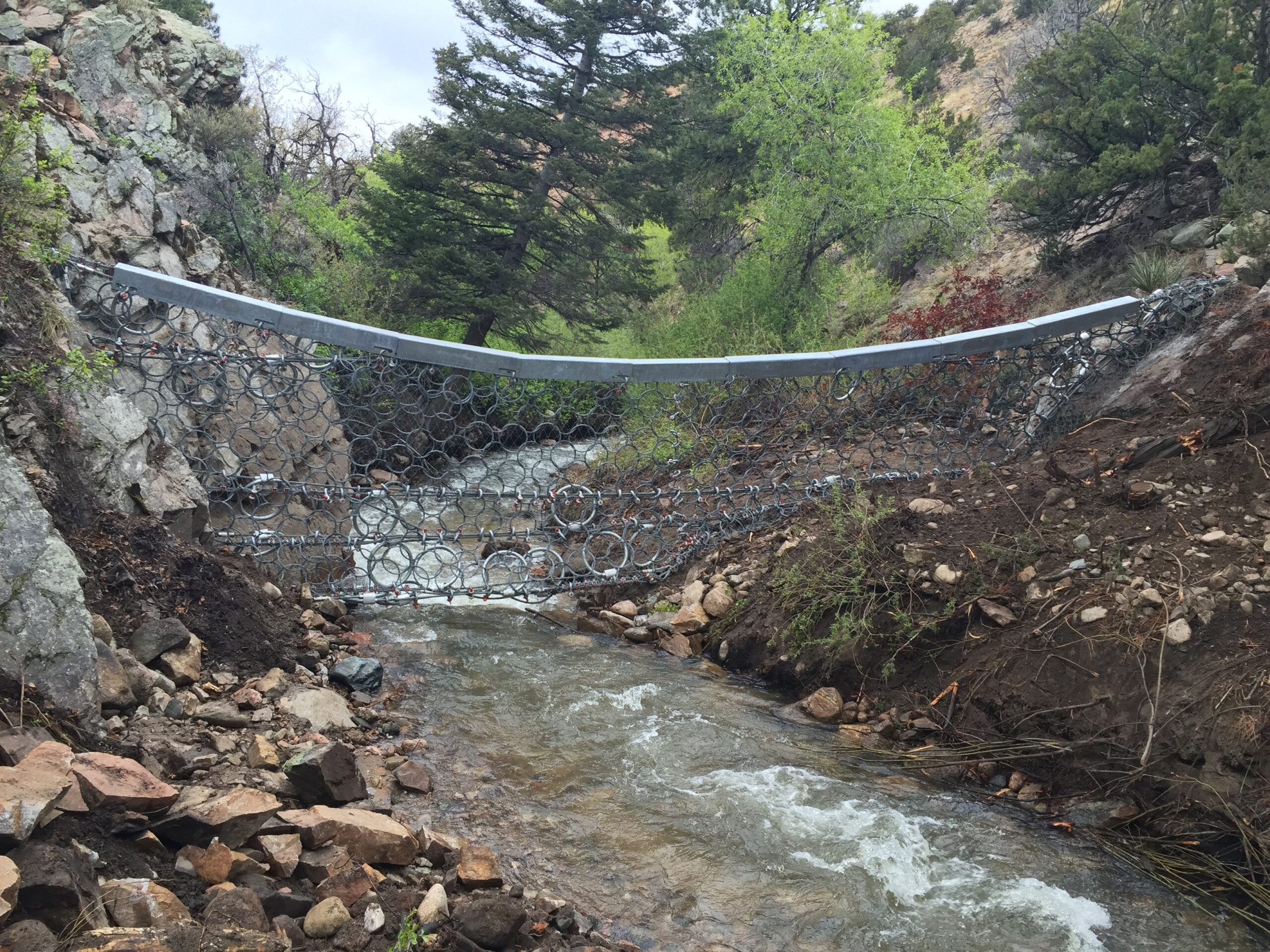
Most debris flow barrier subs select a system based on a general hazard description — 'high energy' or 'post-fire watershed' — without performing the hydrologic analysis that confirms design flow volume and velocity at the proposed barrier location. That approach produces systems that are either significantly over-designed or marginally under-designed, failing during the first design event.
GeoStabilization International's in-house hydrologists calculate design debris flow volume using FLO-2D or comparable modeling from your watershed's topographic data, vegetation burn fraction, and soil erodibility — giving your owner's engineer the documentation to accept the design without additional peer review.
GeoStabilization International responds to subcontract scope inquiries within one business day. Call or complete the form below.