Data Center Excavation & Temporary Shoring

Deep excavations on data center campuses — for basement structures, generator vaults, and utility corridors — frequently occur adjacent to active construction, existing utilities, or neighboring structures. Uncontrolled ground movement creates liability and schedule risk. GSI provides design-build excavation shoring and temporary shoring systems, engineered in-house with monitoring programs in place from day one.

Contact Us


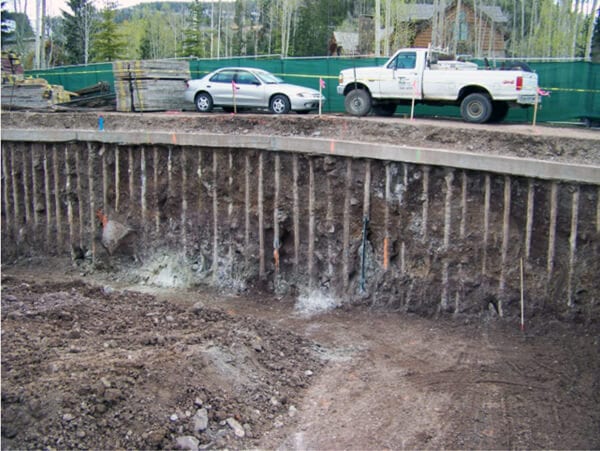
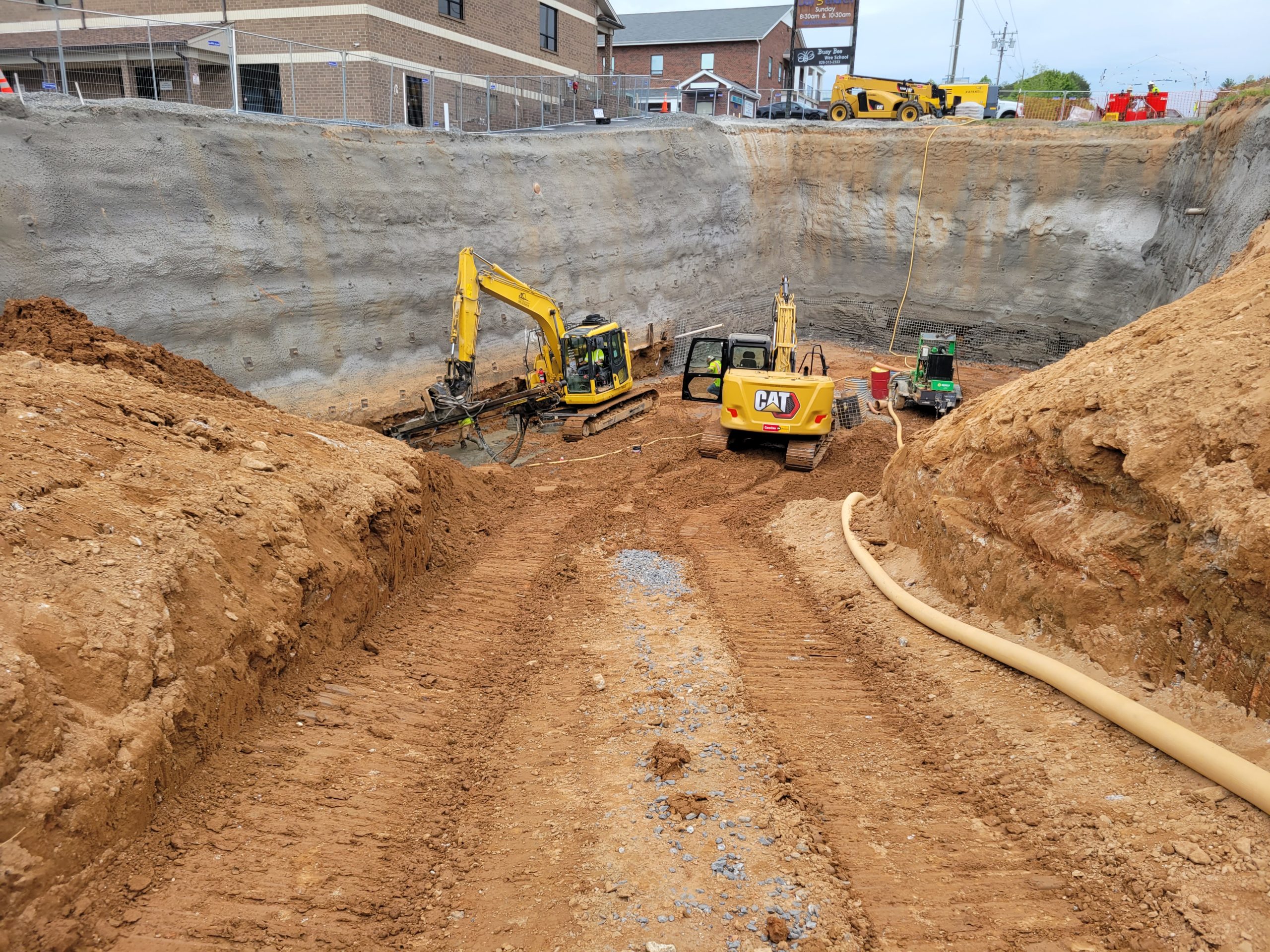
Temporary shoring at church project site, day 3

The Problem: Deep Excavations Next to Things That Can't Move

Deep excavations on data center campuses frequently occur adjacent to active construction, existing utilities, or neighboring structures. Uncontrolled ground movement creates liability, damages adjacent infrastructure, and causes schedule delays that cannot be recovered.

Excavation Shoring

Excavation shoring systems support the walls of an open excavation — preventing collapse and controlling lateral ground movement. GSI designs and installs soldier pile and lagging walls, soil nail shoring systems, micropile shoring, and tieback systems matched to the depth, soil conditions, and adjacent constraints of each excavation.

Temporary Shoring

Temporary shoring is installed for the construction phase and removed once permanent structure or backfill is in place. GSI designs temporary shoring to the required factors of safety for the specific construction sequence, with monitoring programs in place throughout the work.

Top-Down Construction & Monitoring

Where site constraints demand simultaneous above-grade and below-grade construction, GSI provides top-down excavation support. Every project includes a monitoring plan — inclinometers and settlement points installed before excavation begins, with defined alert thresholds tracked throughout.



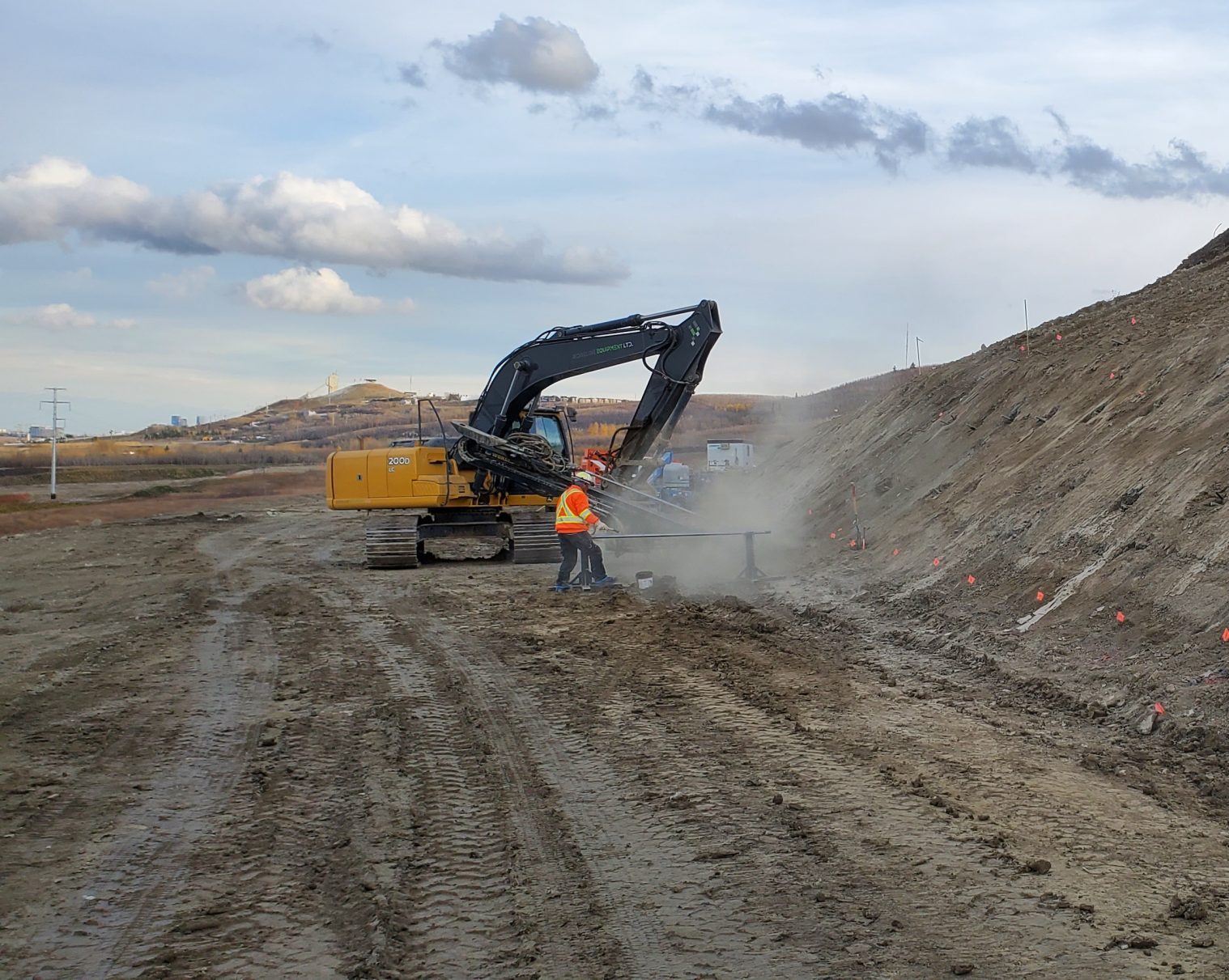
Vertical micropile temporary shoring on residential slope project

Excavation & Temporary Shoring Services

GSI provides the full range of excavation shoring and temporary shoring systems for deep data center excavations — engineered in-house and built by our own crews with monitoring from day one.

  • Soldier Pile & Lagging Walls — Steel H-piles driven at regular spacing with horizontal lagging between — one of the most common temporary shoring systems for deep urban excavations.
  • Soil Nail Shoring Systems — In-situ soil nail reinforcement used as a shoring method for excavations in competent soils, frequently combined with shotcrete facing.
  • Micropile Shoring — High-capacity small-diameter piles for shoring in constrained access conditions or where vibration-sensitive adjacent structures require low-impact installation.
  • Tieback & Ground Anchor Systems — Post-tensioned tiebacks installed through the shoring wall to provide lateral support without internal bracing that obstructs excavation.
  • Top-Down Excavation Support — Structural support enabling simultaneous above-grade and below-grade construction to compress the critical path on large data center projects.
  • Permanent Earth Retention Walls — Below-grade walls designed and built to remain as part of the finished structure, combining construction-phase shoring with permanent lateral earth support.
  • Excavation Monitoring Programs — Inclinometers, settlement points, and surface movement references installed before excavation and monitored throughout — with defined alert thresholds and GSI response protocols.


Ready to Discuss Your Project?

Frequently Asked Questions


Excavation shoring refers broadly to any system used to support the walls of an open excavation. Temporary shoring is a specific category — systems designed for the construction phase only, then removed when permanent structure or backfill is in place. Most data center excavation shoring is temporary. GSI's engineering team evaluates both options and recommends the most cost-effective approach for the specific project requirements.


GSI incorporates settlement monitoring and lateral earth pressure control into every shoring design. Monitoring instruments — inclinometers, settlement points, and surface movement references — are installed before excavation begins and read at defined intervals throughout. Alert thresholds are established in the shoring plan, and GSI responds to any readings approaching those thresholds before damage can occur.


Yes — and this is one of GSI's primary advantages on complex data center projects. Rather than managing separate specialty subcontractors for shoring and slope stabilization, project teams can engage GSI as a single design-build geotechnical contractor for both scopes. GSI's engineers coordinate the shoring and slope stabilization designs as an integrated system — ensuring each element works with the others across the full site.


Related Data Center Services


Slope stabilization on Crestmont Boulevard project

Slope Stabilization

Soil nail walls, ground anchors, and shotcrete facing for cut slopes on data center sites.

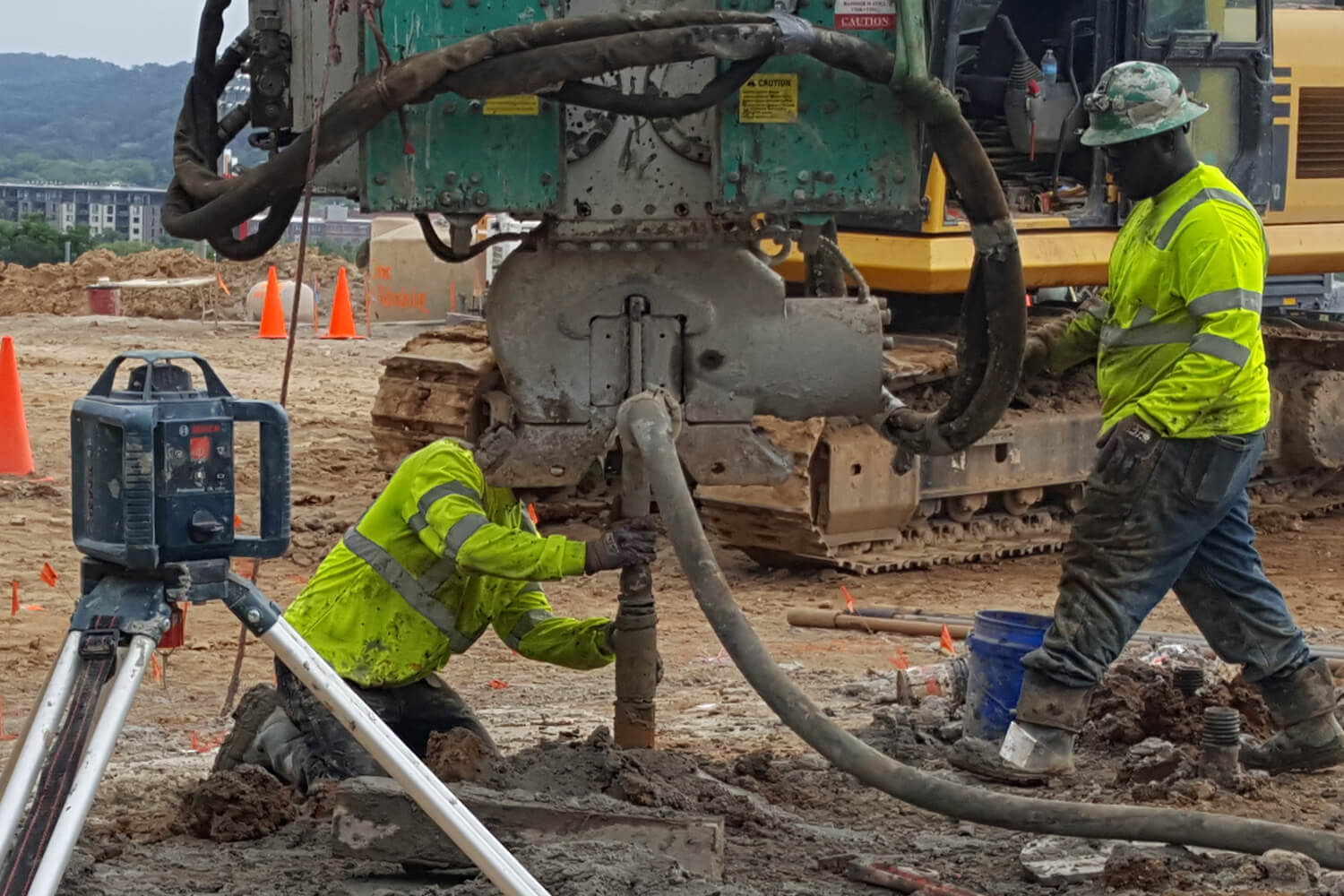
Foundation underpinning micropile installation for sinking structure

Foundation & Subgrade Improvement

Grouting and micropiles for settling pads and poor subgrade conditions.

Pinned mesh installation on slope for rockfall protection

Rockfall Mitigation

Rock bolts, pinned mesh, barriers, and catch systems for sites near steep terrain.

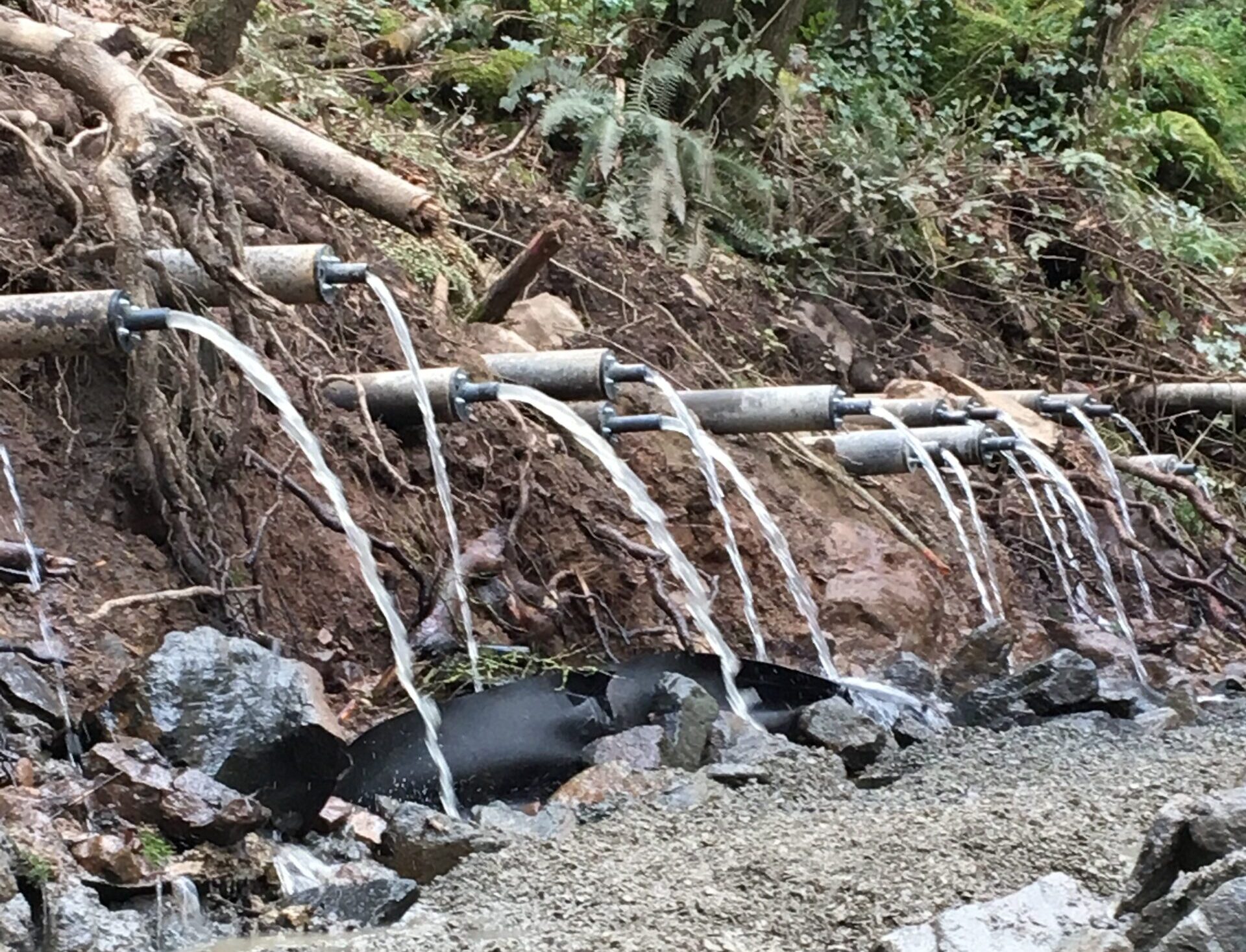
Horizontal drain installation on slope

Horizontal Drains

Horizontal drain installation to manage subsurface water on data center slopes.

GET IN TOUCH

Contact Us Today

If you are interested in a no-obligation site visit to determine if our services fit your needs, call us at 855-579-0536 or fill out our contact form.

855.579.0536


    How Can We Help?

    • Personal Info
    • Contact Info
    • Project Info
    ***Fees May Apply For Residential Site Visits***

    How Can We Help?

    • Personal Info
    • Contact Info
    • Project Info

    How Can We Help?

    • Personal Info
    • Contact Info
    • Project Info

    By using this website, you acknowledge and agree to our Privacy Policy. This site is protected by reCAPTCHA, and the Google Privacy Policy and Terms of Service apply.