Data Center Horizontal Drains

Subsurface water pressure is one of the most persistent threats to slope and foundation stability on data center sites — and one of the most underaddressed. Horizontal drains are perforated pipes installed at a slight upward angle into a slope or retaining wall, intercepting groundwater before it builds pressure and draining it by gravity. No power. No moving parts. Minimal maintenance. GSI installs horizontal drains as a component of slope stabilization programs and as standalone drainage solutions.

Contact Us


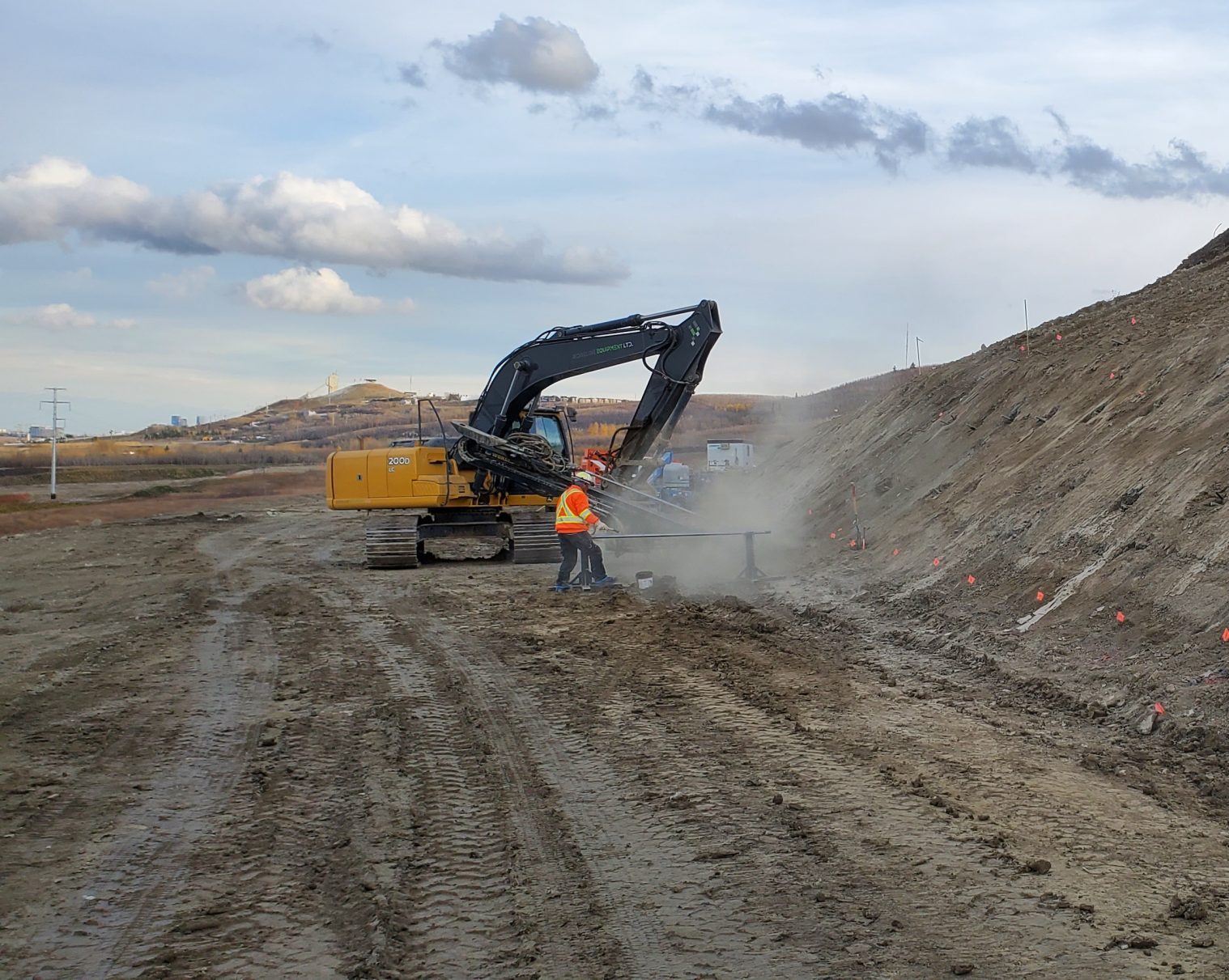
Crew drilling horizontal drains for slope stabilization

The Problem: Subsurface Water Threatening Slope and Foundation Stability

Hydrostatic pressure behind retaining walls and within slope fill is one of the most common — and most underaddressed — causes of long-term slope instability on data center sites. Horizontal drains intercept groundwater before it builds pressure, protecting slopes and foundations for the life of the facility.

How Horizontal Drains Work

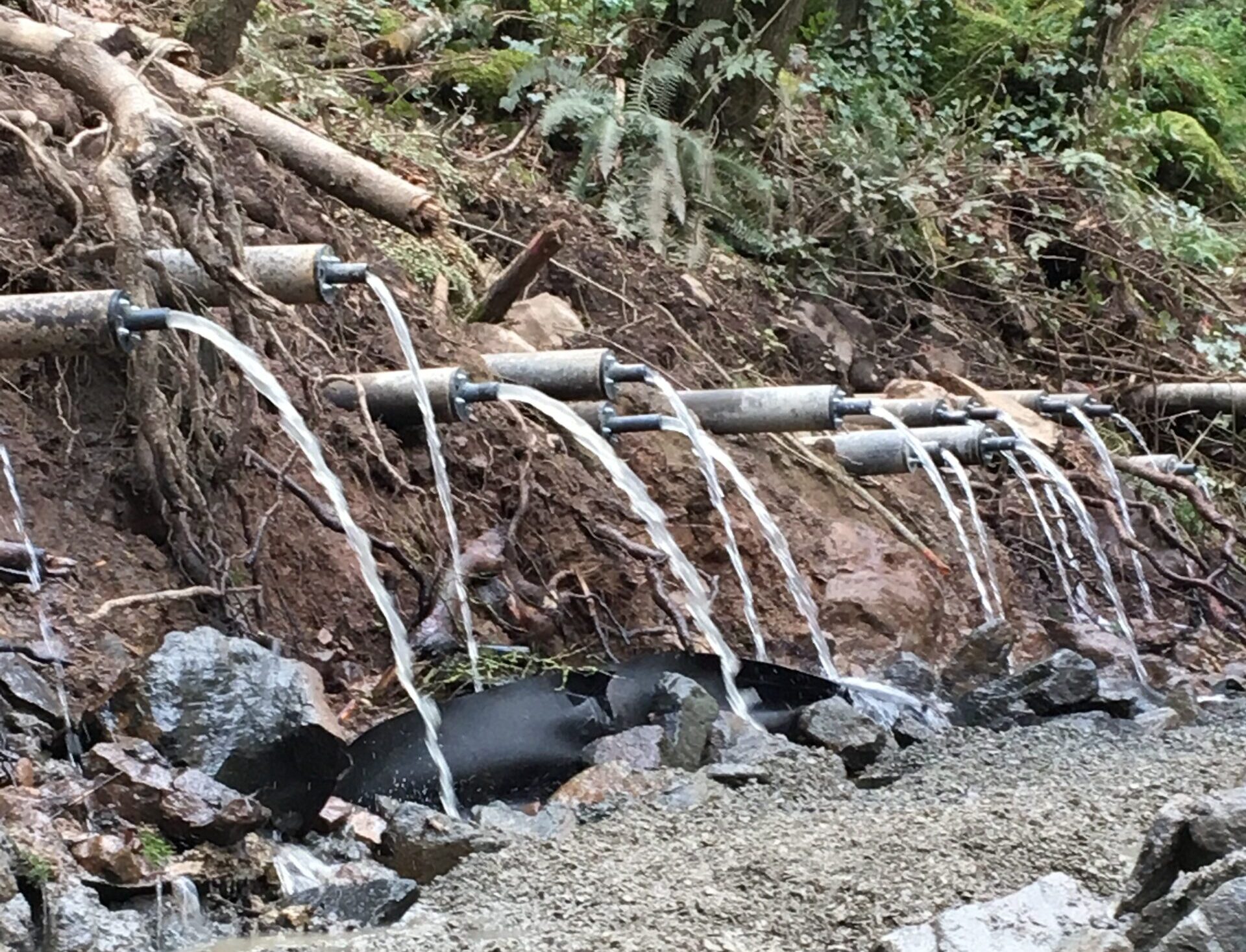
Horizontal drains are perforated pipes drilled at a slight upward angle into a slope or retaining wall. Groundwater enters the perforated casing and flows by gravity to the outlet at the slope face, where it is collected and directed away from the structure. No power. No moving parts. Minimal maintenance.

Integrated with Slope Stabilization

GSI routinely installs horizontal drains as a component of soil nail wall and slope stabilization programs. Designing drainage and stabilization together produces a more effective and more cost-efficient system — drain locations and spacing are coordinated with the nail pattern to maximize coverage without conflicts.

Standalone Drainage Programs

Where a slope or retaining wall is structurally adequate but showing signs of water-related movement, a targeted horizontal drain program may be all that is required. GSI designs and installs standalone drain arrays based on site-specific groundwater conditions.

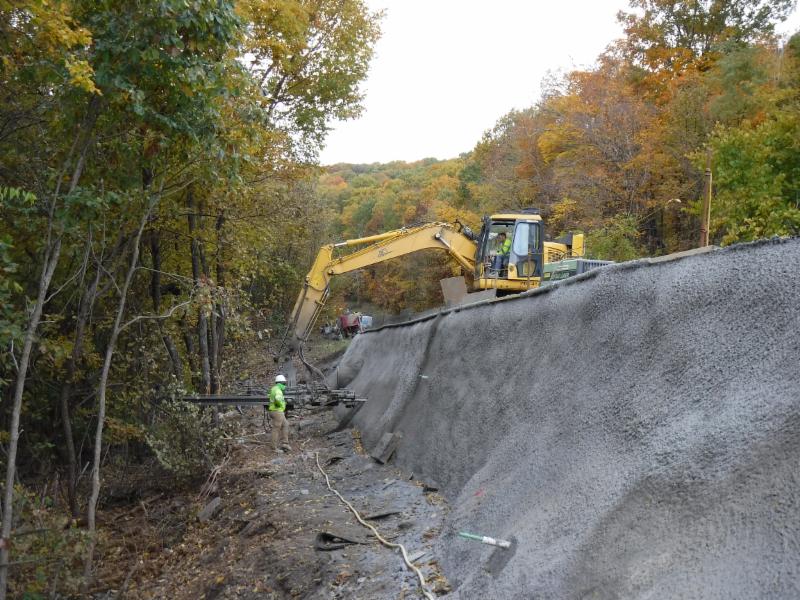
 

Horizontal drain installation on slope

Horizontal Drain Services

GSI provides horizontal drain design and installation for data center slopes and retaining walls — as a component of slope stabilization programs and as standalone drainage solutions.

  • Horizontal Drain Design & Installation — Perforated drain pipes installed at a slight upward angle into slopes and retaining walls to intercept and remove subsurface groundwater by gravity.
  • Integration with Soil Nail Wall Programs — Drain design coordinated with soil nail patterns to maximize drainage coverage across the full slope face without creating conflicts between systems.
  • Standalone Slope Drainage Programs — Targeted drain arrays for slopes showing signs of water-related movement where structural intervention is not required.
  • Retaining Wall Drainage Systems — Horizontal drains and outfall collection systems for retaining walls where hydrostatic pressure is an existing or anticipated design concern.
  • Outfall Collection & Discharge Design — Collection manifolds and discharge infrastructure at the slope face to manage drain outflow and direct it away from the protected structure.
  • Drain Inspection, Cleaning & Rehabilitation — Periodic flushing and inspection to maintain long-term drain performance, and re-drilling alongside blocked drains when rehabilitation is required.


Ready to Discuss Your Project?

Frequently Asked Questions


Elevated pore water pressure within a slope or behind a retaining wall reduces the effective shear strength of the soil — making a stable slope under dry conditions potentially unstable after significant rainfall. On data center sites, slopes are often created by grading and may include fill materials more susceptible to saturation than native soils. Horizontal drains intercept groundwater before it can build pressure behind retaining walls or within slope fill, providing a passive, gravity-driven drainage system that functions continuously without power or active maintenance.


Yes. Horizontal drains can be drilled and installed into existing slopes, retaining walls, and soil nail wall systems without disturbing the structural elements. If a slope or wall that was initially stabilized without adequate drainage subsequently shows signs of movement or elevated pore pressure, GSI can design and install a supplemental drainage program targeting the specific water source contributing to the problem.


Properly installed horizontal drains can remain effective for decades with minimal maintenance. The primary maintenance requirement is periodic inspection and flushing to remove sediment or mineral deposits that may reduce flow capacity over time. GSI designs drain installations with cleanout access integrated into the outlet structure, making inspection and maintenance straightforward. In cases where a drain has become fully blocked, re-drilling alongside the original drain is typically more economical than attempting to rehabilitate the existing drain.


Related Data Center Services


Slope stabilization on Crestmont Boulevard project

Slope Stabilization

Soil nail walls, ground anchors, and shotcrete facing for cut slopes on data center sites.

Temporary shoring at church project site, day 3

Excavation & Temporary Shoring

Temporary and permanent earth retention for deep data center excavations.

Foundation underpinning micropile installation for sinking structure

Foundation & Subgrade Improvement

Grouting and micropiles for settling pads and poor subgrade conditions.

Pinned mesh installation on slope for rockfall protection

Rockfall Mitigation

Rock bolts, pinned mesh, barriers, and catch systems for sites near steep terrain.

GET IN TOUCH

Contact Us Today

If you are interested in a no-obligation site visit to determine if our services fit your needs, call us at 855-579-0536 or fill out our contact form.

855.579.0536


    How Can We Help?

    • Personal Info
    • Contact Info
    • Project Info
    ***Fees May Apply For Residential Site Visits***

    How Can We Help?

    • Personal Info
    • Contact Info
    • Project Info

    How Can We Help?

    • Personal Info
    • Contact Info
    • Project Info

    By using this website, you acknowledge and agree to our Privacy Policy. This site is protected by reCAPTCHA, and the Google Privacy Policy and Terms of Service apply.