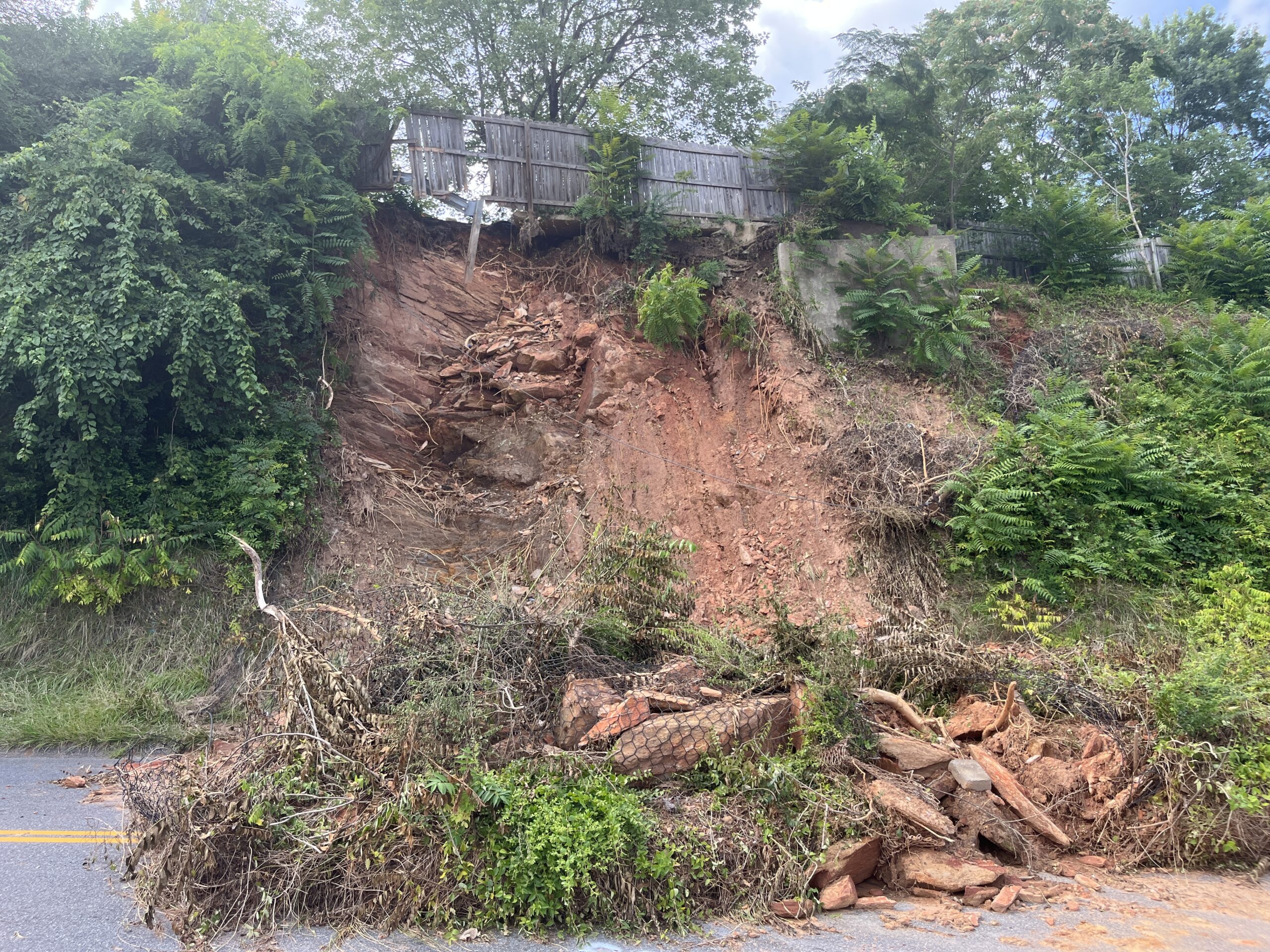



When a 100-year storm event strikes, it doesn't wait for deliberate planning. In the summer of 2023, extreme rainfall destabilized a slope at the intersection of 12th Street and Federal Avenue in Lynchburg, Virginia — threatening historic homes in the College Hill neighborhood and compromising a vital corridor into the city's business district. GeoStabilization was tasked with designing and constructing a permanent solution that would protect property, preserve community character, and be delivered under budget.
The storm overwhelmed an aging 22-year-old slope drape mesh system extending more than 640 linear feet, exposing multiple zones of instability behind the mesh that city engineers identified as posing a direct risk to adjacent private properties. The College Hill area is one of Lynchburg's most historically significant neighborhoods, meaning any repair needed to minimize footprint and avoid damage to private lots, two existing retaining walls, and three city utilities threading through the project zone. GSI evaluated four remediation options before the City selected the soil nail and shotcrete approach for its ability to address global stability comprehensively while maintaining a minimal construction footprint.
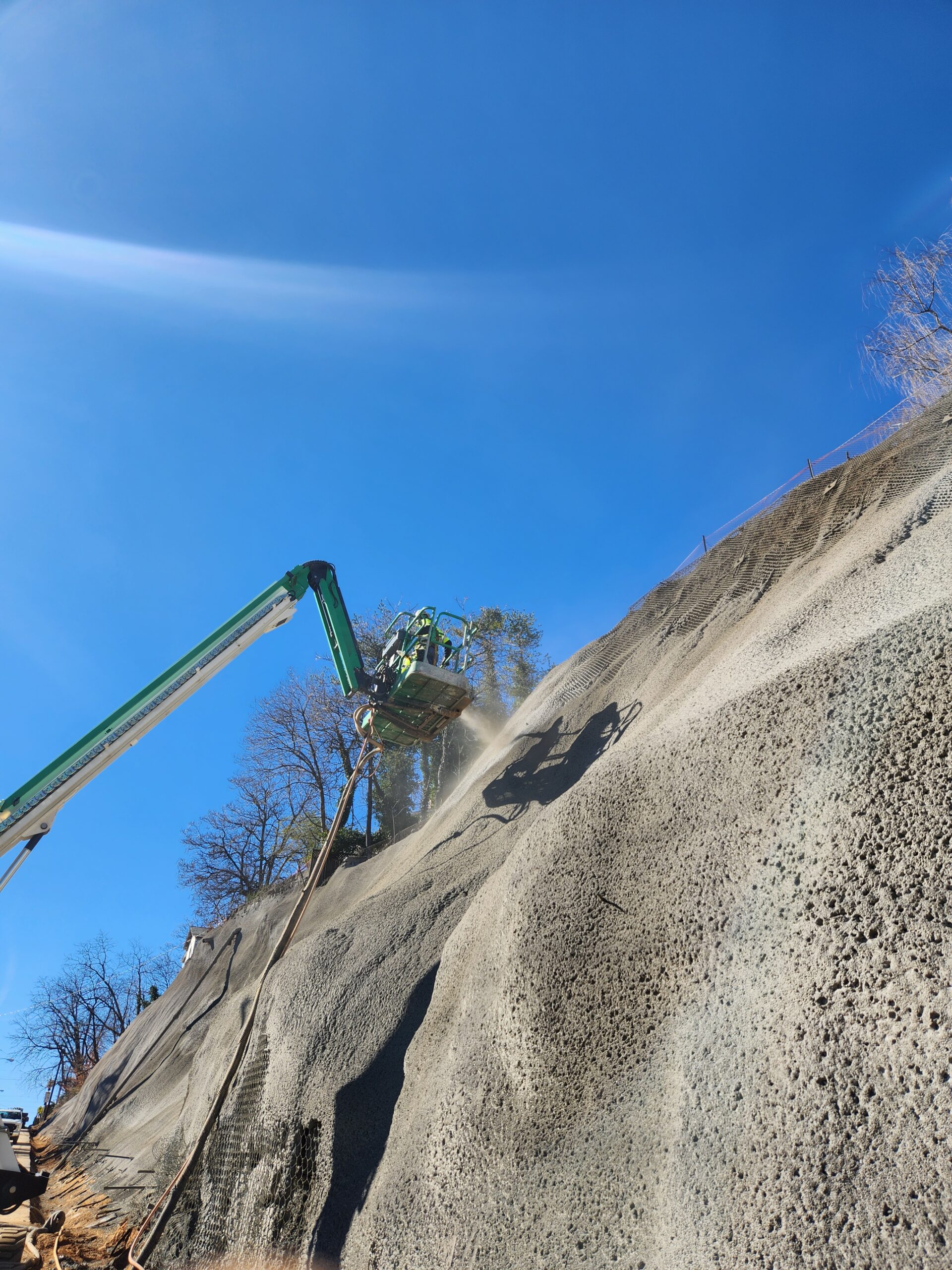
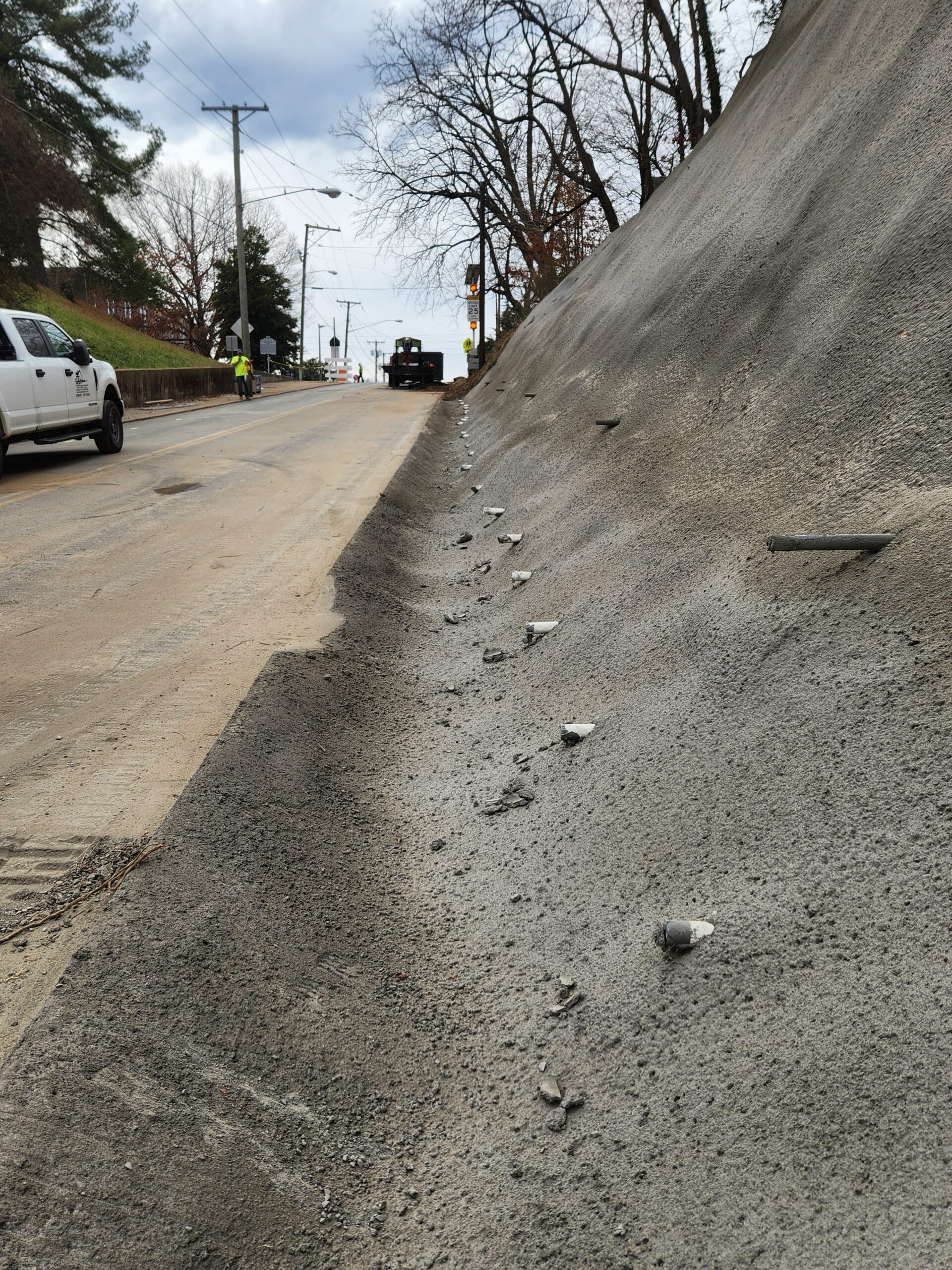
GeoStabilization's crews began by scaling loose rock and removing the damaged mesh system from the slope, then installed 499 SuperNails to depths of up to 20 feet throughout the repair zone. Over the nails, 28,424 square feet of 6-inch-thick shotcrete was applied with integrated strip and horizontal drains to manage subsurface water and prevent future pressure buildup behind the facing. The shotcrete treatment was constructed from the top down, following the natural contour of the existing slope to minimize material and maximize structural efficiency. At the toe, a concrete swale with energy dissipators was constructed to capture and manage surface drainage flowing off the treated slope — addressing one of the root causes of the original failure.
The project was completed on time and under budget — and the response from the City of Lynchburg reflected the quality of the work. Principal Engineer D'Anna Conner described the result as 'fantastic,' crediting the team for their professionalism and proactive approach throughout the project. Construction Manager Edd Wood echoed that sentiment, commending the crew's dedication and willingness to go above and beyond. The completed slope protection restored safety to the College Hill neighborhood and secured a key gateway into Lynchburg's business district for years to come.