Subsurface Void & Sinkhole Problems

Subsurface Void & Sinkhole Problems

Subsurface void and sinkhole problems occur when the ground beneath the surface loses material or collapses, creating hidden gaps that reduce support and increase failure risk. These conditions can develop gradually over time or appear suddenly with little warning, often triggered by water movement, deteriorating infrastructure, or underlying geologic conditions.

Voids and sinkholes are especially concerning because surface conditions may look stable until failure occurs. What begins as a small depression, cracking, or “soft spot” can progress into rapid settlement, pavement collapse, or structural distress if the loss of support continues.

GeoStabilization International has restored support beneath thousands of sites across North America, including critical infrastructure and active facilities where safety and downtime are major concerns.

Contact Us

Sinkhole Remediation
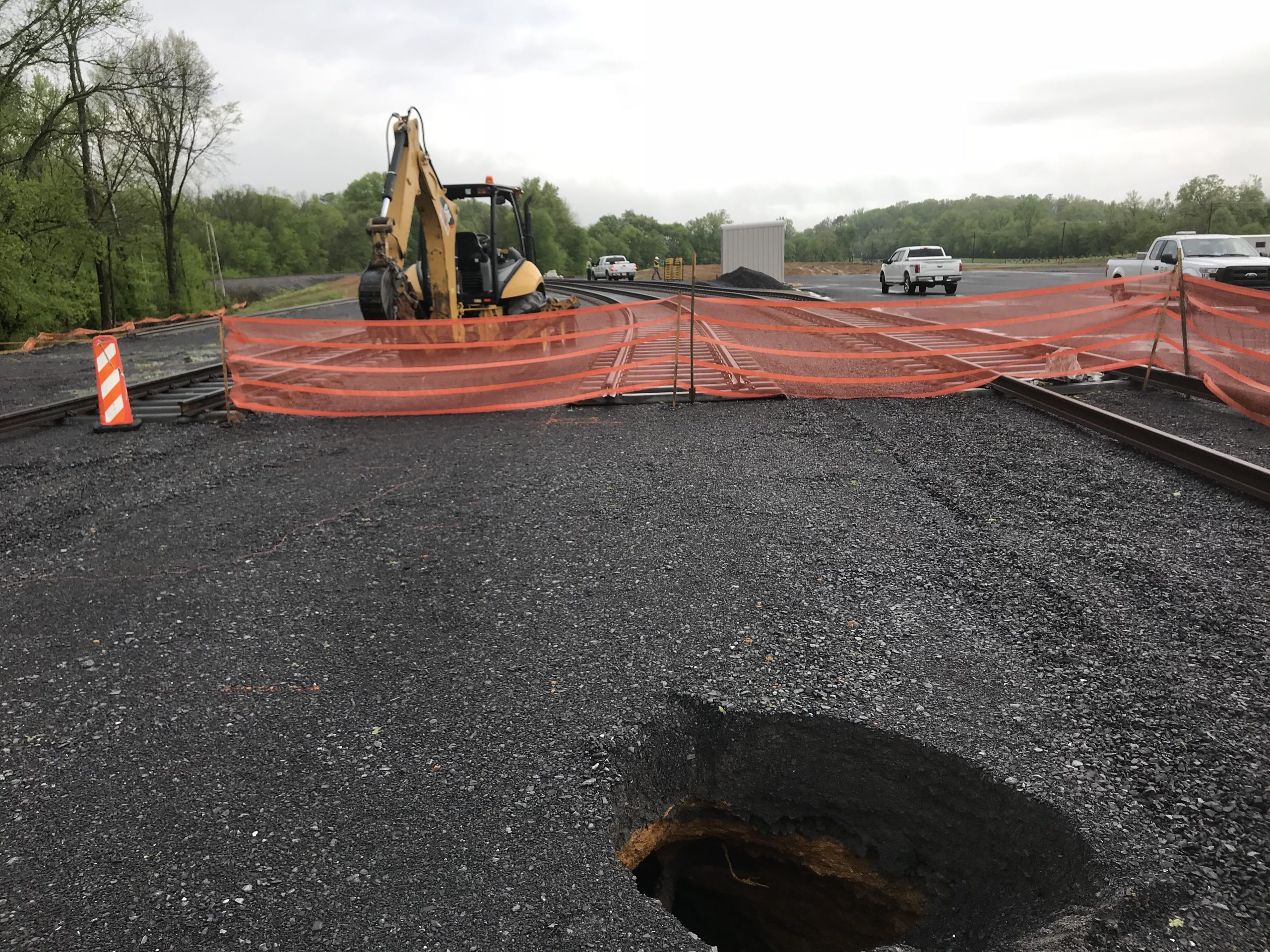
Large sinkhole in the middle of a road with construction equipment and workers nearby for repair.

How Subsurface Voids and Sinkholes Develop

Subsurface voids form when soil or supporting material is removed, displaced, or collapses below grade. While the cause may differ site-to-site, the risk is the same: once support is lost, overlying slabs, pavements, or structures may begin to settle or fail. Common causes include:

  • Water-driven soil loss from internal erosion, seepage, or washout
  • Deteriorating utilities or drainage systems that create ongoing soil migration
  • Poorly compacted backfill that compresses or settles over time
  • Underground erosion pathways that expand gradually
  • Geologic voiding in certain ground conditions where cavities can develop
Warning Signs of Void or Sinkhole Risk

Voids and sinkholes often present early indicators before major failure. Even small surface changes may indicate significant conditions below grade. Common signs include:

  • Sudden depressions in pavement, yards, or slabs
  • Cracking that radiates outward from a low point
  • Soft areas that worsen under traffic or loading
  • Ponding water where drainage previously worked normally
  • Settlement appearing near inlets, culverts, or utility corridors
  • Repeated surface repairs in the same locations
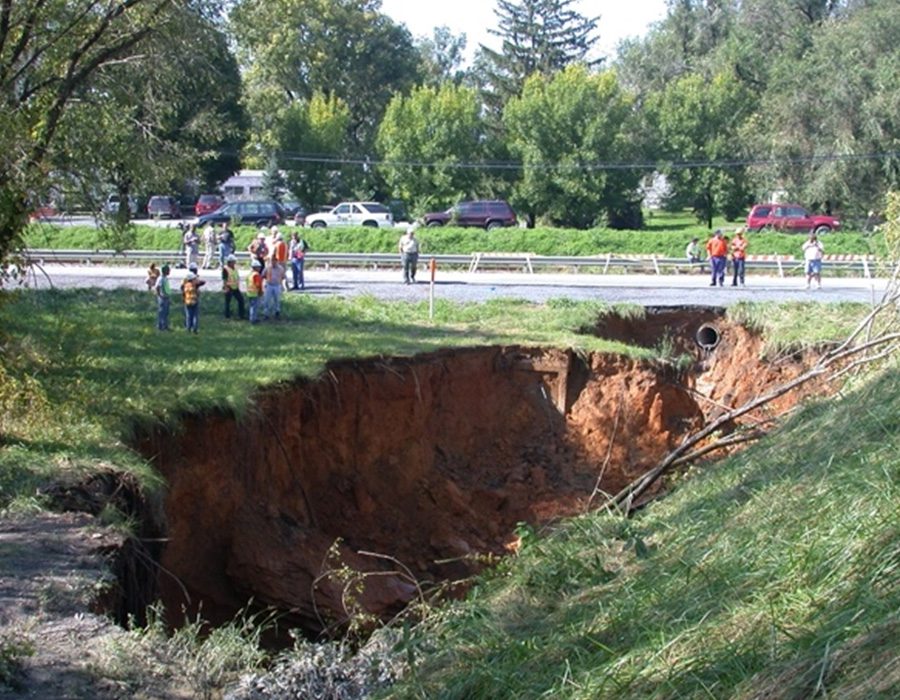
Large sinkhole near a road with people observing from a safe distance.

Most Impacted Stakeholders

Subsurface voids and sinkholes affect owners and agencies responsible for assets where sudden loss of support can create serious safety and operational consequences. For these stakeholders, voiding is not simply a maintenance issue; it’s an exposure and reliability risk:

Transportation agencies managing roadways, approaches, and corridor infrastructure

Municipalities and public agencies responsible for streets and public facilities

Industrial and commercial sites with slabs, yards, and operational loading zones

Utility owners maintaining underground infrastructure and access areas

Property owners and developers where collapse risk threatens buildings or access

Restore Support

Request an Assessment

Active Collapse or Rapid Settlement?

Emergency Stabilization Support
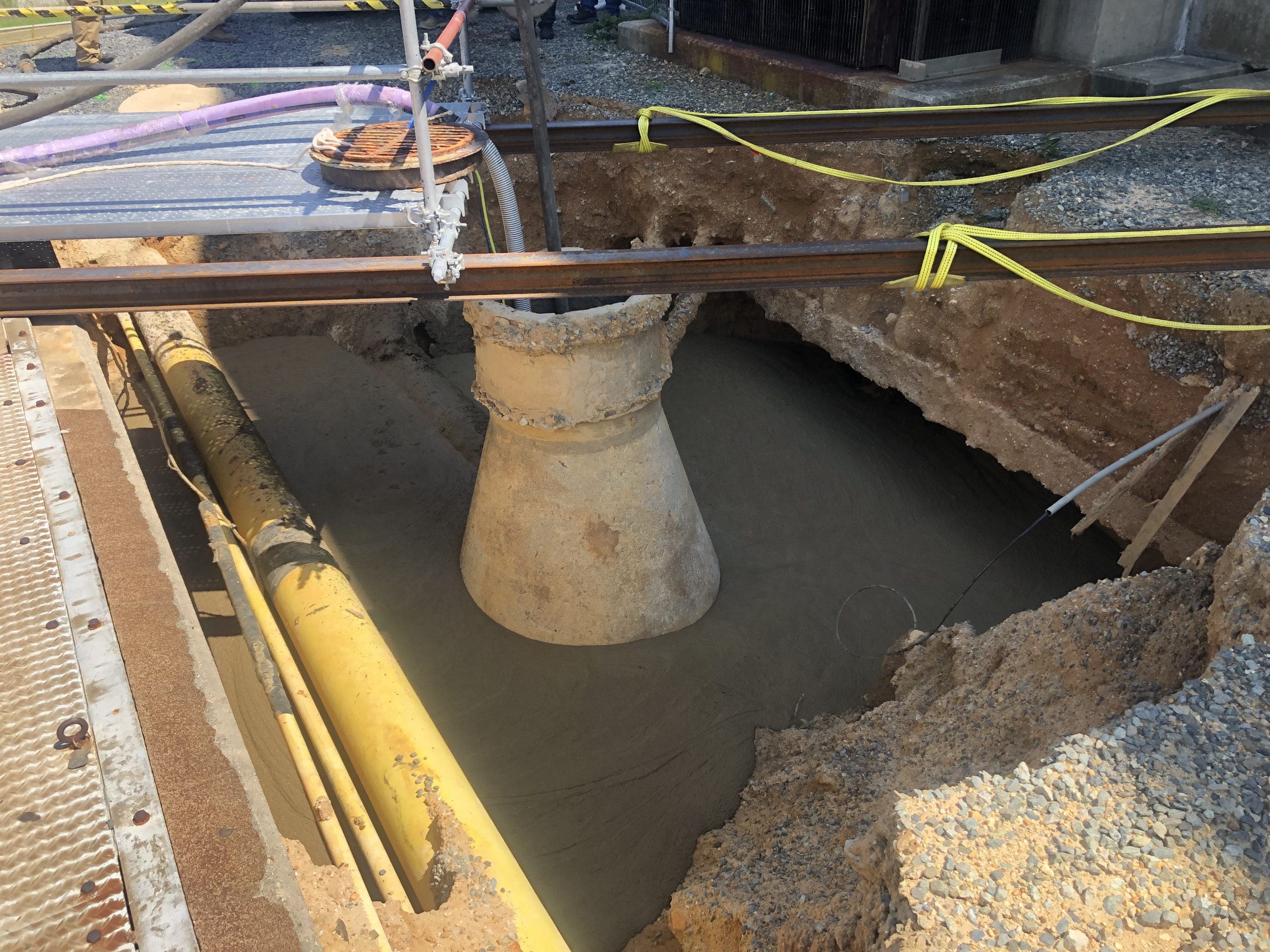
Construction site showing sinkhole repair with concrete grouting around a large pipe and exposed utility lines.

Why These Problems Escalate

As voids grow, repair scope and disruption typically increase. Subsurface void and sinkhole problems often worsen due to:

  • Continued soil migration through water pathways
  • Progressive enlargement of void areas below grade
  • Increasing surface loading from traffic or operations
  • Temporary surface repairs that do not restore subsurface support
  • Delayed response that allows the void to expand beyond the original area
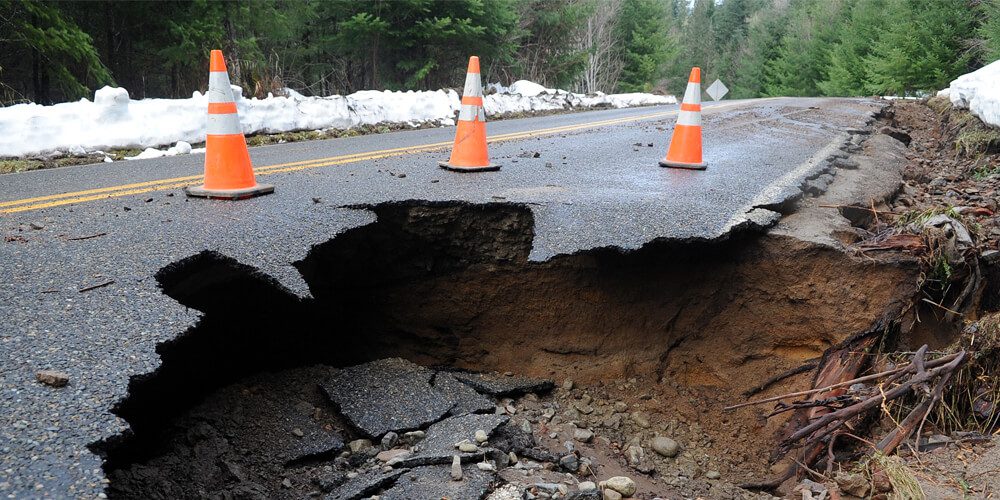
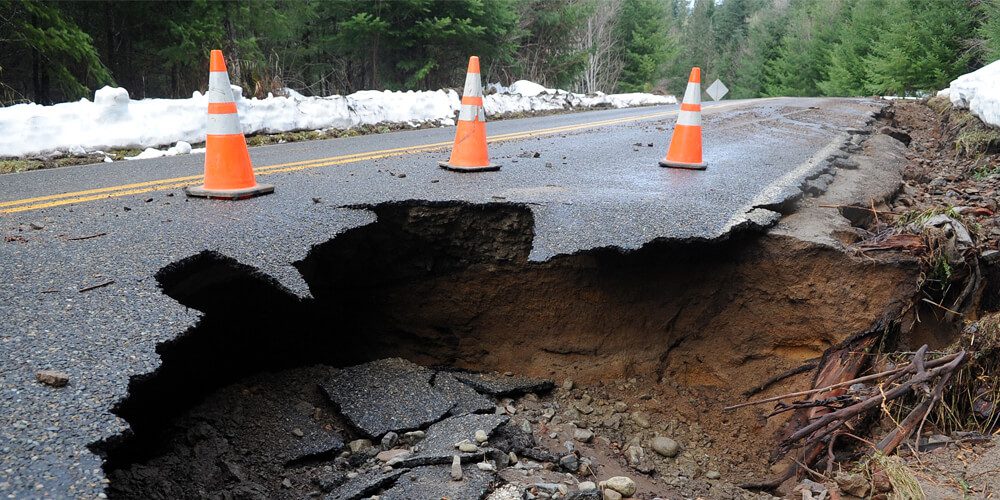
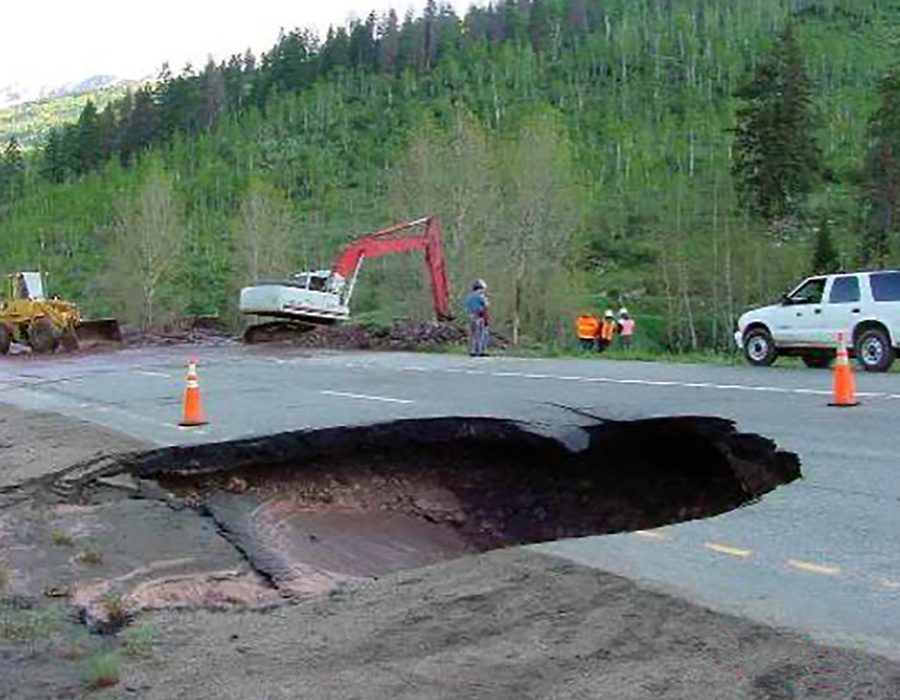
Partially collapsed roadway with a large sinkhole and traffic cones placed for safety in a snowy, forested area.

Consequences of Inaction

Early action is often the difference between controlled stabilization and emergency response. Failure to address subsurface voiding can result in:

  • Sudden pavement or slab collapse
  • Unsafe conditions for the public and crews
  • Damage to adjacent infrastructure and utilities
  • Emergency closures and operational disruption
  • Higher repair costs due to expanded failure area

Frequently Asked Questions

A void is an underground loss of support or cavity below grade. A sinkhole is the surface expression of that void when collapse or settlement becomes visible.

Not always. Some develop gradually with progressive settlement, while others collapse rapidly after triggering events such as heavy rain or continued soil loss.

Common causes include water-driven soil loss, leaking utilities, poor drainage, internal erosion, and backfill settlement.

Often, yes. Many stabilization approaches restore support without complete excavation, depending on access and site constraints.

If settlement is rapid, cracking is expanding, or collapse risk is present, it should be treated as urgent. Early evaluation reduces safety exposure and repair scope.

Related Solutions

Subsurface void and sinkhole conditions are typically addressed through engineered support restoration methods selected based on void size, depth, access constraints, and performance requirements. Common solution categories include:

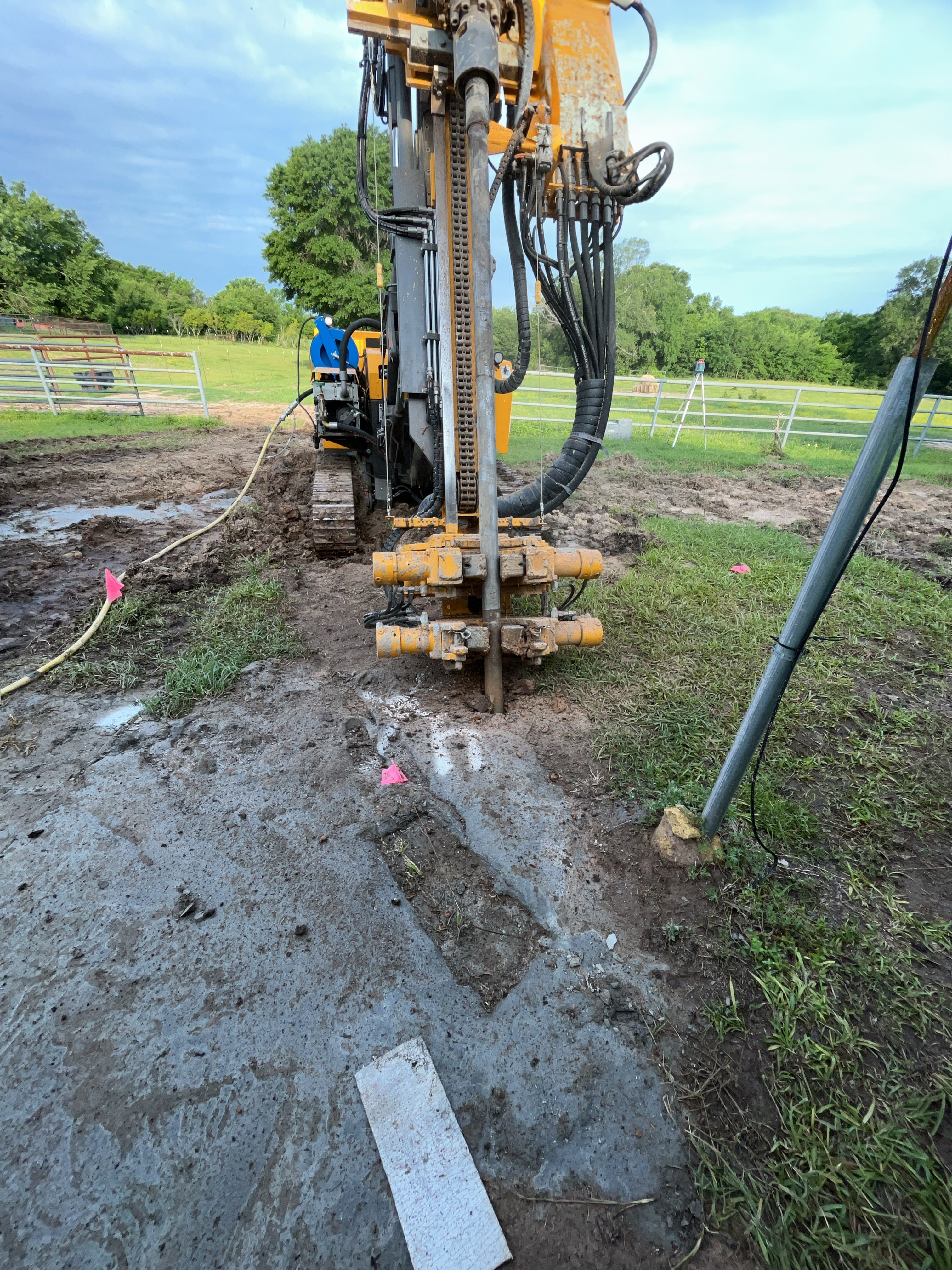
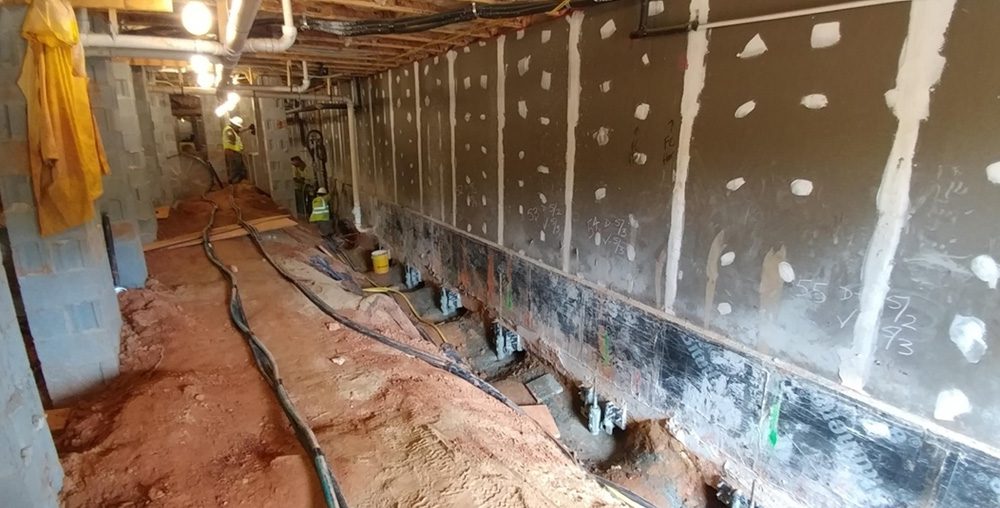
Sinkhole repair showing exposed soil and support piers along a wall.

Why Early Action Matters

Subsurface voiding is a hidden risk that can escalate quickly. Early evaluation and support restoration can prevent sudden failure, reduce disruption, and protect the long-term performance of the asset before a small depression becomes a major collapse.

How GSI Helps

No two sites are identical, and the same issue can require an immediate response, a maintenance plan, or a permanent stabilization strategy. GSI helps owners take the right next step with solutions built for safety, constructability, and long-term performance.

Emergency Response

When conditions are urgent, GSI mobilizes quickly to stabilize hazards, reduce immediate risk, and help restore safe access. Our teams deliver field-ready solutions that support critical infrastructure and prevent conditions from worsening.

Ongoing Maintenance

Some problems require recurring attention to keep corridors, slopes, and assets performing safely over time. GSI provides proactive maintenance and targeted repairs that extend service life, reduce repeat failures, and improve reliability.

Planned Stabilization

When it’s time for a permanent solution, GSI designs and builds stabilization systems tailored to site constraints and performance goals. Our teams deliver long-term improvements that strengthen durability, safety, and asset protection.

Client Reviews

Project Support for Township Client in Pennsylvania

[as told by GSI Project Development Engineer] This is the second project your company has completed for us and just like the first one a great crew to work with. Very competent, courteous, and informative … great job.

Safety-Focused Project Support for Commercial Client in Tennessee

I wanted to take a moment to express gratitude and satisfaction with the job that GSI performed for me.  This work was inside a very congested industrial environment which also had other potential hazards with the presence of alcohol. In addition to confined quarters inside the building we had extreme weather conditions taking place outside the building.  My client was on a critical path timeline and this required GSI to return the week between Christmas and New Year’s. I knew that this was a mandatory week off for GSI but your organization came through, no ifs, ands or buts.

1.) The job superintendent, Ian Turner, handled himself remarkably. He was professional and no matter what the situation he took ownership.

2.) Every person on my job site with GSI had an extraordinary attitude. Case in point: As I was giving a “pep talk” I commented, “some of you guys may be ready to go home”. Emanuel from Georgia, raised his head looked at me and said “no, we wanna finish this job”. Every single person on this project is welcome to work on my projects anytime!

3.) Jarrod Hartshorn was as stated in your company policies willing to communicate 24/7. He answered his phone night or day and if he didn’t in a short while I could expect a phone call.  Jarrod also drove to my project to check on things with me and with the crew working.

4.) One of the best safety programs I have ever witnessed! I enjoy doing “flex and stretch“ with the crew every morning. Thank you!

5.) Hats off to all those volunteers the week after Christmas.

I wish I could remember all names but a special thanks to everyone on my project [including] Preston, Emanuel, Ian, Cole, Cliff, Jarrod, Zach, and the maintenance guy from Kentucky.

Roadway Repair in Montana

In handwritten note to Brett Gustafson, Project Manager for GeoStabilization: “Brett – Thank you for your quick response to reopen Blue Slide Road in Sanders County.  Your talented team was available to complete a road for the public to travel on in less than 45 days.  Mother Nature has challenged us in Montana this year with moisture in all forms, and we appreciate your resilience in the face of those challenges.  Sincerely, Steve Bullock.

GET IN TOUCH

Contact Us Today

Subsurface void and sinkhole problems often remain hidden until rapid settlement or collapse occurs. GeoStabilization International provides targeted void filling and support restoration to stabilize infrastructure before failures escalate. Request an assessment today to reduce risk and protect long-term performance.

855.579.0536

    How Can We Help?

    • Personal Info
    • Contact Info
    • Project Info
    ***Fees May Apply For Residential Site Visits***

    How Can We Help?

    • Personal Info
    • Contact Info
    • Project Info

    How Can We Help?

    • Personal Info
    • Contact Info
    • Project Info

    By using this website, you acknowledge and agree to our Privacy Policy. This site is protected by reCAPTCHA, and the Google Privacy Policy and Terms of Service apply.