Wisconsin's Wisconsin Driftless Area (US-18, WI-35 Great River Road), Door Peninsula cliffs, Lake Superior bluffs traverse fractured rock formations that produce rockfall events ranging from individual block failures to massive cliff collapses. Freeze-thaw cycling, root wedging, and progressive weathering loosen blocks along discontinuities until gravity takes over—sending rock onto travel lanes, damaging vehicles, and forcing emergency closures on corridors that carry thousands of vehicles daily.
Each closure triggers detour routing, emergency response costs, and economic disruption that compounds until the source hazard is permanently addressed. WisDOT manages these rockfall zones knowing that reactive cleanup after each event costs more than engineered protection that prevents events from reaching the roadway.
Rock bolts mechanically pin identified unstable blocks to competent rock behind them—preventing release before it occurs. GSI specifies bolt lengths, patterns, and anchorage based on mapped discontinuity orientations and block geometry at each Wisconsin site.
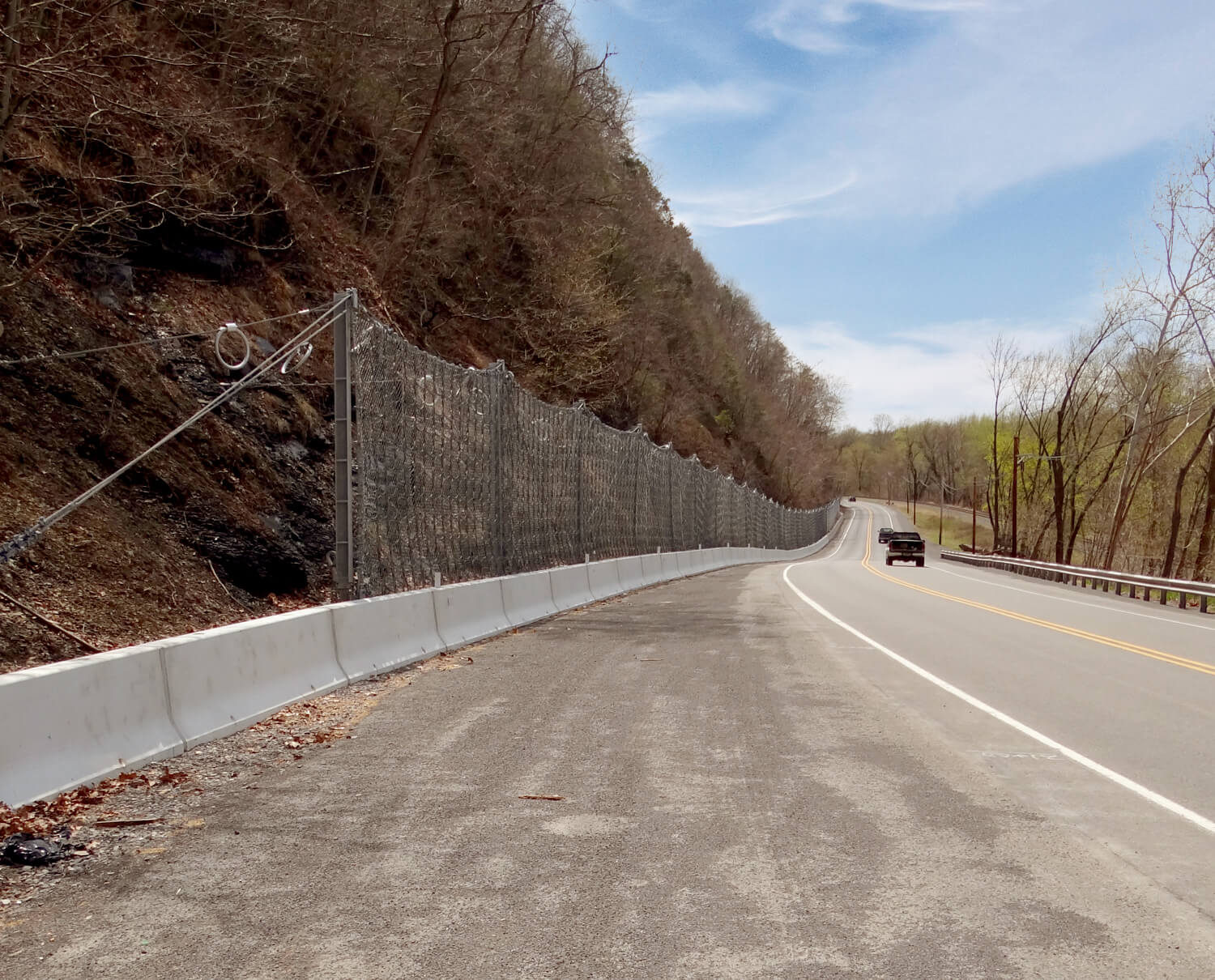
Where source area treatment alone cannot eliminate rockfall risk, GSI designs interception systems—attenuator fences that decelerate falling rock and containment barriers that stop it before reaching travel lanes. Each barrier is specified using 3D trajectory simulation calibrated to Wisconsin's specific slope geometry and rock block characteristics.
Precision removal of loose and marginally stable rock eliminates the source material before it releases. GSI's Rockfall Remediation Technicians work on vertical faces via industrial rope access—removing hazards from terrain where no conventional equipment can operate.

GSI's engineering team is ready for your Wisconsin rockfall mitigation challenge. Get your site-specific assessment today.