West Virginia's eastern panhandle and Kanawha Valley contain clay-rich residual soils derived from Devonian shale and Mississippian mudstone parent rock—formations that swell significantly when absorbing moisture and shrink during dry periods. This seasonal volume change cracks highway pavements, distorts bridge approach slabs, ruptures buried utilities, and progressively damages commercial foundations across affected corridors. GeoStabilization International engineers chemical stabilization programs and structural underpinning systems that permanently eliminate expansive soil movement.
Our ground improvement specialists design treatment programs using site-specific swell potential testing and mineralogical analysis—ensuring the correct chemical agent and dosage for West Virginia's specific clay characteristics.
West Virginia's eastern panhandle and Kanawha Valley contain residual clay soils derived from Devonian shale and Mississippian mudstone that exhibit significant swell-shrink behavior. Seasonal moisture changes drive ground movements of 1-4 inches that progressively damage highway pavements, bridge approach slabs, utility lines, and commercial foundations. WVDOH and infrastructure operators across these regions face recurring maintenance costs that conventional surface repairs cannot eliminate because the underlying soil movement continues unchecked.
GeoStabilization International engineers chemical stabilization programs that permanently modify the clay mineralogy driving expansion. Lime, cement-kiln dust, or proprietary chemical injection reduces swell potential by 60-80%—permanently eliminating the seasonal moisture-driven volume change. Treatment depths are designed using site-specific swell potential testing, Atterberg limits analysis, and moisture profiling to ensure complete modification of the active zone.
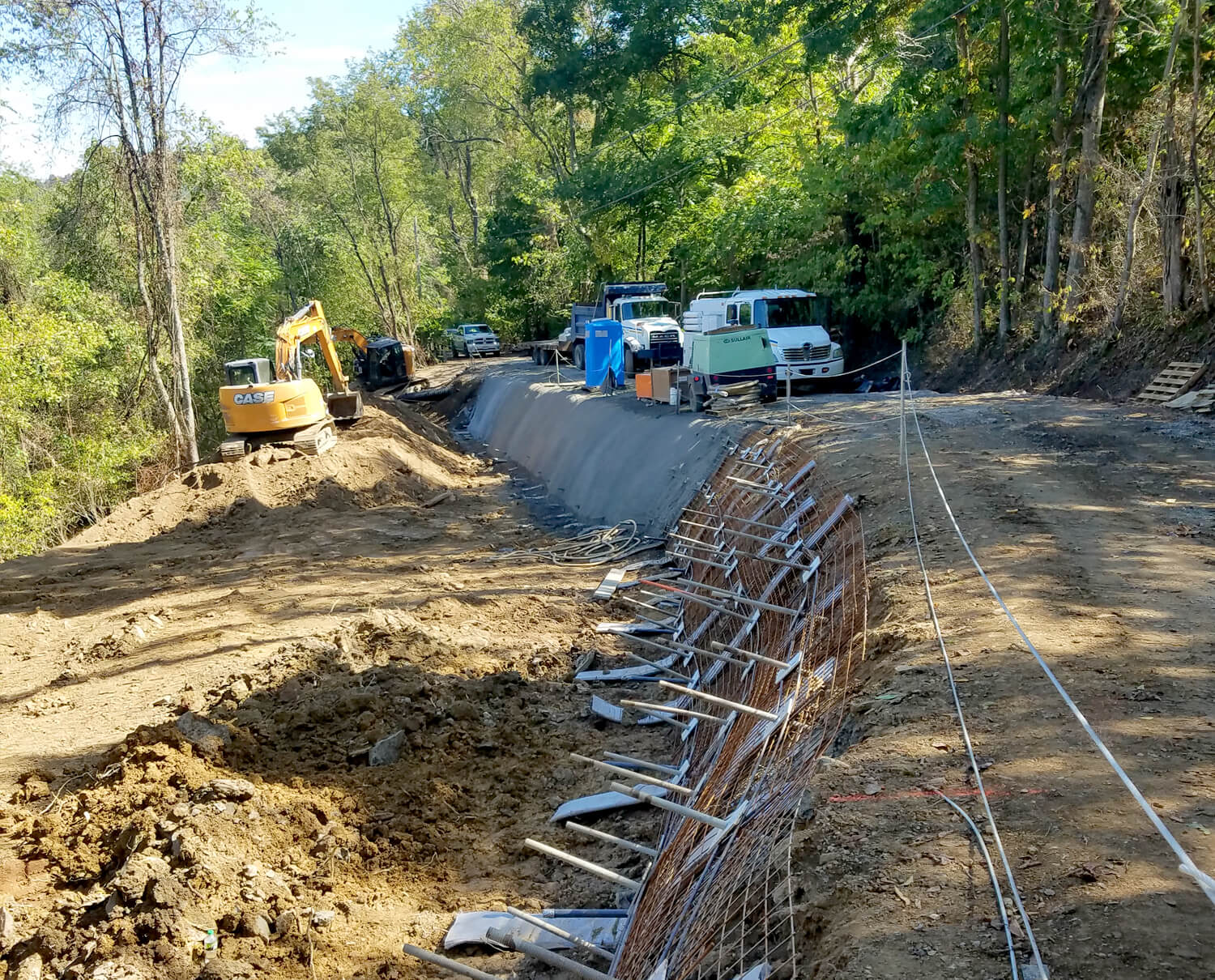
For structures already damaged by expansive soil movement, GeoStabilization International installs helical pier systems and structural underpinning that transfer foundation loads below the active zone to stable bearing strata. These systems permanently decouple the structure from expansive soil movement—stopping the damage cycle and providing a permanent return on investment that eliminates annual repair costs.
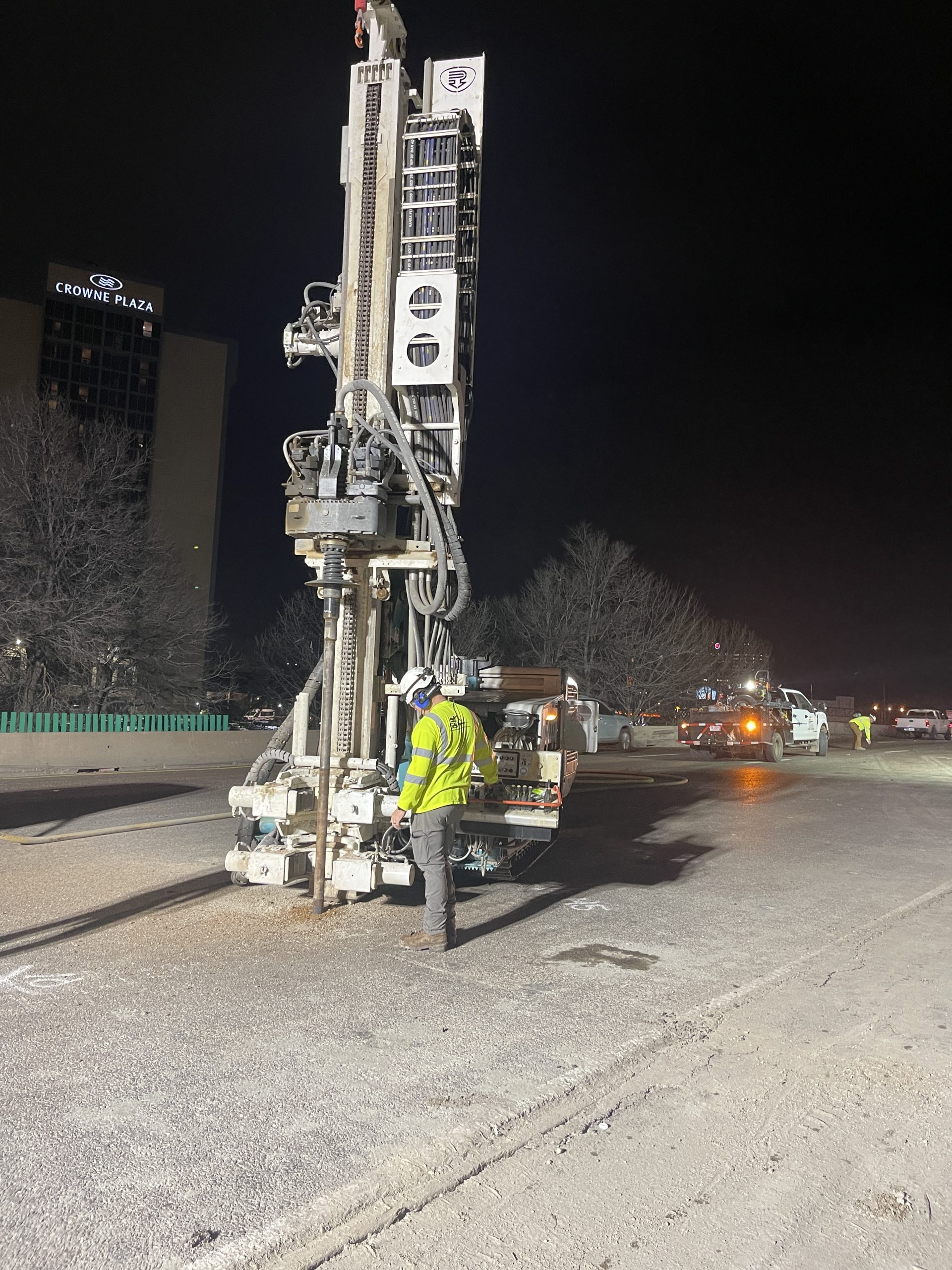
Traditional expansive soil maintenance—patching, mudjacking, seasonal adjustment—addresses the symptom while the swell cycle continues. GeoStabilization International's chemical stabilization permanently modifies the clay mineralogy. Once treated, the soil no longer swells. This eliminates annual maintenance costs and provides a permanent return on investment. Our 8,000+ completed projects include expansive soil treatment across multiple Appalachian and mid-Atlantic settings, bringing proven techniques to every West Virginia project.
Stop the annual repair cycle. GeoStabilization International's chemical stabilization permanently modifies the clay that's destroying your West Virginia infrastructure. One treatment. Done.