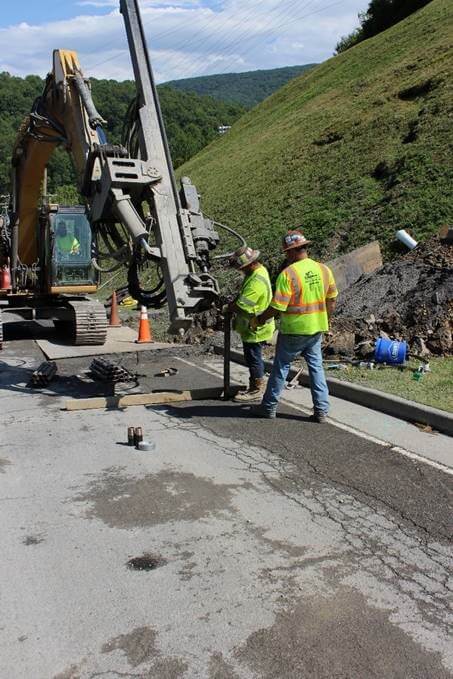
Virginia's Shenandoah Valley limestone belt—extending through Frederick County, Warren County, and the broader Valley region—contains karst terrain where sinkholes form as subsurface dissolution voids propagate through carbonate bedrock and overlying residual soils. I-81, US-11, and regional commercial corridors cross active karst zones where new sinkholes threaten highway safety and infrastructure integrity. GeoStabilization International deploys targeted void filling and compaction grouting that addresses the complete subsurface void system—not just the surface collapse.
Our ground improvement engineers characterize void geometry using borehole investigation, downhole cameras, and ground-penetrating radar before designing injection programs that fill voids completely and restore load-bearing capacity across the treatment zone.
The Shenandoah Valley's limestone belt—extending from Frederick County through Warren County and beyond—sits atop some of the most dissolution-active carbonate bedrock in the mid-Atlantic region. Sinkholes form when subsurface voids propagate upward through residual clay overburden, collapsing suddenly when the soil can no longer bridge the expanding cavity. I-81, US-11, and commercial corridors across the Valley cross active karst zones where sinkhole formation threatens highway safety, utility integrity, and commercial infrastructure.
GeoStabilization International's sinkhole repair addresses the complete void system. Compaction grouting densifies the disturbed overburden above the void. Targeted void filling injects cementitious grout into the dissolution cavity itself. Chemical grouting seals fracture pathways that allow continued soil migration into developing voids. Each treatment component is designed using detailed subsurface investigation—borehole drilling, downhole cameras, and ground-penetrating radar that maps void geometry before injection begins.
GeoStabilization International offers proactive subsurface assessment for Virginia infrastructure in sinkhole-prone terrain. GPR surveys, microgravity mapping, and systematic borehole programs identify developing voids before they reach the surface—enabling preventive grouting at a fraction of emergency repair cost. VDOT and Virginia's infrastructure operators benefit from this proactive approach to karst hazard management across the Shenandoah Valley.
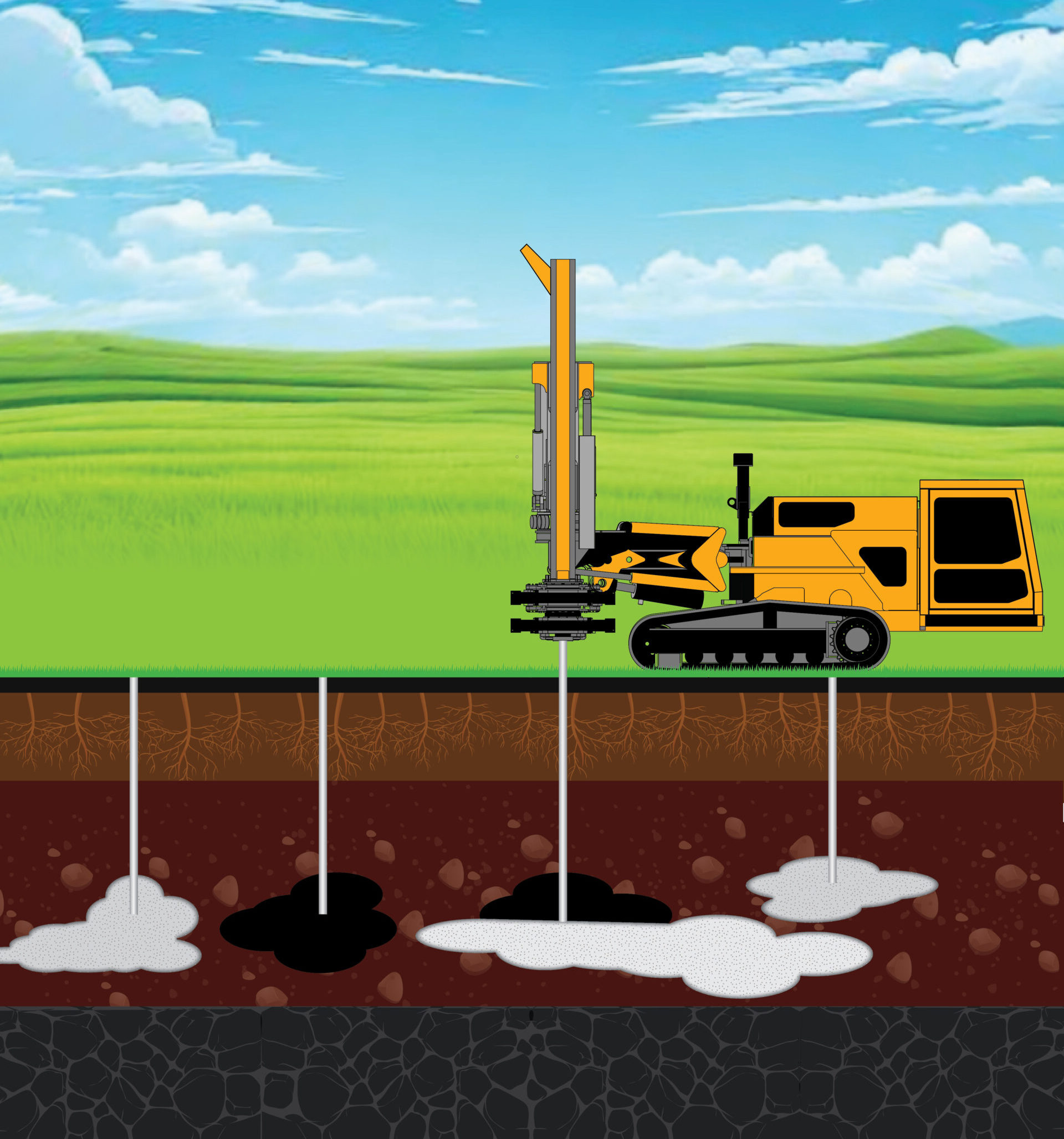
Emergency sinkhole repair costs 3-5x more than proactive void treatment. GeoStabilization International offers subsurface assessment programs for Virginia infrastructure in karst terrain—using GPR, microgravity surveys, and systematic borehole programs to identify developing voids before surface collapse. Preventive grouting fills voids at a fraction of emergency cost, keeping Shenandoah Valley roads open and infrastructure intact. The 8,000+ projects in our performance database inform every assessment we conduct.
Infrastructure owners share their experience with GeoStabilization International's void filling and grouting programs—verified through post-treatment testing.
Stop patching surface collapses. GeoStabilization International's void filling programs address the complete subsurface system beneath your Shenandoah Valley infrastructure.