Oregon's Coast Range, Columbia River Highway (US-30), OR-35 through Hood River, and I-84 through the Gorge experience chronic landslide conditions driven by saturated clay soils, ancient landslide deposits, and intense Pacific storms. ODOT manages hundreds of active and dormant landslide sites across the state, requiring engineering solutions that address deep-seated failure planes. GeoStabilization International installs soil nail walls, ground anchor tiebacks, and engineered retaining structures using proprietary technology that works in ground conditions where conventional methods fail.
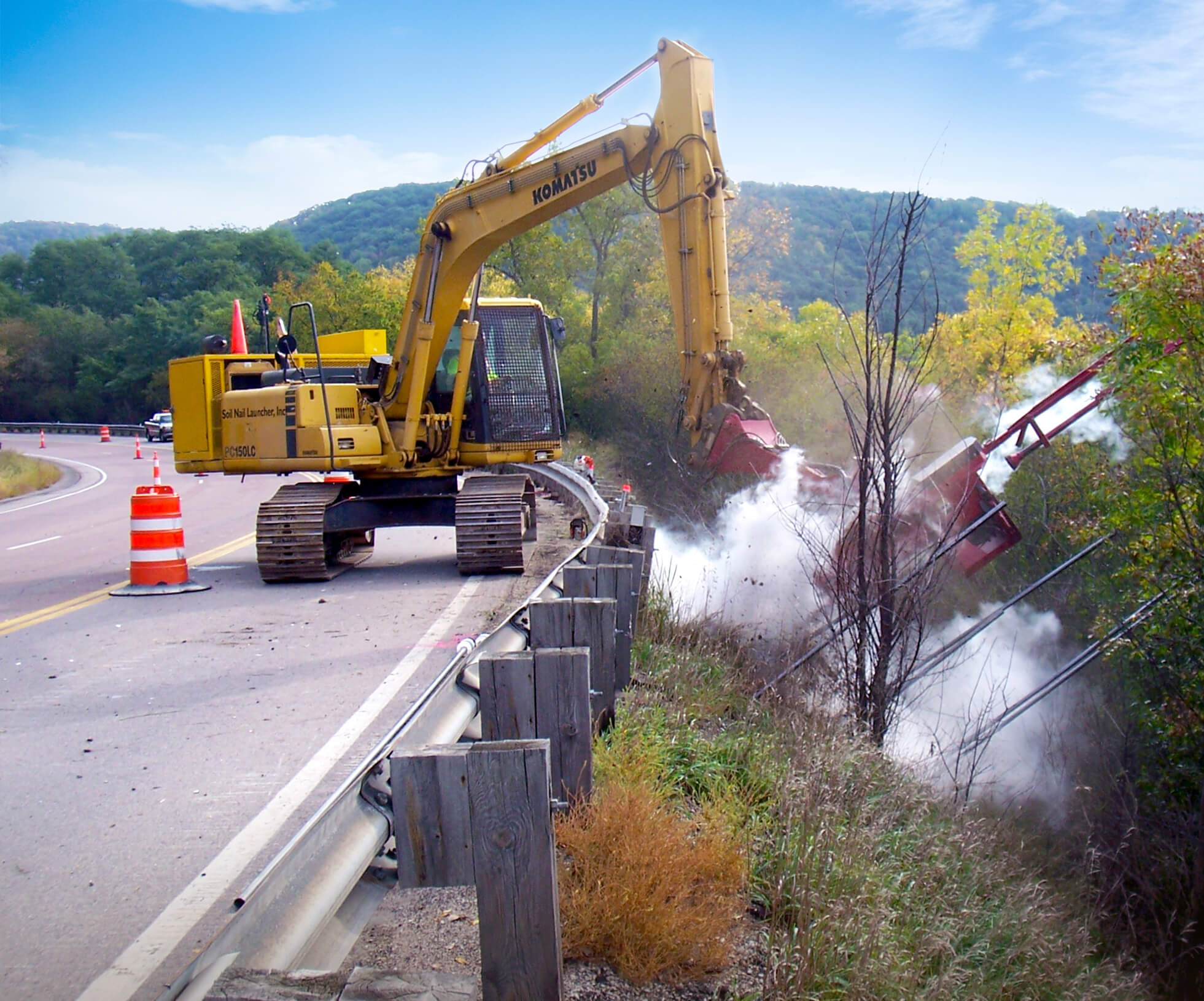
Our Soil Nail Launcher™ fires SuperNails™ into actively moving slides without excavation—a capability essential in Oregon's moisture-sensitive, collapse-prone soils.
Oregon's combination of heavy Pacific rainfall, ancient landslide deposits, and clay-rich volcanic soils creates one of the nation's highest concentrations of active landslide sites. ODOT manages chronic slope instability along US-30 (Columbia River Highway), OR-35 through Hood River, I-84 through the Gorge, and Highway 101 along the Coast Range. Many of these slides have been patched repeatedly with temporary fixes that address surface symptoms while the deep-seated failure plane continues to move.
GeoStabilization International engineers landslide repairs that target the failure mechanism at depth—not just the surface expression. Soil nail walls intercept shallow failure planes with dense reinforcement arrays. Ground anchor tiebacks extend through the slide mass into competent bearing strata, preventing reactivation. Engineered retaining systems redistribute lateral earth pressures to stable foundations. Every solution is designed by our in-house geotechnical engineers using site-specific subsurface data.
Oregon's landslide repair projects benefit from GSI's integrated design/build model. One team designs the solution and constructs it—eliminating the 6-12 month gap between design completion and construction start that plagues traditional design-bid-build procurement. This compressed timeline is critical when slopes are actively moving and every week of delay increases the remediation scope and cost.
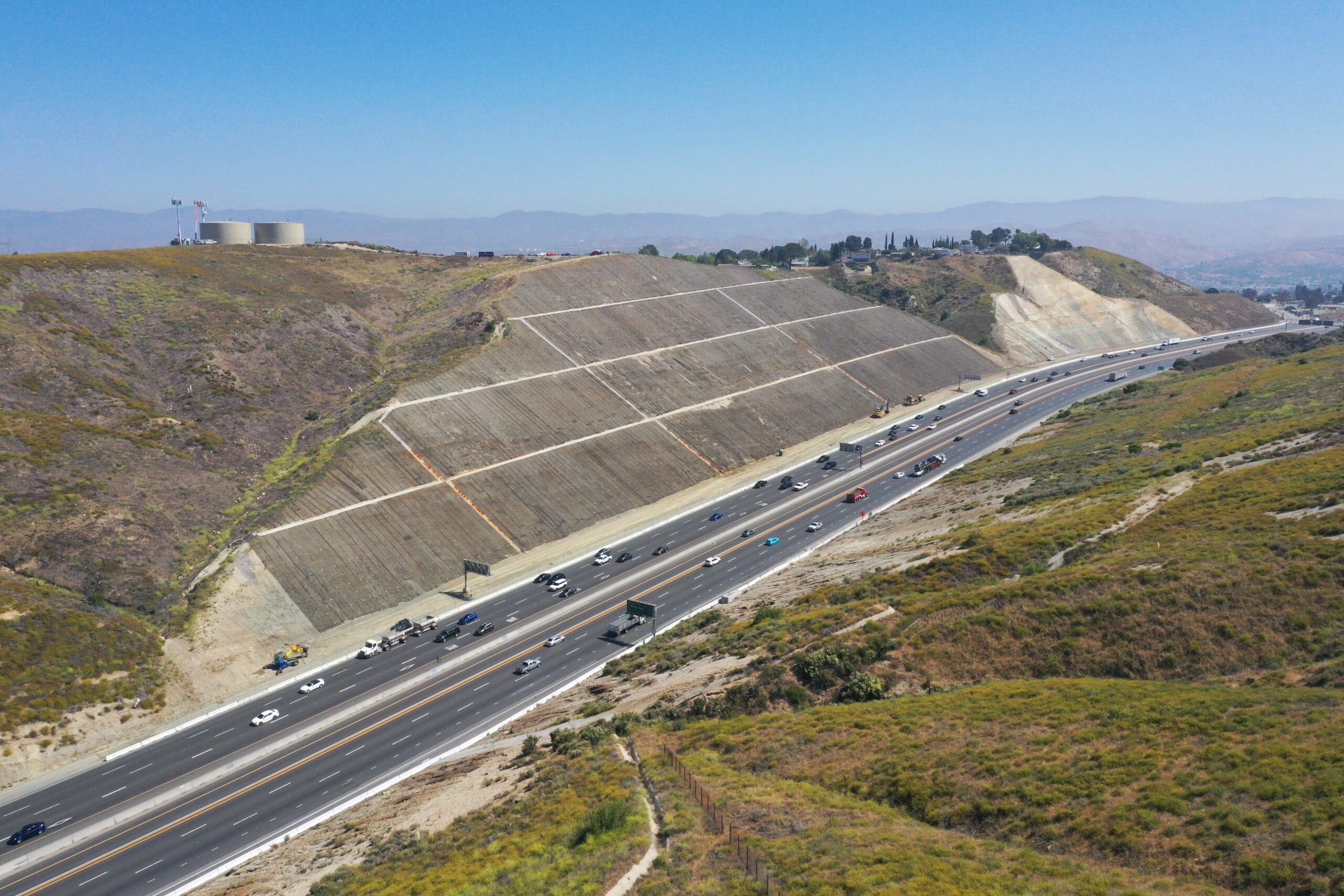
Oregon's landslide repair projects suffer when split across separate design consultants and construction contractors—creating coordination gaps, change orders, and schedule overruns that inflate costs and extend timelines. GeoStabilization International eliminates this fragmentation. Our in-house geotechnical engineers design the solution. Our field crews build it. One contract covers the entire scope. And our design/build/warranty model means we stand behind the performance of every nail, anchor, and retaining element we install—because the team that designed it is the team that built it.
From emergency response speed to engineering depth, here's what our project partners say about working with GSI.
ODOT corridors deserve permanent landslide solutions—not temporary patches. GeoStabilization International's design/build team delivers engineered repairs under one contract. Call now.