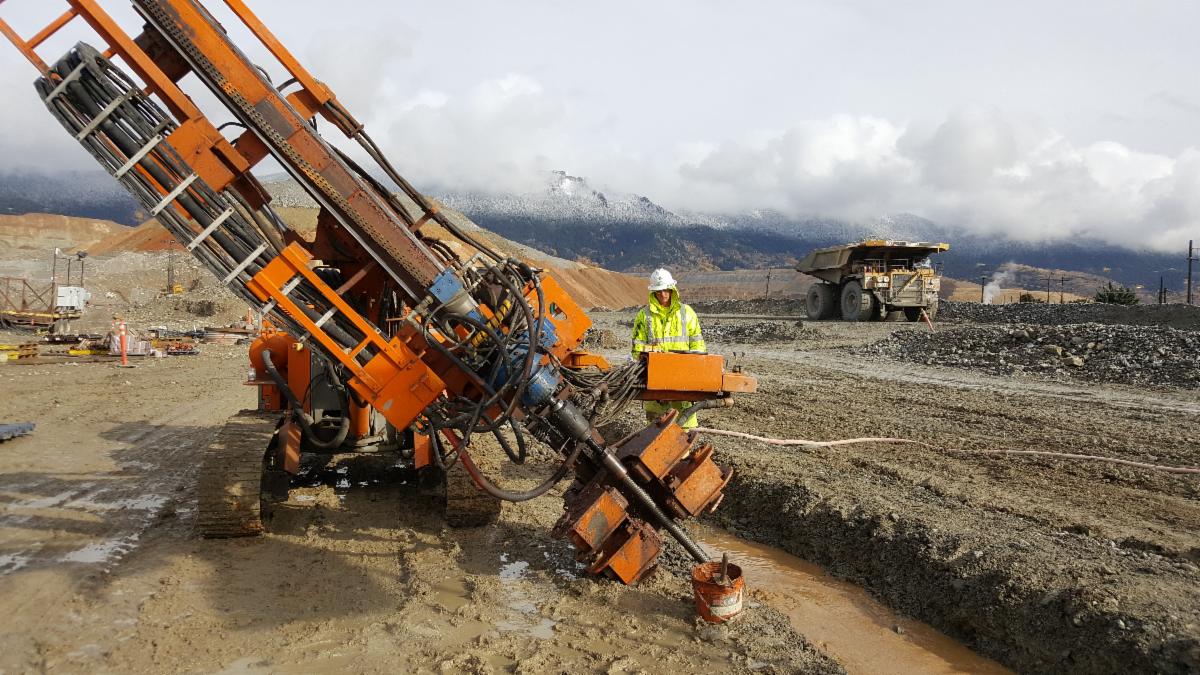
Ohio has an estimated 8,000 abandoned underground mines covering more than 600,000 acres — the vast majority concentrated in the coal-mining counties of eastern and southeastern Ohio. In Guernsey County alone, the problem has forced ODOT emergency response twice on Interstate corridors. In March 1995, a section of I-70's eastbound travel lane collapsed into an abandoned coal mine. The remediation required drilling approximately 1,800 injection holes and placing roughly 50,000 cubic yards of grout into water-filled mine voids at a cost of approximately $3.6 million. On I-77 in Summit County, ODOT stabilized 800 feet of interstate underlain by coal mine workings while keeping all lanes open — a project that required real-time ground deformation monitoring to protect the traveling public during grouting operations.
Ohio requires mine subsidence insurance in 26 mandatory counties across the eastern coalfields — including Guernsey, Muskingum, Perry, Hocking, and 22 others — a direct acknowledgment of how widespread and active this risk remains.
GeoStabilization International delivers compaction grouting and void filling programs engineered for Ohio's coal mine conditions — with in-house geotechnical engineers who investigate, design, and manage field execution under a single ODOT-ready contract.
Ohio's abandoned coal mines present subsidence conditions that vary significantly across the eastern coalfields. Void depth, overburden composition, groundwater saturation, and the degree of pillar deterioration all differ between Guernsey County's deep Allegheny Formation workings and the shallower room-and-pillar mines of Perry or Hocking counties. A treatment program designed without site-specific investigation of those variables risks missing the actual failure mechanism — as the I-70 experience demonstrated, where mine dewatering triggered previously stable conditions to fail.
Water behavior in abandoned mines is a critical factor in Ohio. Mines that fill with water after abandonment gain temporary buoyant support for the mine roof. When that water level drops — through dewatering, seasonal fluctuation, or adjacent mining activity — roof support is lost and subsidence risk spikes rapidly. GeoStabilization International's investigation programs account for mine hydrology alongside void geometry and overburden conditions before any grouting design is finalized.
Confirming that void fill is complete is as important as the grouting program itself. GeoStabilization International uses borehole camera systems and real-time injection monitoring to verify fill extent during treatment — not just document volume placed. For ODOT corridors where the consequences of incomplete treatment include emergency lane closures, that verification step is what separates a warranted repair from one that requires a return visit.
ODOT and Ohio's infrastructure operators rely on GeoStabilization International's integrated engineering and construction delivery. Our engineers apply geophysical survey methods — including ground penetrating radar, seismic refraction, and electromagnetic terrain conductivity — alongside traditional boring programs to characterize void locations and overburden conditions before treatment begins. When subsurface conditions differ from initial findings during drilling — a frequent reality in Ohio's variable coalfield geology — our team adjusts the treatment program without breaking project momentum.
Over 600,000 acres of Ohio sit above abandoned mine workings, and conditions continue to change as mines age, water levels fluctuate, and infrastructure loads increase. GeoStabilization International's engineers are ready to investigate your site, design a treatment program built for eastern Ohio's coal mine geology, and deliver it under a performance warranty. Request a subsidence assessment to get started.