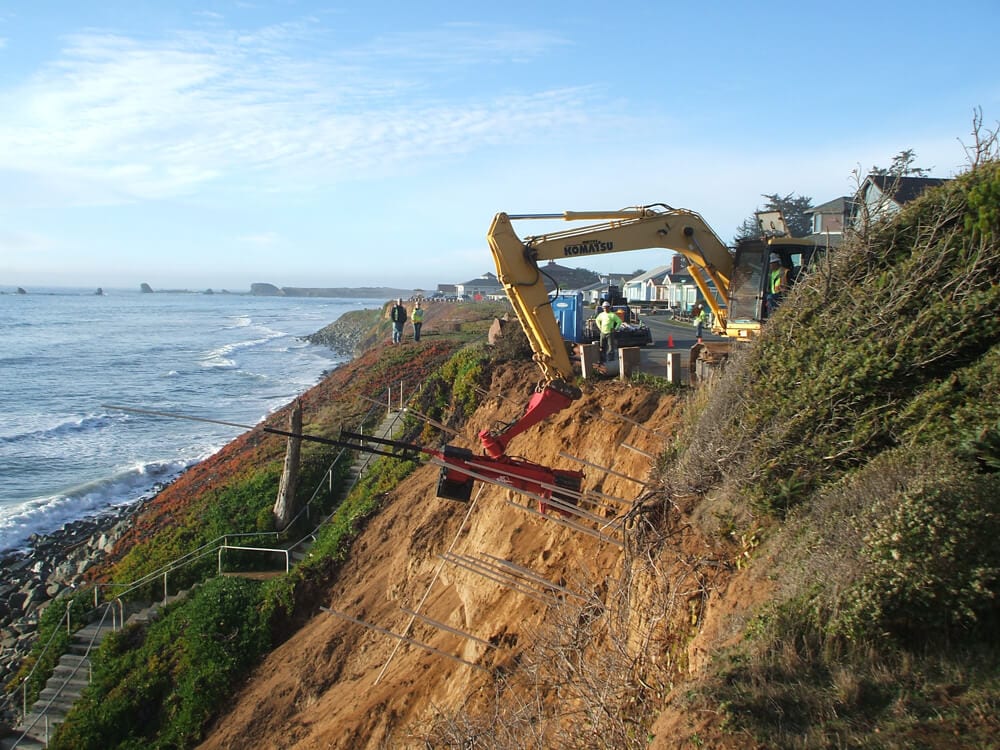
New Jersey’s 130-mile Atlantic coastline—from Sandy Hook to Cape May—faces persistent coastal geohazards driven by Nor’easters, hurricane storm surge, wave runup, tidal inlet migration, and longshore sediment transport. These forces continually reshape the Jersey Shore’s barrier island system, threatening transportation corridors, coastal infrastructure, and densely developed communities. Areas such as Long Beach Island, Island Beach State Park, and the Cape May peninsula experience shoreline retreat, dune erosion, and storm overwash during major storm events.
GeoStabilization International designs and installs engineered coastal stabilization systems that address these dynamic shoreline hazards while meeting New Jersey Department of Environmental Protection (NJDEP) coastal permitting requirements. Our solutions integrate storm surge and wave modeling, sediment transport analysis, and slope stability assessments to develop revetment systems, erosion control measures, and bioengineered stabilization designed to perform under the severe Nor’easter and hurricane conditions common along the Jersey Shore.
Hurricane Sandy in 2012 highlighted the vulnerability of the state’s coastal system. Extreme storm surge, wave attack, and dune overtopping caused widespread erosion and infrastructure damage along the barrier island chain. Many areas experienced rapid beach loss, slope instability, and structural failures where protective systems were inadequate or poorly integrated with coastal processes.
As sea level rise accelerates and storms intensify, these coastal geohazards will continue to threaten transportation corridors, utilities, public infrastructure, and private development across the Jersey Shore.
GeoStabilization International provides engineered stabilization solutions designed specifically for coastal geohazard conditions. Our systems combine structural protection with nature-based stabilization techniques to enhance long-term shoreline resilience.
Solutions may include:
Engineered Revetment Systems
Rock and articulated block revetments designed to dissipate wave energy
Toe protection systems to prevent scour and structural undermining
Reinforced slope stabilization to protect coastal bluffs and embankments
Dune and Bluff Stabilization
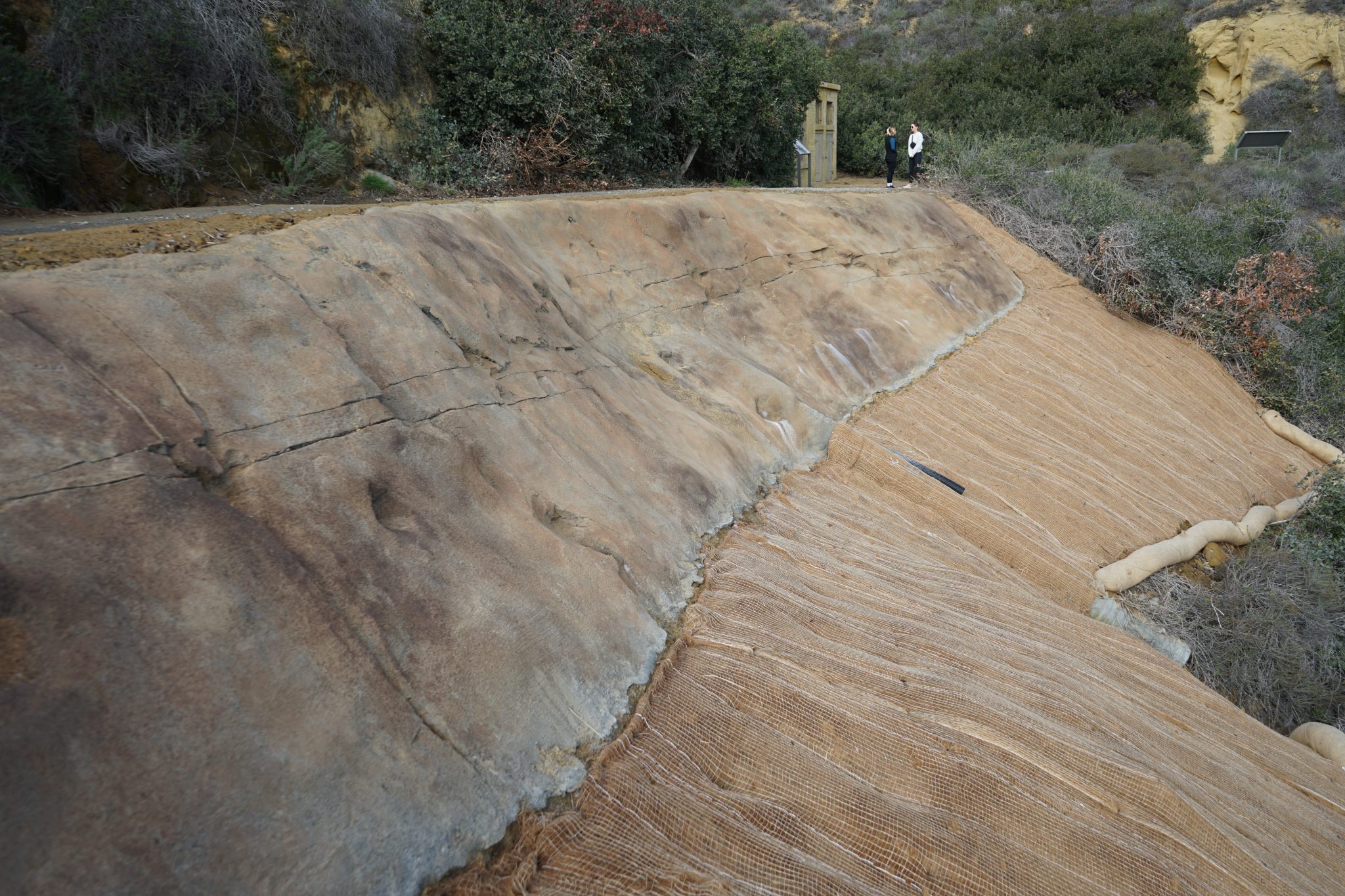
Soil bioengineering systems using deep-rooted vegetation and geosynthetics
Reinforced dune systems to resist erosion and storm overwash
Vegetated stabilization for coastal slopes and infrastructure corridors
Ground Improvement and Erosion Control
Geotechnical stabilization of unstable coastal soils
Surface and subsurface drainage solutions to reduce erosion
Erosion control systems for roadways, seawalls, and shoreline infrastructure
These systems are engineered to perform under hurricane-driven wave loading, storm surge conditions, and the evolving shoreline dynamics of New Jersey’s barrier island coast.
Coastal construction in New Jersey requires compliance with NJDEP Coastal Zone Management rules and environmental permitting standards. Projects must demonstrate compatibility with coastal processes, protection of public access, and preservation of sensitive habitats.
GeoStabilization International integrates permitting considerations into the earliest phases of project development. Our designs incorporate structural stabilization, habitat considerations, and regulatory compliance from the outset—helping projects advance efficiently through NJDEP review while delivering resilient coastal protection.
Jersey Shore and Atlantic coast stakeholders share their experience with GeoStabilization International's hurricane-rated coastal solutions.
The next Nor'easter is coming. GeoStabilization International designs Sandy-rated coastal protection for New Jersey's barrier islands and shoreline infrastructure.