Along New Hampshire's I-93 Franconia Notch, fractured rock formations produce rockfall that drops onto highway corridors with no advance warning. The rock masses above these roadways deteriorate progressively—each freeze-thaw cycle, each rain event, each root intrusion widens fractures until blocks release. The damage pattern is predictable; the timing of individual events is not.
Highway agencies across New Hampshire face a choice: wait for events and pay emergency cleanup costs repeatedly, or invest in engineered protection that intercepts rockfall before it reaches the travel lanes. The lifecycle economics consistently favor protection—but only when the protection is engineered for the specific rock mass and trajectory characteristics at each site.
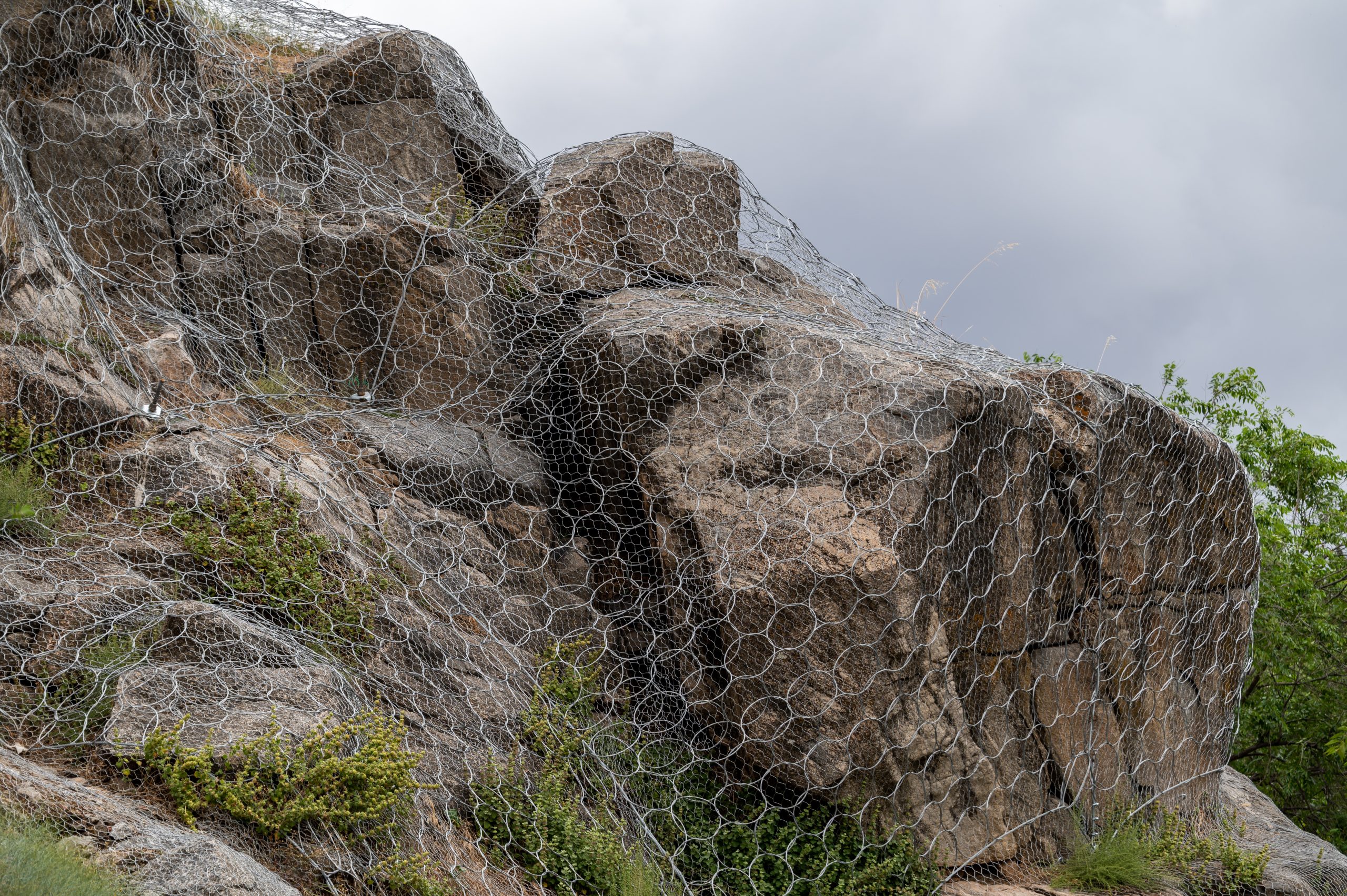
Rock bolts mechanically pin identified unstable blocks to competent rock behind them—preventing release before it occurs. GSI specifies bolt lengths, patterns, and anchorage based on mapped discontinuity orientations and block geometry at each New Hampshire site.
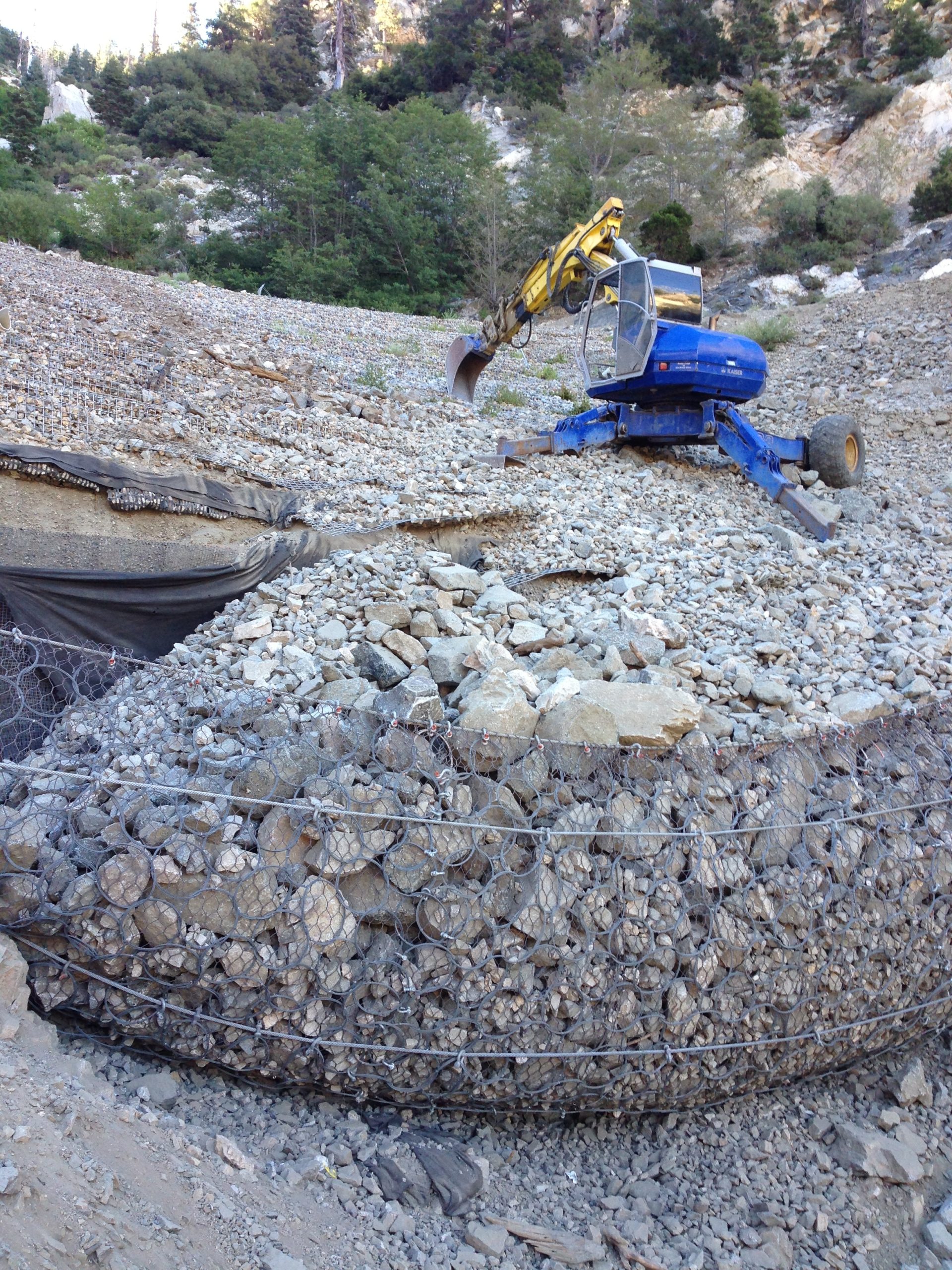
Where source area treatment alone cannot eliminate rockfall risk, GSI designs interception systems—attenuator fences that decelerate falling rock and containment barriers that stop it before reaching travel lanes. Each barrier is specified using 3D trajectory simulation calibrated to New Hampshire's specific slope geometry and rock block characteristics.
Precision removal of loose and marginally stable rock eliminates the source material before it releases. GSI's Rockfall Remediation Technicians work on vertical faces via industrial rope access—removing hazards from terrain where no conventional equipment can operate.
GSI's engineering team is ready for your New Hampshire rockfall mitigation challenge. Get your site-specific assessment today.