New Hampshire's White Mountains, Ossipee Range produce recurring slope failures driven by saturated soils, weak geologic structures, and progressive weathering that reduces soil strength over time. When rainfall or snowmelt raises pore water pressure along failure surfaces, slope masses mobilize—burying road sections, shearing utility lines, and threatening structures downslope.
NHDOT has historically managed these failures with emergency patching—regrading the slide mass, repaving the road, and reopening the corridor. But patching does not address the failure mechanism. The same slope fails again the next wet season, and the cycle of emergency response, temporary repair, and repeated failure consumes maintenance budgets without producing lasting stability.
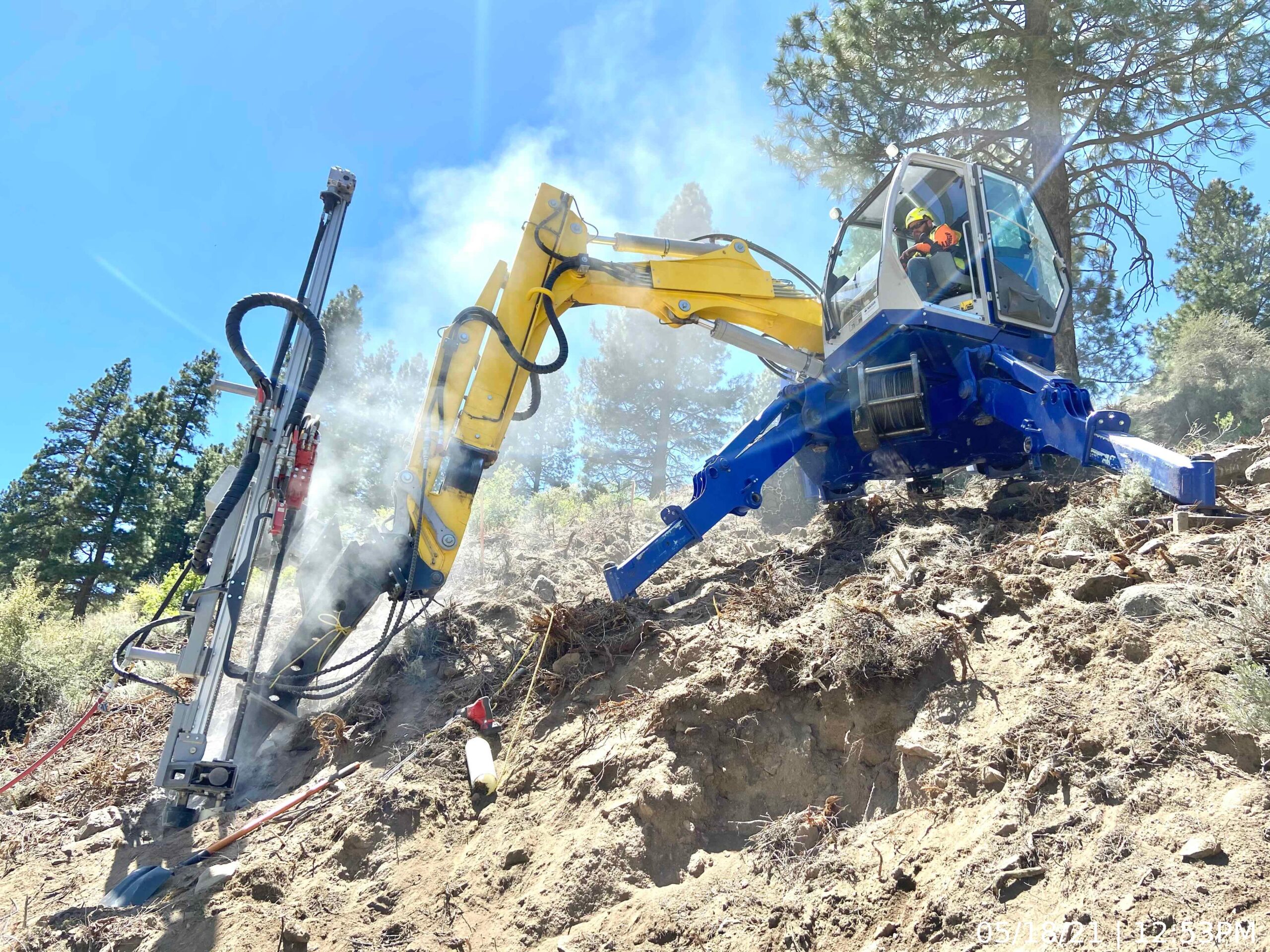
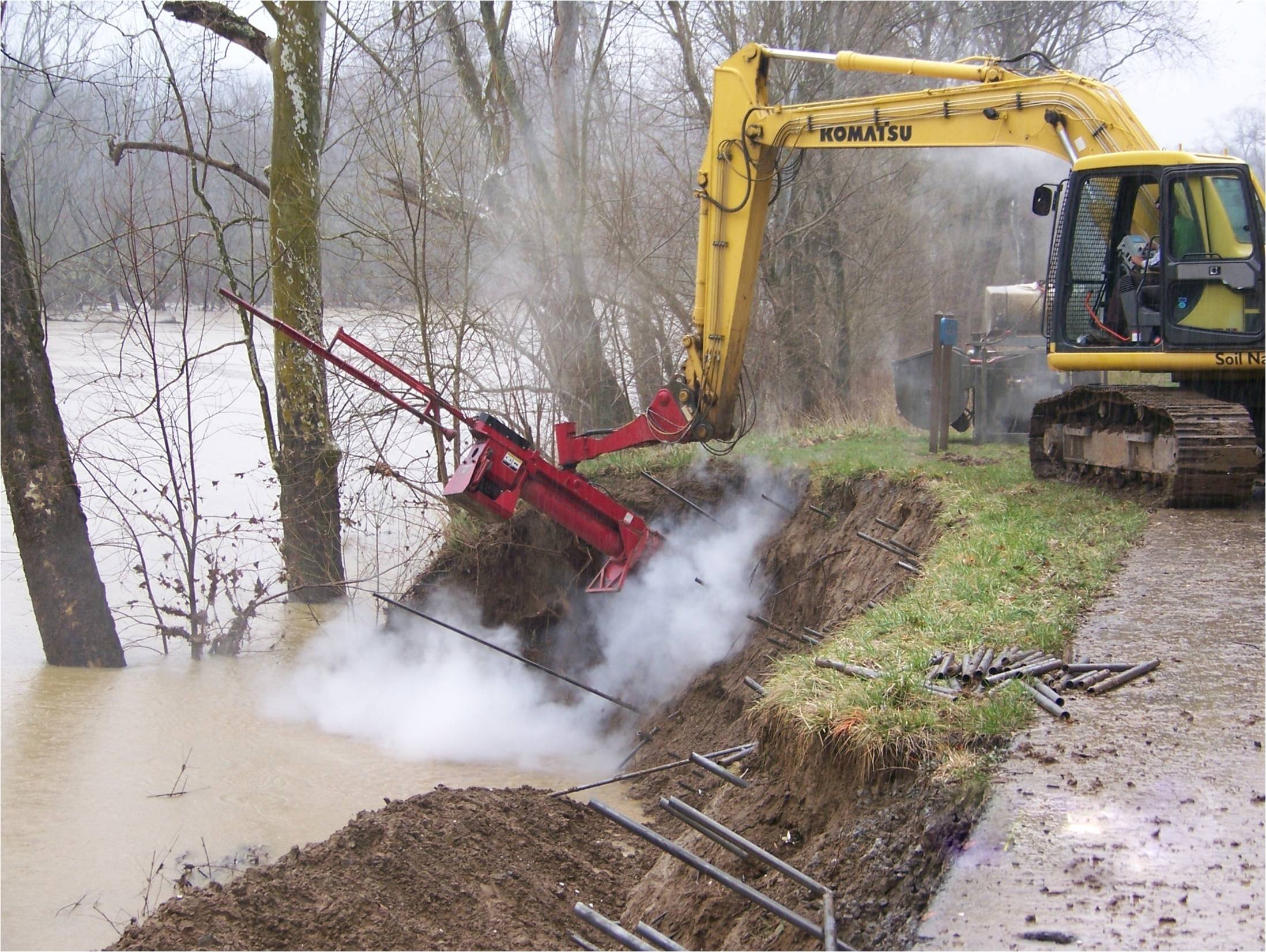
Soil nailing reinforces failed slopes from within—driving steel reinforcement through the slide mass into stable material below the failure surface. The nailed zone resists the driving forces causing movement. GSI installs soil nails using both conventional drilling and the patented Soil Nail Launcher™, which fires SuperNails™ into saturated, actively moving ground without excavation.
Where New Hampshire's slopes fail along shallow surfaces, driven steel pins provide rapid, cost-effective reinforcement without full soil nail wall construction. Combined with surface drainage improvements, slope pins arrest shallow translational failures common in weathered residual soils.
Water is the trigger for virtually every landslide in New Hampshire. GSI designs drainage systems that reduce pore water pressure within the slope mass. Combined with reinforcement, drainage provides the layered defense that prevents future reactivation.
GSI's engineering team is ready for your New Hampshire landslide repair challenge. Get your site-specific assessment today.