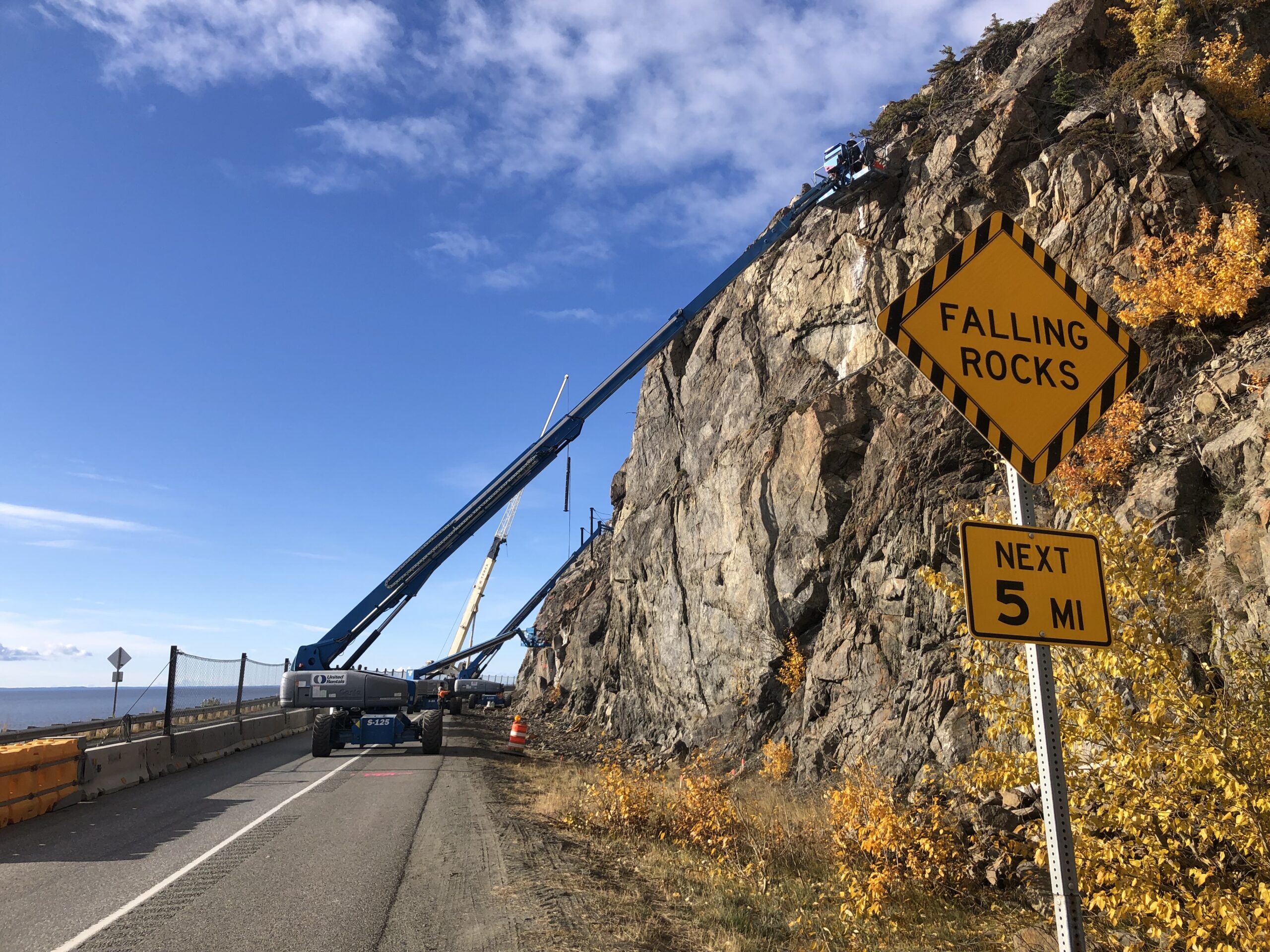
Nevada's geology creates rockfall conditions that are both widespread and difficult to predict. The state's basin-and-range structure — defined by fault-bounded mountain ranges rising steeply from valley floors — puts rock cuts and natural slopes directly above critical highway corridors. Along I-80 through the Humboldt Range, fractured and jointed rock faces shed debris onto one of the state's most traveled freight routes. US-50 traverses exposed ridge and canyon terrain across central Nevada where roadside cuts have limited catchment space. Lake Tahoe basin roads contend with granitic slopes that fracture along joint planes and produce sudden block failures.
Compounding the terrain challenge, Nevada is the third most seismically active state in the nation — and seismic shaking is a documented trigger for rockfall on slopes that appear stable under normal conditions. Freeze-thaw cycles at elevation add further destabilizing force throughout the winter and spring months.
GeoStabilization International delivers rock bolts, draped mesh, attenuator barriers, and scaling operations across Nevada's most active corridors, with in-house geotechnical engineers who design every solution and field crews who execute it under a single NDOT-ready contract.
Nevada's basin-and-range terrain doesn't produce uniform rockfall behavior. Rock mass structure, joint orientation, block size, and slope geometry vary significantly between the Humboldt Range, the Sierra Nevada front, and the ranges of central and southern Nevada. A protection system sized and configured for one formation type can underperform significantly against another — which is why site-specific investigation drives every design decision GeoStabilization International makes. Our engineers and geologists assess each corridor's actual rock mass conditions before specifying a single bolt or barrier. That field-collected data determines trajectory modeling inputs, protection system selection, and energy absorption requirements for the site — not generic ratings from unrelated geology.
Nevada's high-elevation corridors experience pronounced freeze-thaw cycling in winter and spring months, when water infiltrating rock joints freezes, expands, and progressively widens fractures. Combined with the state's seismic activity — which can mobilize previously stable blocks without warning — Nevada's rockfall season extends well beyond what lower-elevation or less seismically active states experience. GeoStabilization International's engineers account for both seasonal and seismic triggering mechanisms in trajectory modeling and protection system design.
NDOT and Nevada's infrastructure project sponsors rely on GeoStabilization International's integrated design-build capability. The specialists who characterize your rock mass and model failure trajectories are directly connected to the crews who install the reinforcement. When field conditions reveal joint sets or block geometries that require design adjustment — common in Nevada's structurally complex ranges — our team responds in real time. No RFIs queuing for review. No schedule lost to a separate design cycle.
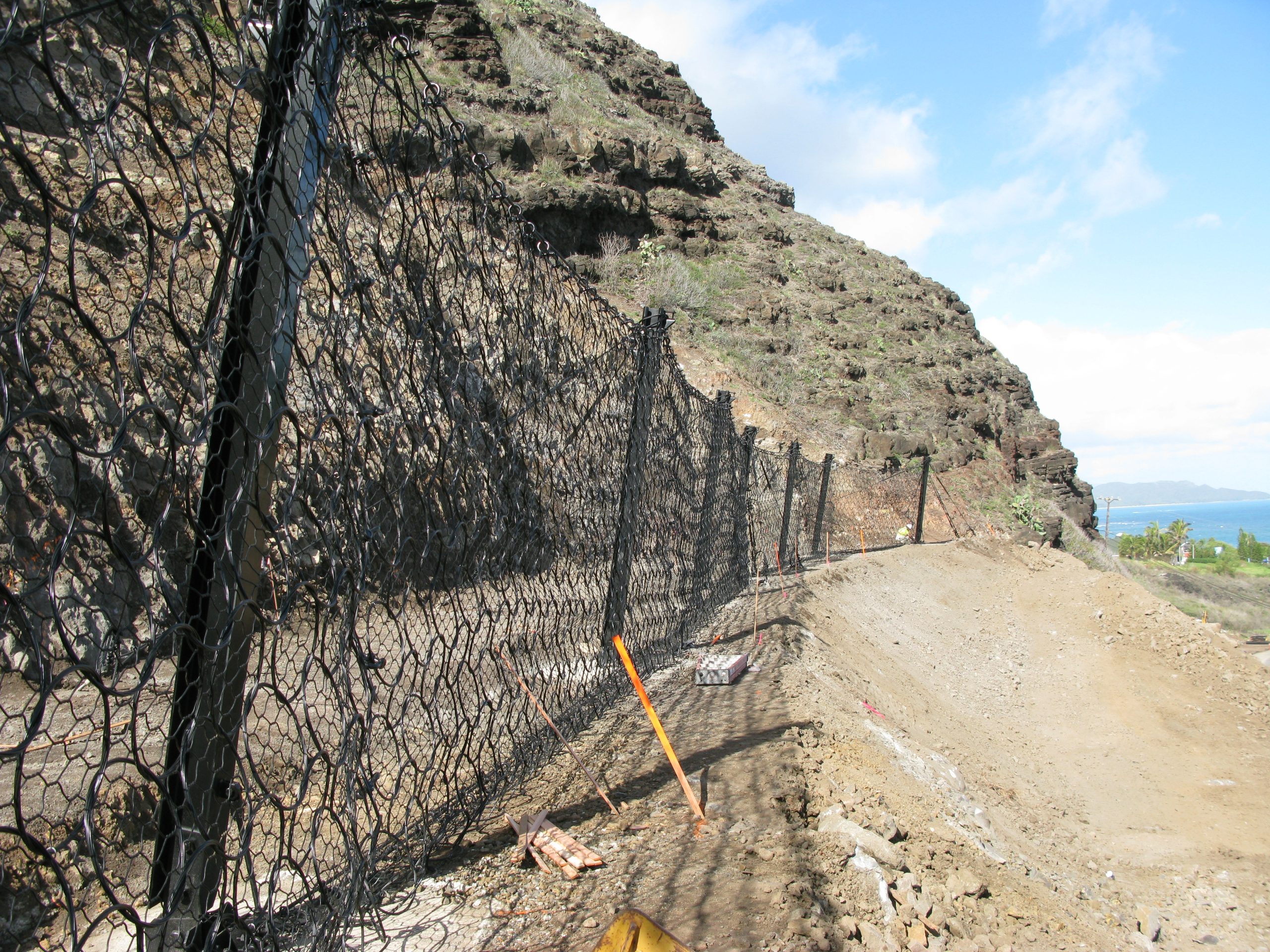
A barrier rated for one rock type will underperform against a different formation's block size and energy profile. GeoStabilization International's geologists map each site's specific rock mass conditions before engineers select a single bolt diameter or barrier rating — matching every element of the protection system to the actual failure mechanics of your slope.
Fault-bounded ranges, seismically active corridors, and remote highway cuts demand a contractor with the equipment and engineering depth to work where others can't. GeoStabilization International is ready to assess your site, design the solution, and stand behind it with a performance warranty. Request a rockfall assessment to get started.