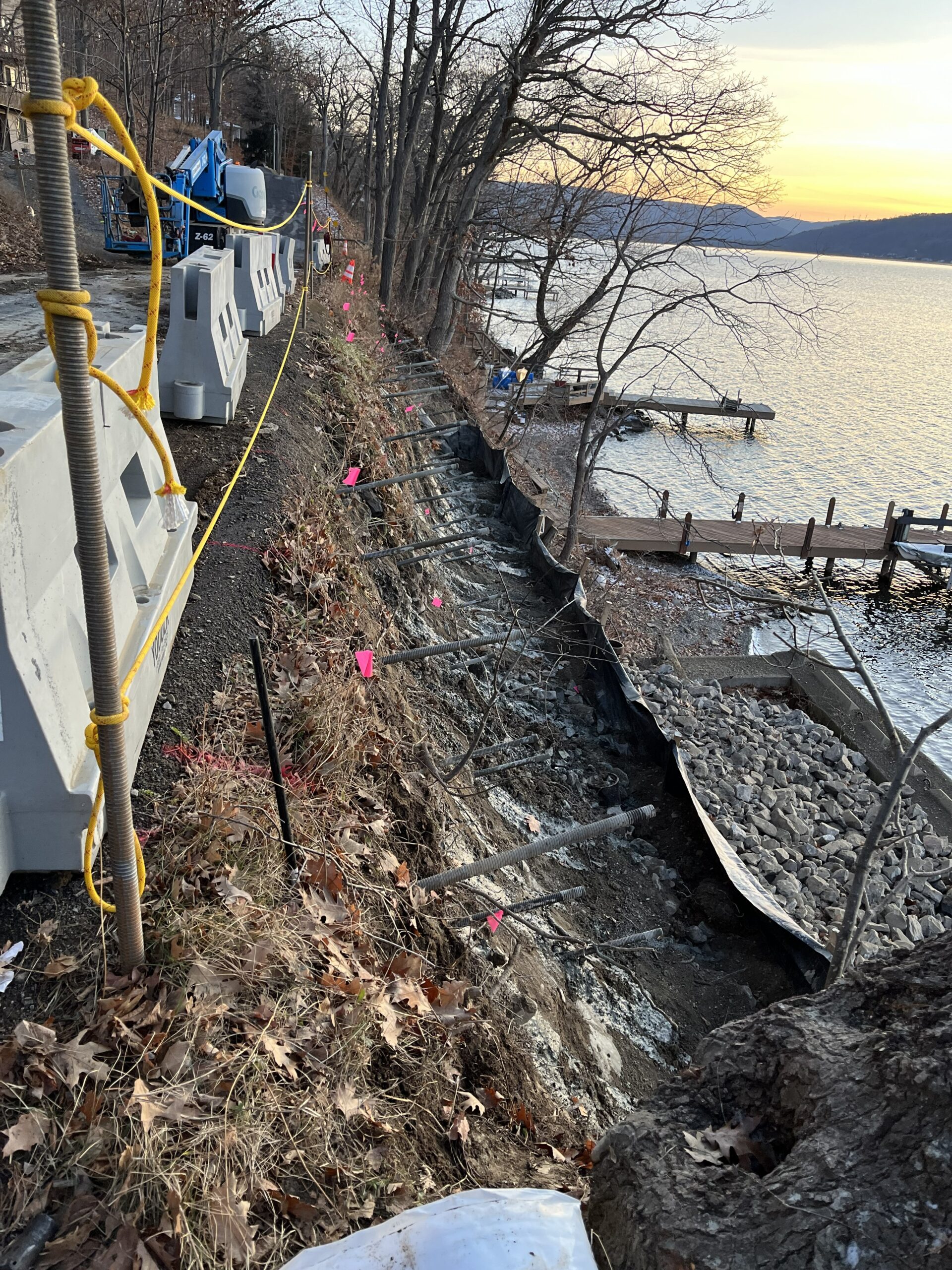
Massachusetts has 1,519 miles of coastline — and roughly 65 to 70 percent of it is actively eroding, according to the state's Office of Coastal Zone Management. The entire geography of Cape Cod, Martha's Vineyard, and Nantucket is composed entirely of glacial deposits laid down by the Laurentide Ice Sheet roughly 21,000 years ago. Those moraines, outwash plains, and glacial till bluffs have no bedrock foundation — making them inherently susceptible to wave attack, longshore sediment transport, and storm-driven erosion.
Along the South Shore and Plymouth bluffs, 100-foot-plus coastal banks face persistent erosion from northeasters that strike the Massachusetts coast multiple times each winter. Sea level in the Boston area has been rising at approximately 11 inches per century, a rate that concentrates wave energy higher on bluff faces and reduces the natural beach buffer that once absorbed storm energy before it reached the bluff toe.
GeoStabilization International deploys bluff stabilization, revetment systems, and bioengineering across Massachusetts's most vulnerable corridors — with in-house geotechnical engineers who design every solution and field crews who execute it under a single MassDOT-ready contract.
Massachusetts's erosion conditions vary considerably along its coastline. The outer Cape Cod bluffs face direct Atlantic wave energy and longshore drift that can shift barrier beaches 3 to 20 feet in a single year. The South Shore's glacial drumlins and till banks erode from a combination of wave attack at the bluff toe and internal drainage failures that cause slumping. Martha's Vineyard and Nantucket experience some of the highest erosion rates in the state — documented at over 2 feet per year on the exposed southern shores. Each setting requires site-specific investigation before a protection system can be properly designed. GeoStabilization International's engineers and geologists assess corridor-level conditions using field-collected data on bluff geometry, soil stratigraphy, wave exposure, and drainage behavior — not generic standards applied from unrelated terrain.
For Massachusetts sites where hard armor alone isn't appropriate — environmentally sensitive areas, permitting-constrained corridors, or locations where natural sediment contribution to the beach system needs to be maintained — GeoStabilization International integrates bioengineering approaches alongside structural protection. Vegetated slope reinforcement, root mat stabilization, and drainage management address the internal failure mechanisms that revetments alone don't resolve, extending system performance and reducing long-term maintenance demands.
Massachusetts shorelines erode dramatically during winter months when high-energy northeaster waves move sediment offshore and attack coastal banks directly. Shorelines that appear stable in summer can lose significant material in a single storm event. MassDOT has formally assessed the vulnerability of its coastal transportation systems to sea level rise and coastal storms — and the infrastructure exposure is substantial across South Shore corridors, Route 6A on the Cape, and coastal routes on the islands.
MassDOT and Massachusetts's infrastructure operators benefit from GeoStabilization International's unified engineering and construction delivery. The engineers who assessed your bluff conditions and designed the protection system stay connected to the field crew building it. When unexpected stratigraphy or drainage conditions appear mid-construction — which Massachusetts's complex glacial deposits regularly produce — the team adapts without losing project momentum.
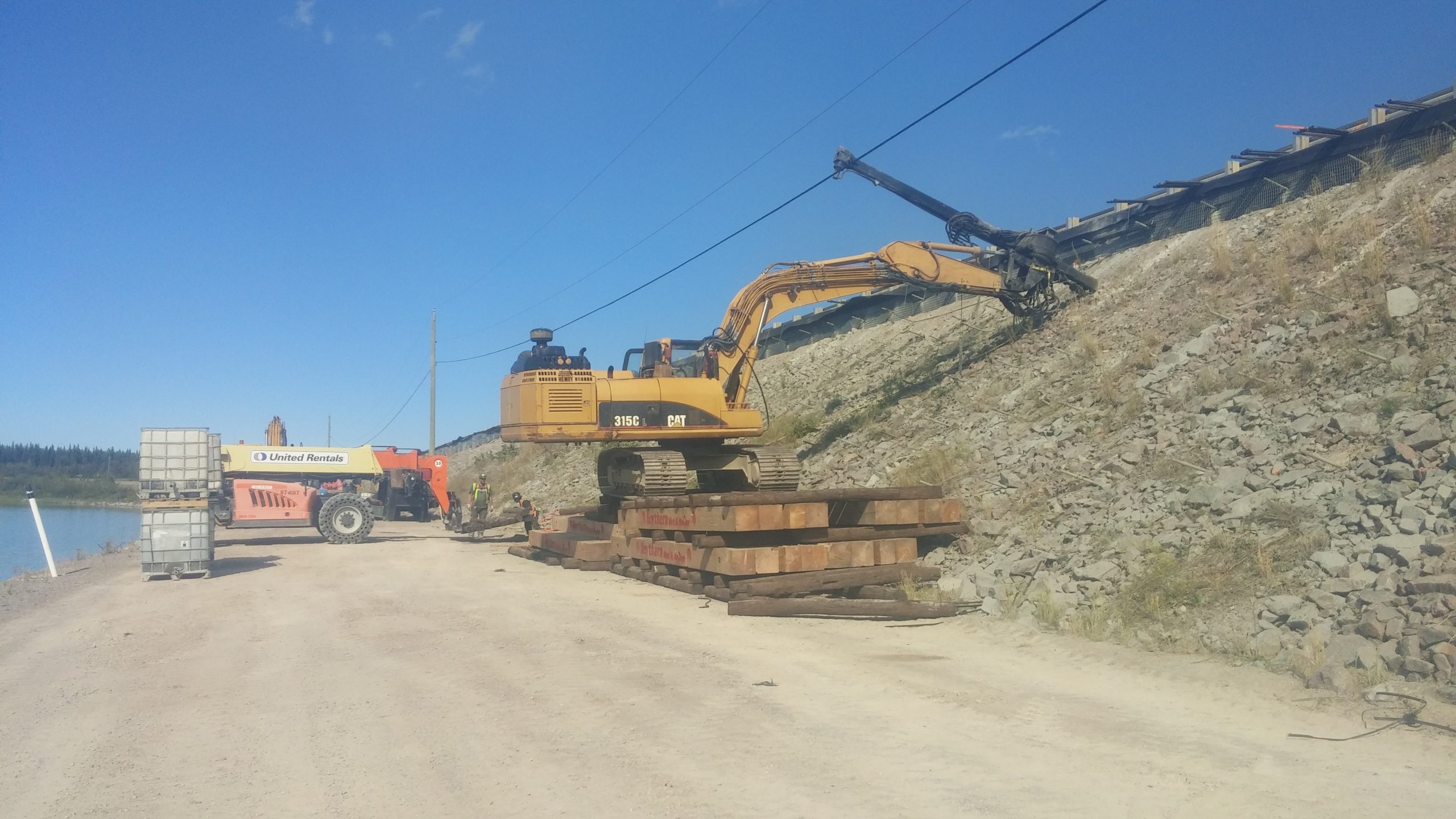
GeoStabilization International is not a geotechnical division inside a general contractor — geohazard mitigation is the entire business. Every one of our 700+ professionals works on geohazard projects every day, building the depth of field experience that diversified contractors simply can't replicate.
With sea levels rising and northeasters intensifying, Massachusetts's glacial bluffs and coastal banks face conditions that will only increase pressure on shoreline infrastructure. GeoStabilization International's engineers are ready to assess your site and deliver a protection system built for New England's coastal conditions. Request a coastal assessment to get started.