Illinois's Southern tip — Cairo, Pulaski County, Mississippi River floodplain sit within a zone of significant seismic hazard where loose, saturated soils are susceptible to liquefaction during earthquake shaking. When seismic waves pass through these soils, pore water pressure spikes and the ground temporarily loses its ability to support structures—causing foundations to settle, embankments to spread, and buried utilities to float or sink.
The consequence of ignoring liquefaction risk is catastrophic failure during the next seismic event—an outcome that costs orders of magnitude more than pre-event ground improvement. Every dollar invested in liquefaction mitigation before the earthquake prevents tens of dollars in emergency repair after.
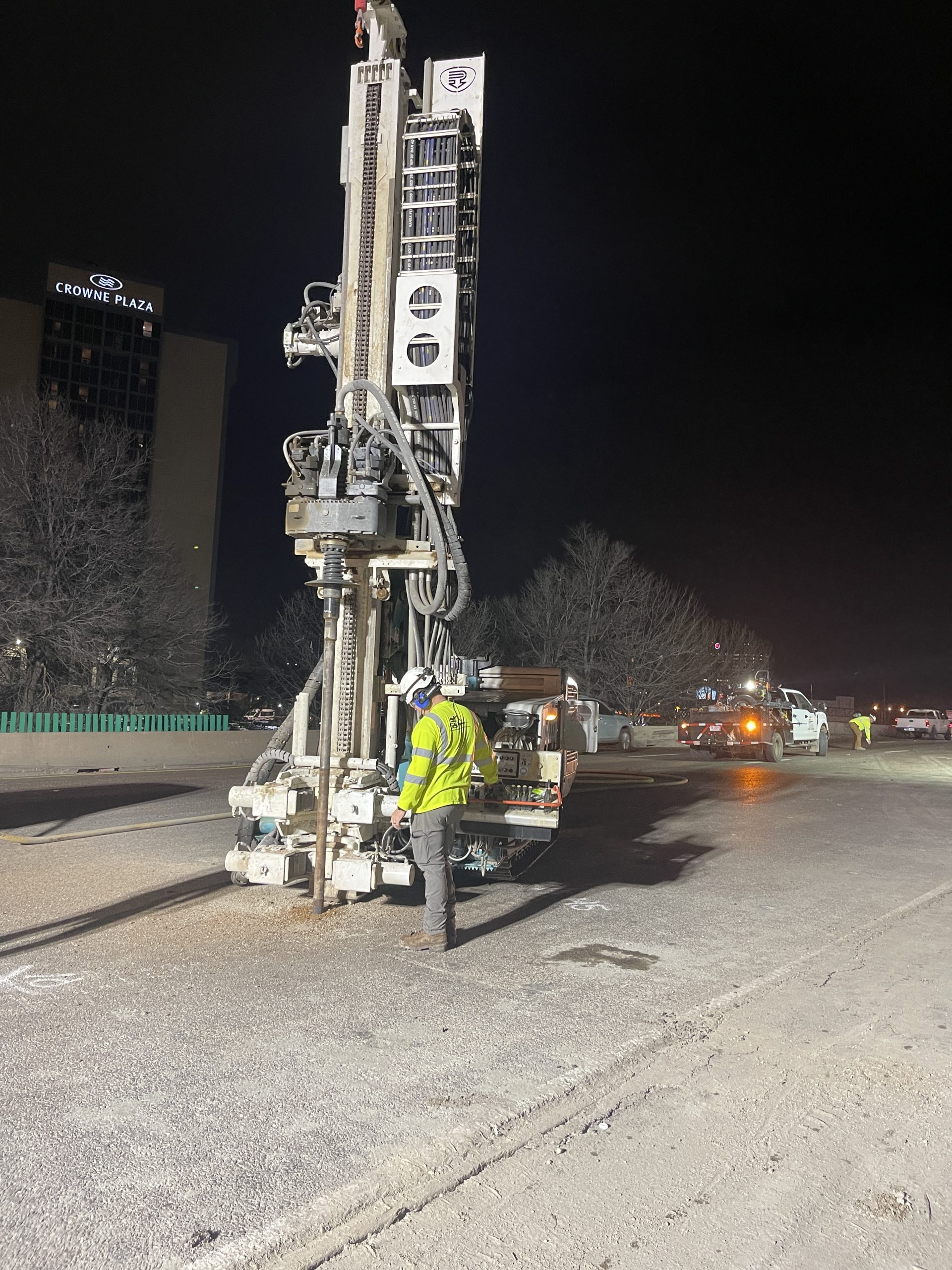
Compaction grouting densifies loose, saturated soils that are susceptible to liquefaction during earthquake shaking. By increasing soil density and reducing void ratio, compaction grouting raises the ground's resistance to liquefaction above the seismic demand level—preventing the ground failure that causes catastrophic structural damage.
Where site conditions favor different approaches, GSI designs stone columns, deep soil mixing, or vibro-compaction programs—each method selected based on the specific soil profile, groundwater conditions, and seismic demand at your site.
Ground improvement before an earthquake is an investment. Reconstruction after liquefaction-induced failure is a catastrophe. GSI quantifies the cost-benefit of pre-event treatment versus post-event repair to support your investment decision with engineering economics—not just engineering opinion.
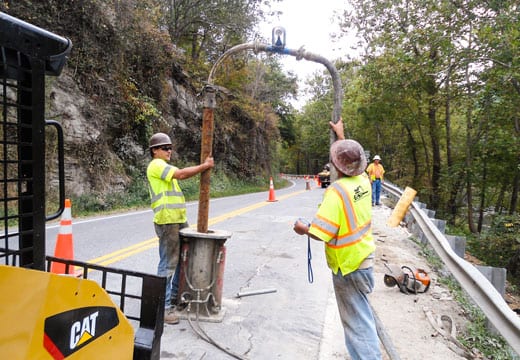
CPT-based liquefaction triggering analysis. We quantify exactly which soil layers are susceptible and at what seismic demand level—targeting treatment precisely.
Post-treatment verification testing. CPT and SPT testing after treatment documents measurable, quantified soil improvement.
Cost-benefit engineering. We quantify the economics of pre-event treatment versus post-event reconstruction to support your investment decision.
USGS hazard integration. Designs calibrated to probabilistic seismic hazard data specific to your Illinois site.
IDOT partners and Illinois infrastructure owners describe the seismic ground improvement solutions GSI delivers across the state.
Seismic risks demand proactive solutions. GSI’s engineers are ready to assess your site and develop a ground improvement plan—so you can build with confidence.