Hawaii has approximately 168 miles of state roads exposed to rockfall and landslide risk — and the events on those corridors are documented, recurring, and operationally disruptive. In February 2023, a rockfall closed Kamehameha Highway near Waimea Bay, triggering an emergency traffic zone declaration by HDOT. Rock scaling, debris removal, and barrier installation were required for the immediate response, with a follow-on impact fence installation needed for long-term protection. Two sections of the Pali Highway on Windward Oahu rank 8th and 10th on HDOT's statewide rockfall risk list — and a 2019 rockfall on the Pali required months of repairs to restore the corridor.
The geology driving these events is consistent across Hawaii's highway corridors: thin to medium bedded basalt flows interbedded with loose clinker and scoria layers. As the soft clinker erodes, it removes support from overlying massive basalt beds — allowing cantilevers and overhangs to form and eventually topple. Earthquakes, intense rainfall, and plant root action all accelerate that process. On the Maui Pali Tunnel corridor, HDOT has documented large boulders up to 20 feet long perched above a roadway carrying up to 60,000 vehicles per day.
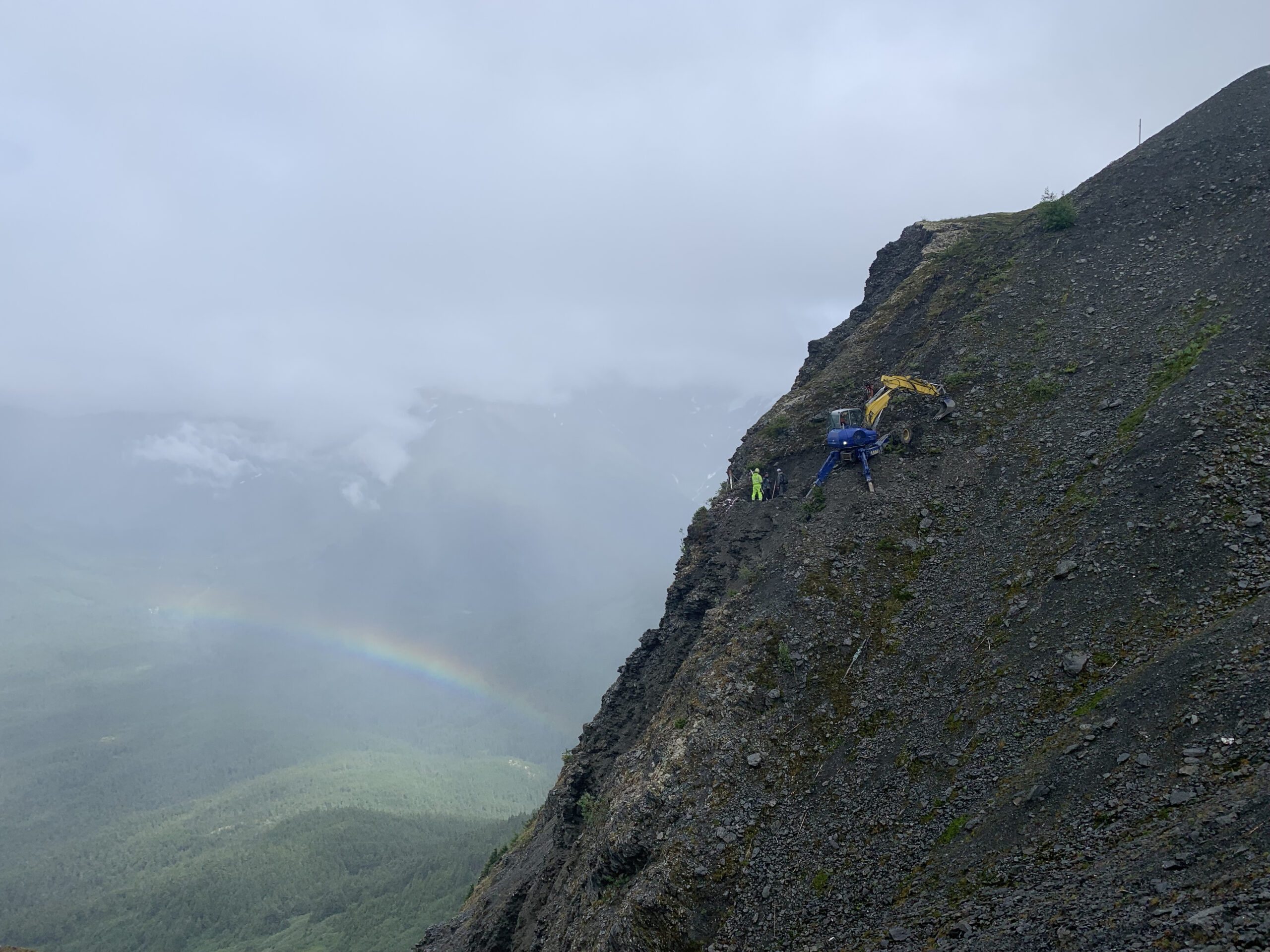
GeoStabilization International deploys rock bolts, attenuator barriers, draped mesh, and rope access scaling operations across Hawaii's most active rockfall corridors — with in-house geotechnical engineers who design every solution and field crews who execute it under a single HDOT-ready contract.
Hawaii's rockfall conditions are not uniform across the state. On Windward Oahu's Pali Highway, the Koolau Range produces large-volume rockfall events driven by cooling joint systems and differential weathering between hard basalt and weak interbedded layers. On Kamehameha Highway's North Shore section, slopes above the road shed material during and after rainfall events, with HDOT maintaining impact barriers at multiple locations as a first line of defense. On Maui's Honoapiilani Highway and Hana Highway, steep volcanic cliffs above coastal road segments generate ongoing rockfall hazards that require active monitoring and staged mitigation.
Each corridor's failure mechanics differ — block size, trajectory angle, runout distance, and impact energy all depend on the specific rock mass structure at that site. GeoStabilization International's engineers and geologists assess those variables directly in the field before any protection system is specified, ensuring barrier energy ratings, bolt patterns, and mesh configurations match the actual hazard at your corridor.
Our engineering team analyzes site-specific geology, discontinuity patterns, weathering profiles, and failure mechanisms before designing any protection system. For Hawaii's volcanic rock corridors, that means 3D trajectory modeling informed by field-measured rock mass data — not generic trajectory assumptions from mainland formations. The result is a protection system sized for what's actually above your road.
When a rockfall event closes a Hawaiian highway, GeoStabilization International maintains 24-hour emergency mobilization with pre-staged equipment and on-call crews. One call activates an integrated response — engineering assessment, solution design, and field execution under one contract — compressing the timeline from emergency call to active mitigation that traditional procurement cannot match.
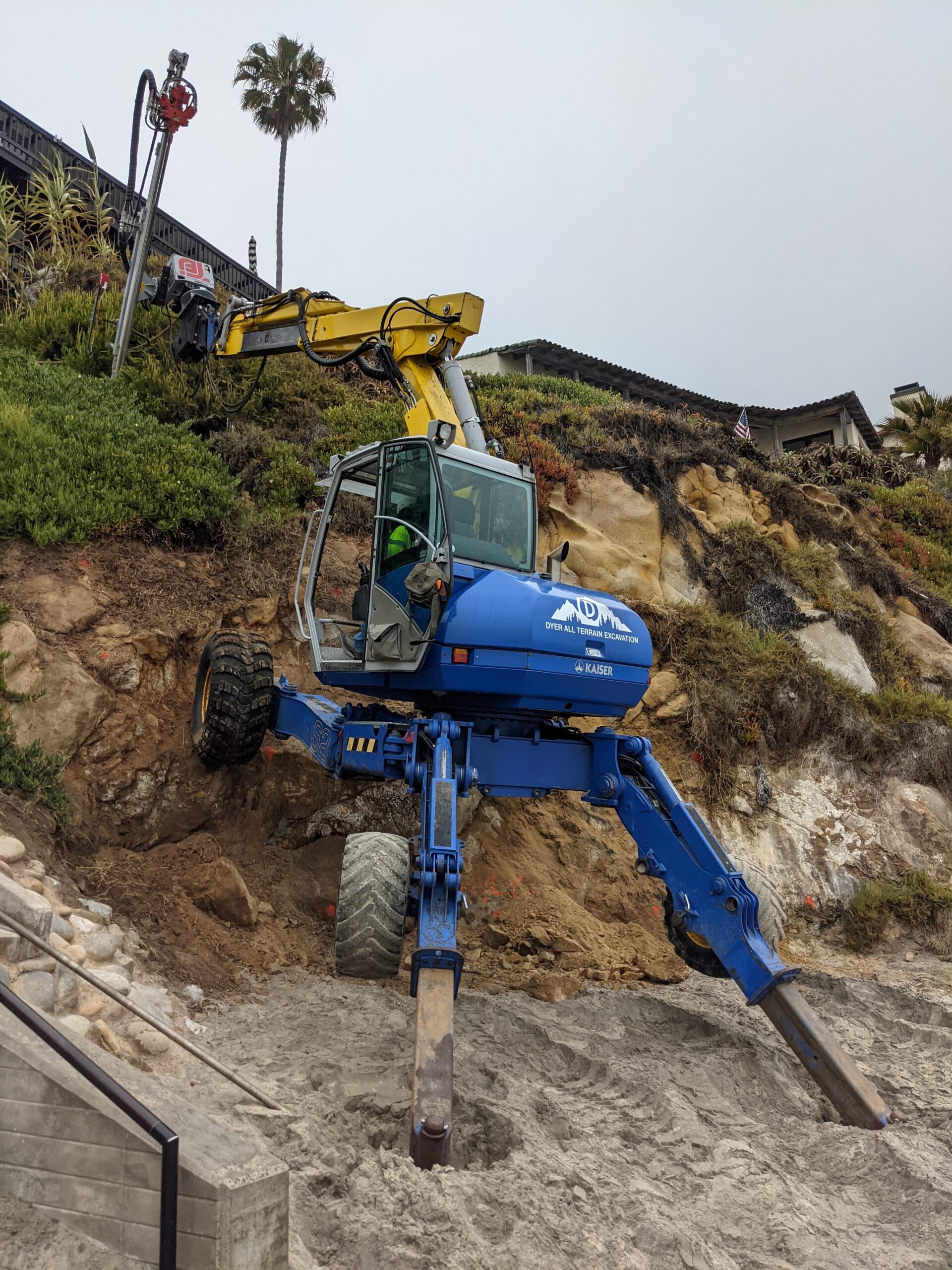
Hawaii's infrastructure operators need a contractor that owns the technology, employs the engineers, and warranties the performance — not one who subcontracts the engineering and rents the equipment. GeoStabilization International's in-house engineering team, purpose-built equipment fleet, and SPRAT/IRATA-certified rope access program deliver rockfall mitigation solutions that compress timelines and eliminate the coordination gaps that inflate costs on traditional procurement.
Hawaii's volcanic corridors shed material after every major rainfall event — and HDOT's statewide rockfall rankings show the risk is well understood and persistent. GeoStabilization International's engineers are ready to assess your site, model the hazard, and deliver a protection system built for Hawaii's geology. Request a rockfall assessment to get started.