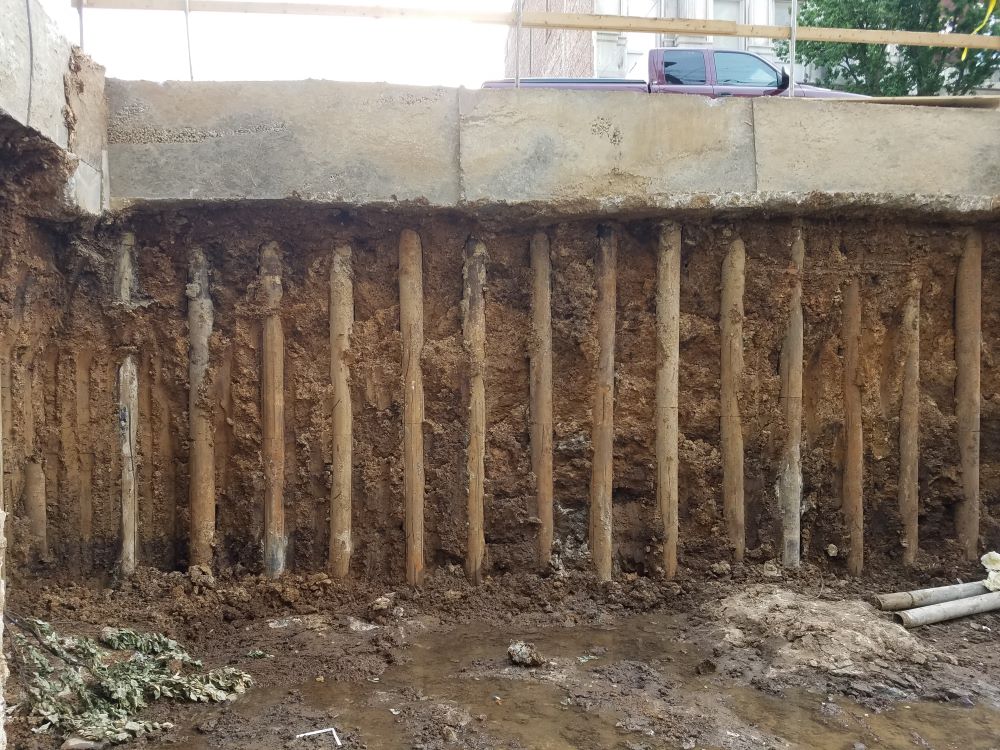
Georgia's Piedmont region—stretching from Atlanta through Columbus and Macon—sits atop residual soils derived from the weathering of metamorphic and igneous bedrock. These soils contain high-plasticity clay minerals that swell when saturated and shrink during drought, generating ground movements that crack commercial slabs, heave highway pavements, displace retaining walls, and shear utility connections across the state's most developed corridors.
Atlanta's rapid development has placed billions in infrastructure directly on Piedmont clays that were stable under forest cover but become active when grading, impervious surfaces, and drainage changes alter the natural moisture regime. The result is progressive, compounding damage that conventional maintenance cannot resolve.
Hydrated lime reacts with Piedmont residual clay minerals to produce non-expansive calcium silicate compounds—eliminating swell potential permanently. GSI engineers specify lime dosage and treatment depth based on site-specific mineralogy testing, because Piedmont clays vary significantly from site to site depending on parent rock type.
For structures already damaged, helical piers transfer loads through the active zone to stable bearing material below. GSI installs piers and relevels structures to design grade—isolating foundations from continued soil movement.
Georgia's humid climate means Piedmont clays rarely reach full desiccation—but seasonal fluctuations still drive damaging swell cycles. GSI designs French drains, interceptor systems, and surface grading improvements that reduce moisture amplitude beneath infrastructure.

Unlike uniform marine clay deposits, Georgia's Piedmont clays vary from site to site based on parent rock type. GSI's treatment reflects this variability:
Development-triggered swell damage compounds every season. GSI's chemical treatment permanently modifies the Piedmont clay mineralogy at your Georgia site.