Expansive Soil Stabilization in Arizona

Expansive Soil Stabilization in Arizona

Chemical stabilization and helical pier systems for Arizona's swelling clay formations—Phoenix metro, Tucson, and Flagstaff corridors.

Request Soil Assessment
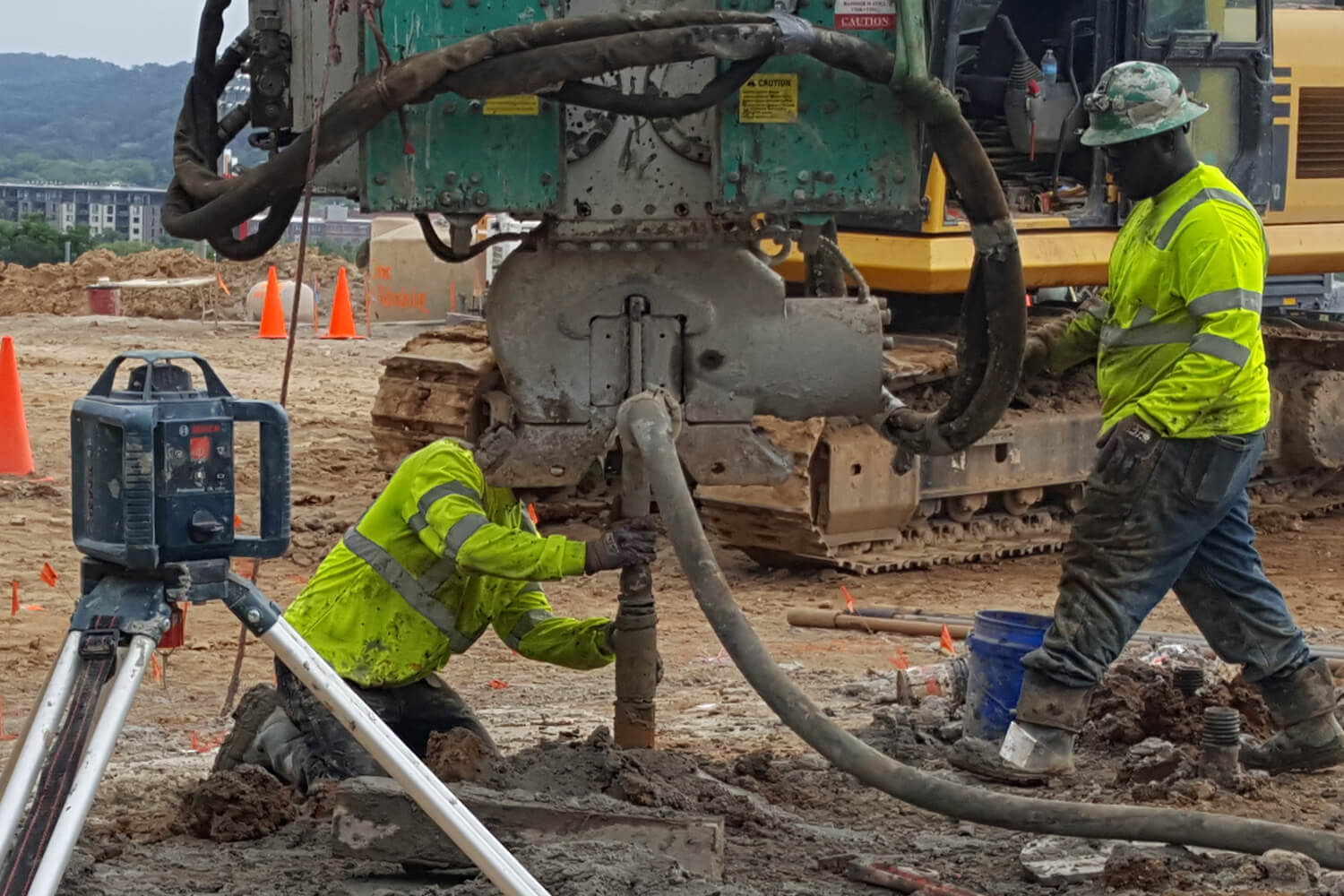
Foundation underpinning micropile installation for sinking structure

Arizona's Desert Soils Swell with Force

Arizona's expansive soil problem is driven by the extreme moisture swings of the desert climate. Months of drought shrink high-plasticity clays to rock hardness, opening deep desiccation cracks through the soil profile. When monsoon rains arrive, water pours into these cracks and reaches clay minerals at depth simultaneously—triggering rapid, powerful swelling that heaves roads, cracks foundations, and shears utility connections. The Phoenix metro, Tucson, and Flagstaff areas all contain significant expansive clay deposits.

ADOT and Arizona municipalities spend millions annually repairing expansive soil damage on highways, water mains, sewer lines, and commercial facilities. Arizona's clay damage is particularly aggressive because the monsoon delivers moisture so quickly to deeply desiccated soils—creating swell pressures that exceed those in more humid climates where moisture changes occur gradually.

Geohazard Mitigation in Arizona

Arizona Soils Heaving After Monsoon?

Request Soil Assessment

Experience You Can Count On

View Project Gallery

How GSI Stabilizes Arizona's Expansive Soils

Chemical Stabilization for Desert Clays

GSI injects hydrated lime into Arizona's expansive clay formations, permanently converting swelling montmorillonite minerals into stable calcium silicate compounds. Arizona's deep desiccation cracks actually aid treatment—lime slurry penetrates deeper through the natural crack network than conventional mixing can achieve, reaching clay at depths where monsoon water triggers the worst swell events.

  • Lime slurry pressure injection through Arizona's natural desiccation crack network
  • Treatment dosage calibrated to the specific clay mineralogy at each site
  • Active zone treatment depth matched to monsoon moisture penetration depth
  • Post-treatment Atterberg limits and swell testing to verify permanent modification

Helical Pier Systems for Damaged Structures

Structures already displaced by swell cycles need both stabilization and releveling. GSI installs helical piers through the expansive zone to non-expansive bearing material below, then hydraulically jacks the structure to original grade. Void forms between foundation elements and soil surface allow the untreated surrounding soil to continue its seasonal movement without affecting the re-supported structure.

  • Helical piers installed through active zone to competent non-expansive bearing
  • Structural releveling via hydraulic jacking to restore design grade
  • Void form details that accommodate continued soil movement around the structure
  • Load testing at every pier location to verify capacity in Arizona soils

Pre-Construction Moisture Conditioning

For new construction on expansive sites, GSI designs pre-wetting and moisture conditioning programs that bring soil moisture to equilibrium before building—eliminating the first-cycle swell that damages structures built on desiccated clay without treatment.

Arizona Expansive Soil Treatment Process

From damage assessment through verified stabilization, GSI follows five steps to eliminate Arizona's monsoon-driven expansive soil damage.

Step 1

Damage Assessment

Engineers evaluate heave patterns, cracking, and moisture conditions to confirm expansive clay is driving your Arizona infrastructure damage.

Step 2

Desert Clay Characterization

Lab testing quantifies mineralogy, swell pressure, and active zone depth—accounting for Arizona's extreme moisture swing conditions.

Step 3

Treatment Design

Engineers specify lime dosage, injection method, and treatment depth optimized for Arizona's desiccation crack patterns and monsoon moisture regime.

Step 4

Chemical Injection

Crews execute lime pressure injection through the desiccation crack network, achieving treatment penetration that conventional mixing methods cannot reach.

Verified Stability

Post-treatment swell testing through at least one monsoon cycle confirms permanent mineralogy modification. Reports document elimination of swell potential.

Verified Stability

Post-treatment swell testing through at least one monsoon cycle confirms permanent mineralogy modification. Reports document elimination of swell potential.

Chemical grouting process diagram illustration

Desert Climate Demands Desert-Specific Treatment

Expansive soil treatment designed for humid climates fails in Arizona's extreme moisture environment. GSI engineers for the conditions Arizona actually presents:

  • Desiccation crack utilization. Arizona's deep crack network becomes a delivery system—lime penetrates to depths conventional mixing cannot reach.
  • Monsoon-cycle verification. Treatment verification spans at least one complete monsoon season to confirm performance under Arizona's most aggressive moisture conditions.
  • Year-round treatment capability. Arizona's mild winters allow chemical stabilization during the dry season when desiccation cracks are deepest and most accessible.
  • ADOT specification compliance. Treatment programs designed to satisfy ADOT documentation and material testing requirements.

Talk to a Soil Specialist

Client Reviews

Innovative and Cost-Effective Project Solutions in Nevada

We have worked on several estimates and concepts with GSI over the last few years. Last spring, we had an opportunity to build a project with them. We received a handful of quotes, GSI was not only competitive, but they also provided a solution that significantly improved the project sequence and schedule. I think it is definitely worth your time to get to know James and their capabilities. I would also add that in many instances, their proposal is not apples to apples with competitors. Because of their unique approaches, oftentimes the earthwork scope can be decreased or made cheaper by using GSI.

Geohazard Stabilization for Railway Infrastructure

GSI was very professional and easy to work with throughout the whole process. They communicated well and were accommodating to our production needs, while allowing us to work with them to help them accomplish what they needed to get done as well. Dan, Amanda, Zech, Craig, and Justin were all great. It was actually pretty refreshing to be able to work with a group that was so easy deal with, especially for a contractor coming in from out of town. They all seemed to have Midwestern values and work ethic. If you have any questions whatsoever, I would be more than happy to discuss. Based on our experience, I would confidently and quickly recommend GSI to anyone needing similar geo stabilization.

Emergency Safety Response for Mining Operations

On our weekly project update call at the mine, our meetings begin with a ‘safety share’. It’s usually filled with personal observations, mine traffic pattern changes to be conscientious of, or in this week’s meeting, a good catch by GSI’s Courtney Smith. There is a protocol to alert mine personnel working in the pit of any hazardous conditions, which includes highwall instabilities or severe weather approaching. Early hazard detection is critical at the mine as it is over 2.5 miles wide by almost a 1 mile deep. If warranted, the crews will need ample time to evacuate. With all the systems, risk controls and procedures in place to protect over 300 people working there, an onsite contractor (GSI) picked up on the lightning / weather quickly approaching and evacuated the slope. He then proceeded to advise mine dispatch of the situation, who in turn advised relevant mine crews (such as the drill & blast crew) that need to evacuate in the event of lightning. Courtney and crew should be commended on their proactive effort to let mine personnel know and not assume someone else was watching. The mine recognized this action and we should also take note of this courageous leadership to advise a mine with so many intimidating procedures in place to take action.

End Swell Damage Permanently

One chemical treatment eliminates the swell cycle that costs Arizona millions annually. GSI's desert soil specialists design treatment calibrated to your site's specific clay and moisture conditions.

Call (855) 579-0536

    How Can We Help?

    • Personal Info
    • Contact Info
    • Project Info
    ***Fees May Apply For Residential Site Visits***

    How Can We Help?

    • Personal Info
    • Contact Info
    • Project Info

    How Can We Help?

    • Personal Info
    • Contact Info
    • Project Info

    By using this website, you acknowledge and agree to our Privacy Policy. This site is protected by reCAPTCHA, and the Google Privacy Policy and Terms of Service apply.