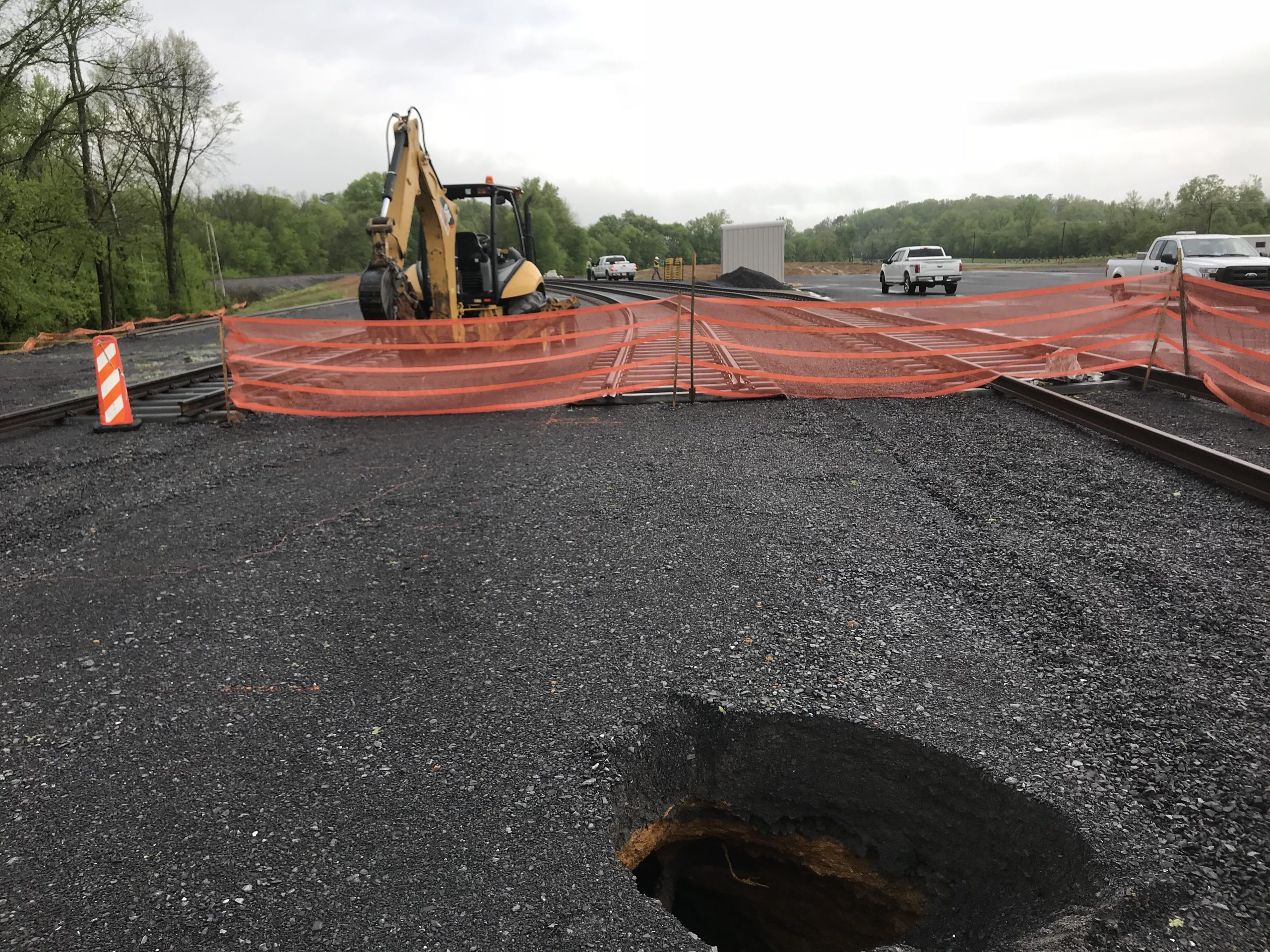
Sinkholes are a documented, recurring problem on Alabama's road network. North Alabama's karst terrain — where soluble limestone dissolves under groundwater flow and leaves voids that eventually collapse — has produced active sinkhole events on US-231 in St. Clair County, SR-101 in Lauderdale County, and corridors throughout Limestone and Morgan Counties. In many cases, surface repairs that don't address the underlying void fail again, sometimes within weeks.
GeoStabilization International delivers engineered sinkhole repair using void filling, compaction grouting, and chemical grouting — designed to treat the subsurface condition, not just patch what's visible at the surface. Our in-house geotechnical engineers investigate, design, and oversee field execution under a single contract, so ALDOT and Alabama's infrastructure operators have one accountable team from assessment through warranty.
A sinkhole that reopens after initial repair is almost always a sign that the void driving the collapse wasn't fully characterized or treated. Alabama's limestone-underlain corridors present exactly that challenge — the surface expression of a sinkhole is often smaller than the void network causing it, and treatment that doesn't account for void geometry, groundwater behavior, and surrounding soil conditions won't hold. GeoStabilization International's approach starts with direct subsurface investigation. Our engineers and geologists use borehole data, CPT soundings, and field measurement to define actual void extent and overburden conditions before any grouting design is finalized. That investigation is what separates a repair that performs from one that reopens after the next heavy rain.
No two sinkholes in Alabama's karst terrain behave the same way. Void size, depth, connectivity, and the condition of surrounding soils all vary from site to site and determine which grouting method — compaction, permeation, chemical, or a combination — will achieve lasting stability. GeoStabilization International's engineers select and design the treatment approach based on verified site data, not default specifications. For larger or more complex void networks, our teams combine grouting with complementary methods such as micropile installation to restore deeper load transfer where the grouting alone isn't sufficient.
ALDOT and Alabama's infrastructure operators work with GeoStabilization International because our engineering and construction teams operate as one unit. The engineers who investigate your site and define the void conditions are directly connected to the crews executing the repair. When drilling reveals conditions that differ from initial findings — a common reality in karst terrain — treatment adjustments happen in the field without waiting on a separate design cycle. That responsiveness is what keeps sinkhole repair on schedule and on budget.
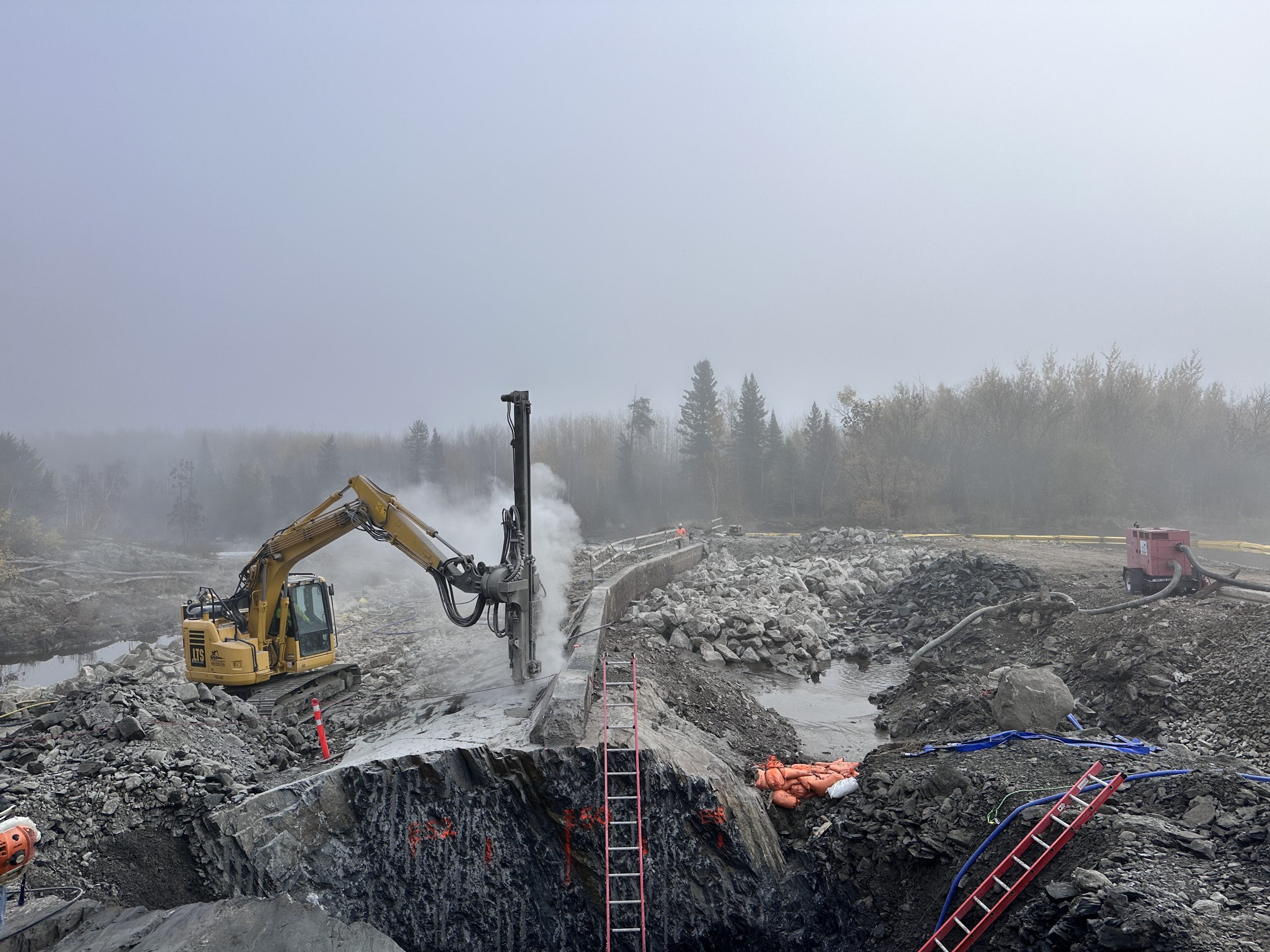
GeoStabilization International maintains one of the largest purpose-built geohazard equipment fleets in North America — including compact grouting rigs capable of operating on active corridors with minimal lane impact. When a sinkhole opens on an Alabama highway, our crews and equipment can mobilize fast, and our engineers are ready to design and adapt in the field from day one.
A sinkhole that's been filled once without treating the underlying void will open again — Alabama's US-231 corridor is a recent example of exactly that. GeoStabilization International investigates the full subsurface condition before any repair begins, so the fix is engineered to last. Request an assessment to get started.