Geohazard Mitigation in Utah

Geohazard Mitigation in Utah

The Wasatch Fault. Little Cottonwood Canyon. Virgin River Gorge. Utah's seismically active escarpments and canyon corridors create rockfall hazards compounded by earthquake risk. Access Limited engineers the mitigation systems that protect Utah's most critical and most vulnerable terrain.

Request Assessment
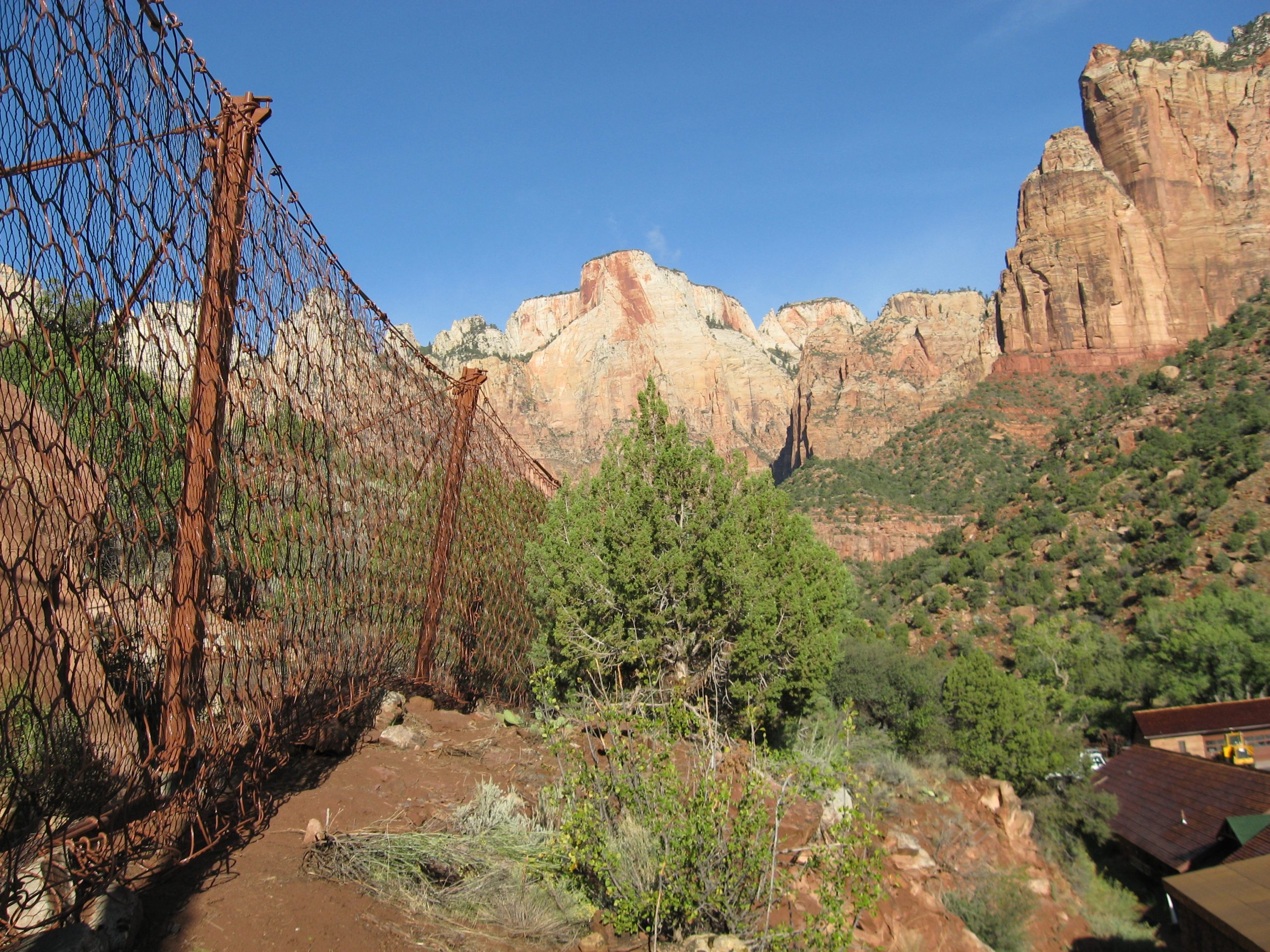
Rockfall fence installed at Zion National Park for slope protection

Geohazard Mitigation Across Utah

FULL-SERVICE GEOHAZARD SOLUTIONS

Along the Wasatch Front's fault-bounded escarpment and through the canyon corridors that define Utah's red rock landscape, Access Limited delivers the full spectrum of geohazard mitigation services — from rockfall control and containment to engineered earth retention systems to ground improvement and slope stabilization. We're the team behind more rockfall mitigation projects than any firm in the region. Our spider excavator fleet makes the impossible accessible, reaching sites where conventional equipment cannot operate, and 100+ collective years of working where others won't bid ensure every project benefits from solutions proven across every geologic setting.

The geohazard protection Utah's infrastructure demands. Our three core solution pillars — Rockfall Mitigation, Earth Retention, and Ground Improvement — give Utah clients a single-source provider for every geotechnical challenge, backed by 24/7 emergency response.

Protect What Your State Depends On

Request Assessment

Mitigation Starts Here

See Our Drilling Capabilities

Solving Utah's Toughest Geohazard Challenges

Utah's Wasatch Front is a textbook example of seismic geohazard risk — a major normal fault zone that produces both the steep terrain that creates rockfall and the earthquakes that trigger it. Every mitigation system installed along the Wasatch must be designed for the earthquake that hasn't happened yet. Access Limited brings the specialized equipment and field experience to address each of these conditions with solutions proven in Utah's specific geologic environment.

The Wasatch Fault is capable of producing a magnitude 7.5 earthquake — an event that would shake loose rockfall across every canyon corridor from Logan to Nephi simultaneously, compounding seismic damage with thousands of individual rockfall events on a scale no other US state faces along a single metropolitan-adjacent fault. Access Limited brings the full spectrum of geohazard mitigation — rockfall, earth retention, and ground improvement — to address the specific conditions that define Utah's terrain.

Rockfall Mitigation

Wasatch Front rockfall, compounded by earthquake risk along one of the most dangerous fault zones in the western US, canyon-corridor rock slope failures, post-wildfire debris flows threatening the wildland-urban interface, and mine-related slope instability in the historic mining districts. Access Limited deploys wire mesh, draped mesh, high capacity steel mesh, rock bolting, flexible barriers, catch fences, and rockfall attenuation systems along I-15 through the Virgin River Gorge, Little Cottonwood Canyon (SR-210), Provo Canyon, US-89 through Logan Canyon, and I-70 through the San Rafael Swell — each installation engineered for the specific rock type, energy level, and infrastructure exposure at the site.

Earth Retention

Stabilizing Wasatch Front canyon walls in one of the Intermountain West's most seismically active zones, retaining Little Cottonwood Canyon highway slopes under combined avalanche, snow, and earthquake loading, and anchoring mine-impacted slopes across Utah's western ranges. Access Limited installs soil-nail walls, shotcrete facing, ground anchors, tiebacks, GCS® walls, MSE walls, micropiles, and retaining wall systems designed for Utah's most demanding combined loading conditions in the western United States.

Ground Improvement

Post-wildfire debris flow mitigation to protect Salt Lake City's watershed infrastructure, subsurface drainage to manage the snowmelt infiltration that triggers canyon slope failures, and grouting for mine-related subsidence in Utah's western ranges. Access Limited deploys launched horizontal drains, compaction grouting, erosion control, critical slope monitoring, and UAS-based assessment across Utah's canyon, alpine, and desert terrain.

Emergency Response & Steep Slope Drilling

Rockfall closures in Little Cottonwood and Big Cottonwood canyons that affect ski resort access and UDOT operations, post-earthquake rockfall response (a scenario UDOT actively plans for), and post-wildfire debris flows in canyon watersheds. Access Limited mobilizes spider excavators, Spider drill rigs, and rope-access crews for immediate deployment. Our equipment fleet reaches terrain across Utah where conventional contractors cannot operate — and our 24/7 availability means the response matches the urgency of the hazard.

Industries Protected

Udot canyon and mountain highway corridor maintenance, wasatch front urban development on seismically active terrain, ski resort access infrastructure, and mining operations across the mineral belt — Access Limited serves each sector with geohazard solutions engineered for the specific operational, regulatory, and terrain requirements that define Utah's infrastructure landscape.

How Access Limited Works in Utah

From initial hazard assessment through long-term monitoring, Access Limited delivers a complete geohazard mitigation lifecycle for every Utah project.

Step 1

Assess

Site investigation maps the intersection of Wasatch Front seismic rockfall with infrastructure exposure — defining exactly what needs protecting and from what.

Step 2

Design

The design phase translates Utah's unique hazard profile into engineered solutions: seismically compounded rockfall shapes every specification.

Step 3

Build

Execution in Utah means putting the right equipment on the right terrain: Utah's canyon walls require drilling at near-vertical angles on faces hundreds of feet high — spider rigs and rope-acces.

Step 4

Monitor

Data-driven monitoring programs track slope movement, anchor loads, and barrier condition through Utah's harshest conditions — catching degradation before it becomes failure.

Need Help?

Contact our team today!

Need Help?

Contact our team today!

Frequently Asked Questions — Geohazard Mitigation in Utah

Utah's Wasatch Front is a textbook example of seismic geohazard risk — a major normal fault zone that produces both the steep terrain that creates rockfall and the earthquakes that trigger it. Every mitigation system installed along the Wasatch must be designed for the earthquake that hasn't happened yet. Access Limited brings the field-tested expertise and purpose-built equipment to address Utah's specific conditions — not generic solutions transplanted from other states.

Little Cottonwood Canyon (SR-210) and I-15 through the Virgin River Gorge is among Utah's highest-priority geohazard corridors. The primary threat is seismically compounded rockfall — Utah's Wasatch Front is one of the most seismically active zones in the Intermountain West, where rockfall hazards from steep canyon walls are amplified by earthquake risk. Mitigation systems must be designed for both gravity and seismic loading simultaneously. Access Limited deploys spider excavators, rope-access crews, and engineered mitigation systems tailored to each corridor's specific hazard profile.

When seismically compounded rockfall threatens Utah infrastructure, Access Limited mobilizes immediately. Our spider excavators, boulder removal capability, and temporary barrier systems deploy while conventional contractors are still assembling quotes. We serve UDOT, Utah mining operators, ski resort infrastructure developers, and military installation managers at Hill AFB and Dugway Proving Ground with 24/7 emergency capability.

Little Cottonwood Canyon's highway widening for ski traffic requires retaining walls that withstand avalanche forces, seismic loads, and the massive snow depths that characterize the Wasatch Range — the most demanding combined loading condition in the western United States. Access Limited's soil nail walls, GCS® walls, MSE walls, ground anchors, and micropile foundations are engineered for the specific loading conditions each Utah site presents.

Utah's canyon walls require drilling at near-vertical angles on faces hundreds of feet high — spider rigs and rope-access crews are the only feasible approach for anchor installation at these heights and angles. Access Limited's spider excavators — the largest fleet in North America — reach Utah sites that conventional equipment cannot access.

Discuss Your Utah Geohazard Project

Whether you need rockfall mitigation, earth retention, ground improvement, or 24/7 emergency response — Access Limited is Utah's full-service geohazard mitigation provider.

Call 805.727.4310

    How Can We Help?

    • Personal Info
    • Contact Info
    • Project Info
    ***Fees May Apply For Residential Site Visits***

    How Can We Help?

    • Personal Info
    • Contact Info
    • Project Info

    How Can We Help?

    • Personal Info
    • Contact Info
    • Project Info

    By using this website, you acknowledge and agree to our Privacy Policy. This site is protected by reCAPTCHA, and the Google Privacy Policy and Terms of Service apply.