
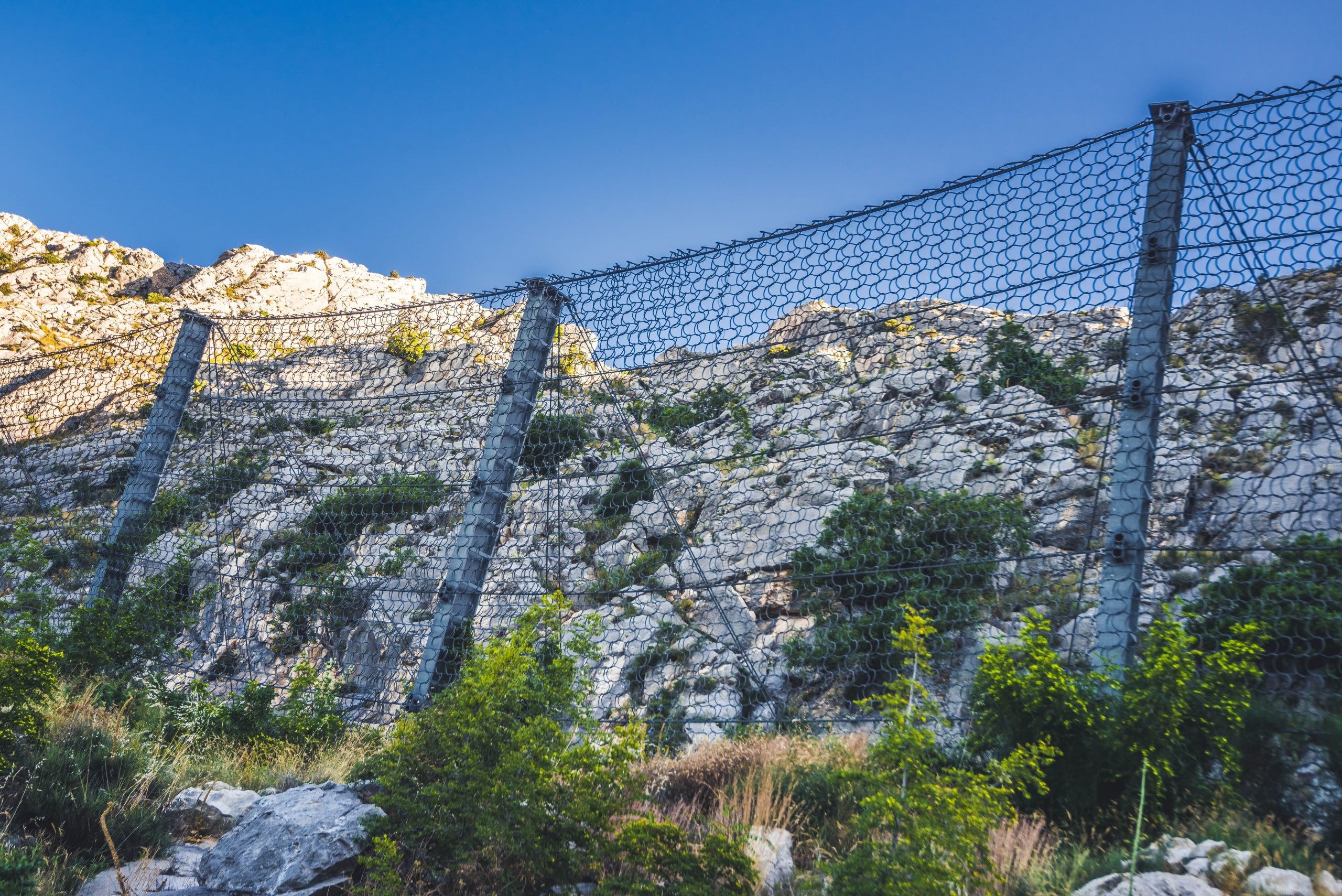
When rockfall detaches from slopes above I-80 through the Delaware Water Gap, I-78 through the Watchung Mountains, Route 23 along the Palisades, and Route 15 through the Highlands, it follows trajectories determined by slope geometry, block shape, and launch velocity. Ditches and berms alone often cannot contain the bouncing, rolling, and airborne blocks that Palisades diabase sill, New Jersey Highlands gneiss, and Delaware Water Gap quartzite produce. Flexible barriers are engineered to intercept rockfall at calculated impact points — absorbing the full energy of the event.
Access Limited designs and installs flexible rockfall barrier systems across New Jersey — each sized to the energy rating, trajectory analysis, and corridor exposure specific to the site.
Barriers in this range protect corridors from moderate rockfall — small to medium blocks with limited fall heights. These systems use deformable posts and cable braking elements to absorb impact energy.
High-energy barriers are specified for New Jersey's most severe rockfall corridors — where large blocks, long fall heights, or steep trajectories generate impact forces that exceed mid-range system capacities.
Ultra-high-energy barriers are engineered for extreme rockfall — massive block detachments, very long fall paths, or channelized rockfall corridors where energy concentrations exceed standard barrier ratings.
Access Limited brings specialty rockfall equipment to New Jersey's constrained, high-traffic corridors.
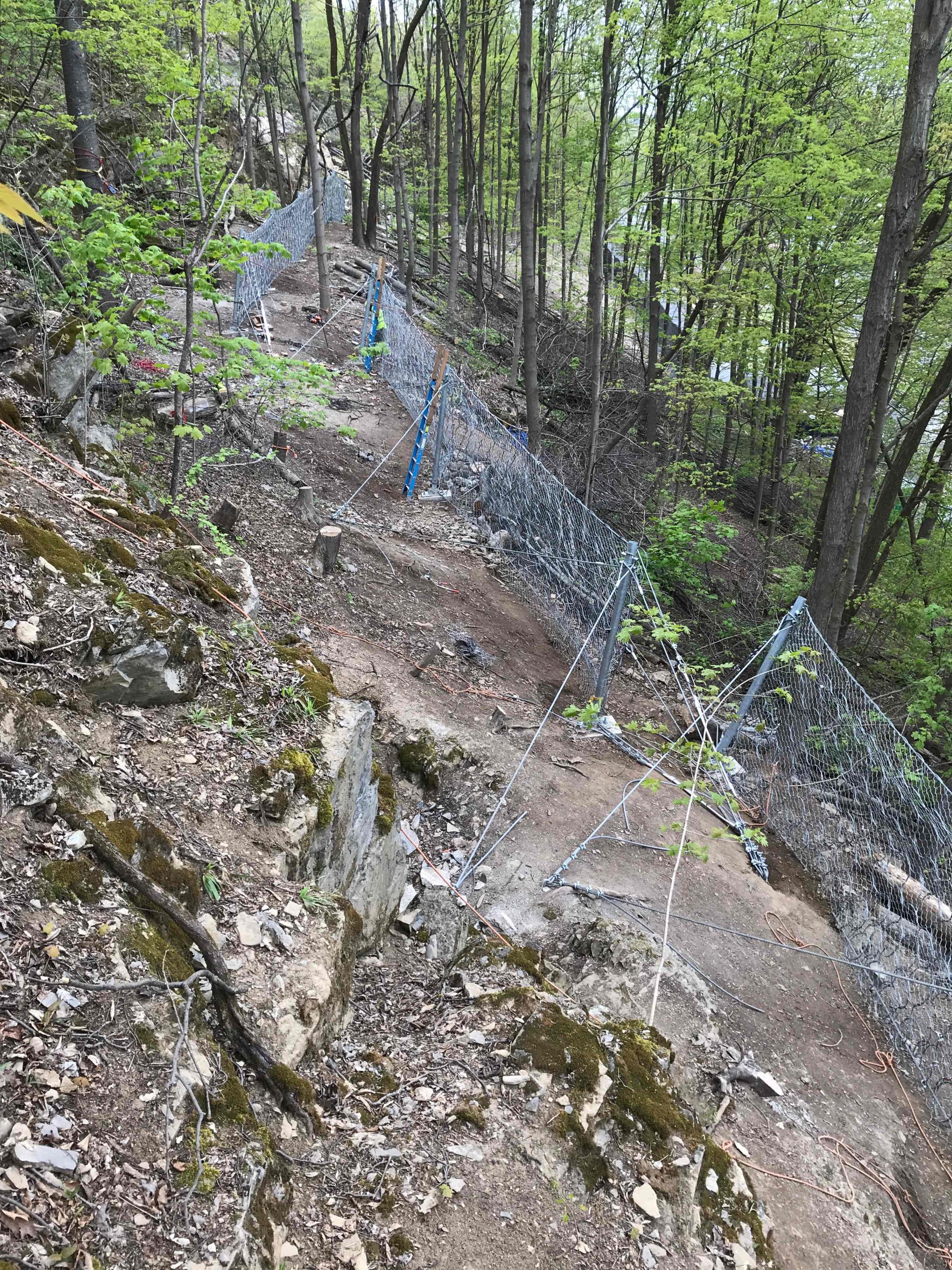
See why NJDOT, NJ Transit, Palisades Interstate Park Commission, utility providers, and Port Authority trust Access Limited for flexible rockfall barriers and rockfall mitigation across New Jersey.
Access Limited delivers specialized flexible rockfall barriers across New Jersey's rockfall corridors. Complete the form to request an assessment or call our team directly.