
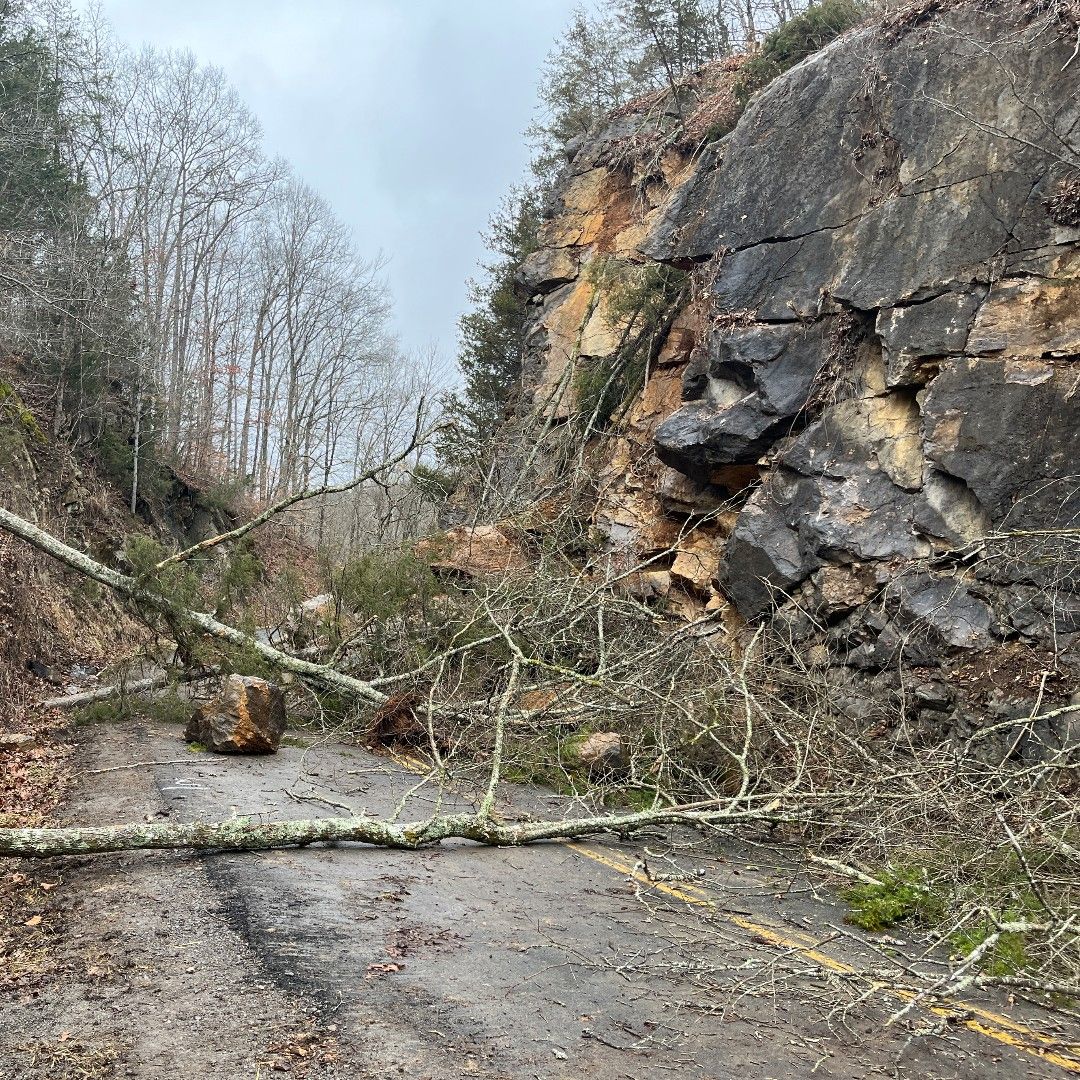
Blue Ridge gneiss in the north, Piedmont granite and schist in the central corridor, and saprolite weathering profiles create rockfall hazards concentrated in Georgia's mountain-Piedmont transition zone. Along corridors like I-75 through the Blue Ridge foothills, I-575 in the Appalachian Plateau, US-19 through Dahlonega, and GA-400 through the Piedmont, rockfall events threaten public safety, close critical transportation routes, and cost agencies millions in emergency response and repair.
Intense subtropical rainfall, rapid saprolite development on metamorphic rock, and hurricane-driven saturation events produce slope failures and rockfall across northern Georgia's highway network. When rockfall strikes, the consequences range from lane closures and traffic disruption to structural damage and catastrophic failure of retaining systems. Georgia's GDOT, USFS (Chattahoochee National Forest), Georgia Power utility corridors, Norfolk Southern rail, and mining operators need a rockfall contractor that understands these conditions.
From control systems that stop rockfall at the source to barriers that intercept it mid-trajectory, Access Limited provides Georgia with the complete rockfall mitigation toolkit. Blue Ridge gneiss in the north, Piedmont granite and schist in the central corridor, and saprolite weathering profiles create rockfall hazards concentrated in Georgia's mountain and Piedmont transition zone — requiring exactly this breadth of capability along I-75 through the Blue Ridge foothills, I-575 in the Appalachian Plateau, US-19 through Dahlonega, and GA-400 through the Piedmont.
Many Georgia corridors produce persistent, low-energy rockfall — small blocks and fragments that accumulate in ditches and encroach on travel lanes. Access Limited addresses these conditions with rockfall netting and wire mesh systems that contain material on the face or guide it to collection zones. Pinned mesh locks weathered and fractured surface rock in place with pattern-bolted anchors, while rockfall mesh provides broader coverage for slopes shedding material across the full face.
Where block sizes increase and fall heights generate significant energy, Access Limited deploys flexible rockfall barriers sized to the site's trajectory analysis. Catch fences provide lower-profile containment at ditch lines and benches. Draped mesh manages tall faces where full-face bolting is impractical — anchoring at the crest and controlling the fall path to the toe.
Rock bolting and rock anchor systems reinforce fractured rock masses by anchoring through failure planes into competent rock behind them. Anchored mesh combines mesh confinement with intermediate face anchors for tall slopes where unanchored drape would create excessive deformation.
The most severe Georgia corridors produce large-block, high-energy rockfall that demands cable net mesh and high-capacity barrier systems. Attenuation systems reduce energy through staged mesh curtains on the longest, steepest slopes. Access Limited's scaling operations — mechanical, manual, remote, and controlled blasting — remove the hazard directly where installed systems alone cannot manage the risk. Boulder breaking reduces oversized detached blocks in the catchment zone.
Every system Access Limited installs in Georgia is engineered for the conditions at the specific site. View all geohazard mitigation services available in Georgia.
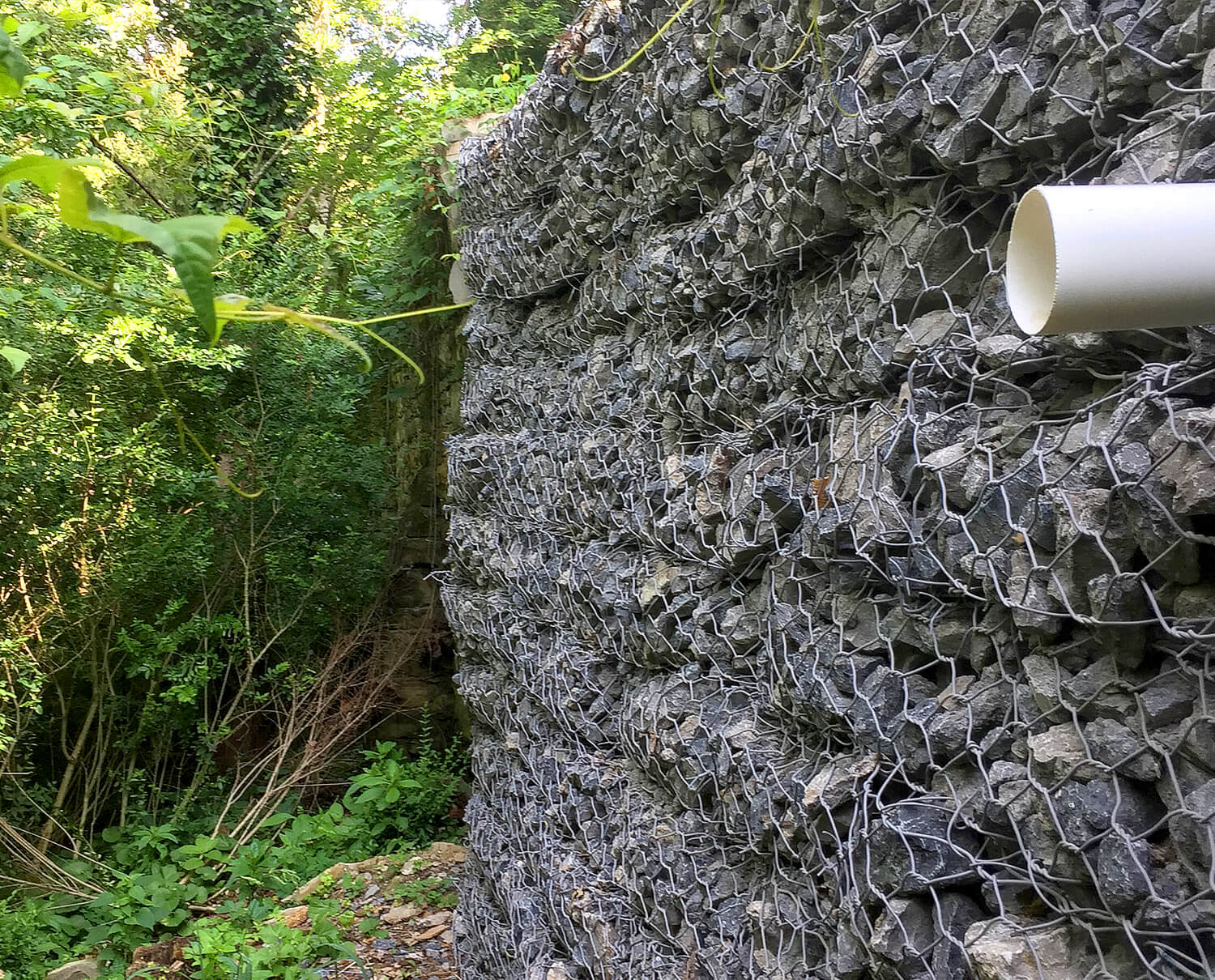
See why GDOT, USFS (Chattahoochee National Forest), Georgia Power utility corridors, Norfolk Southern rail, and mining operators trust Access Limited for rockfall mitigation in Georgia and across the nation.
Whether you need rockfall containment, emergency scaling, or a comprehensive slope assessment — Access Limited is Georgia's rockfall mitigation specialist.