
Debris flows are not rockfall. They combine saturated soil, rock, timber, and water into a fast-moving, high-density mass that can overwhelm standard rockfall containment. Along I-76 along the Pennsylvania Turnpike, Route 22 through the Lehigh Valley, I-80 across the Allegheny Plateau, and I-99 through the Ridge and Valley, Appalachian fold-and-thrust belt sandstone, limestone, and shale beds along highway rock cuts and intense precipitation create conditions where debris flows threaten roadways, bridges, and drainage structures with forces that standard barriers cannot absorb.
Access Limited designs and installs debris flow-specific barrier and mitigation systems across Pennsylvania — engineered for the flow volumes, velocities, and material compositions unique to each drainage and corridor.
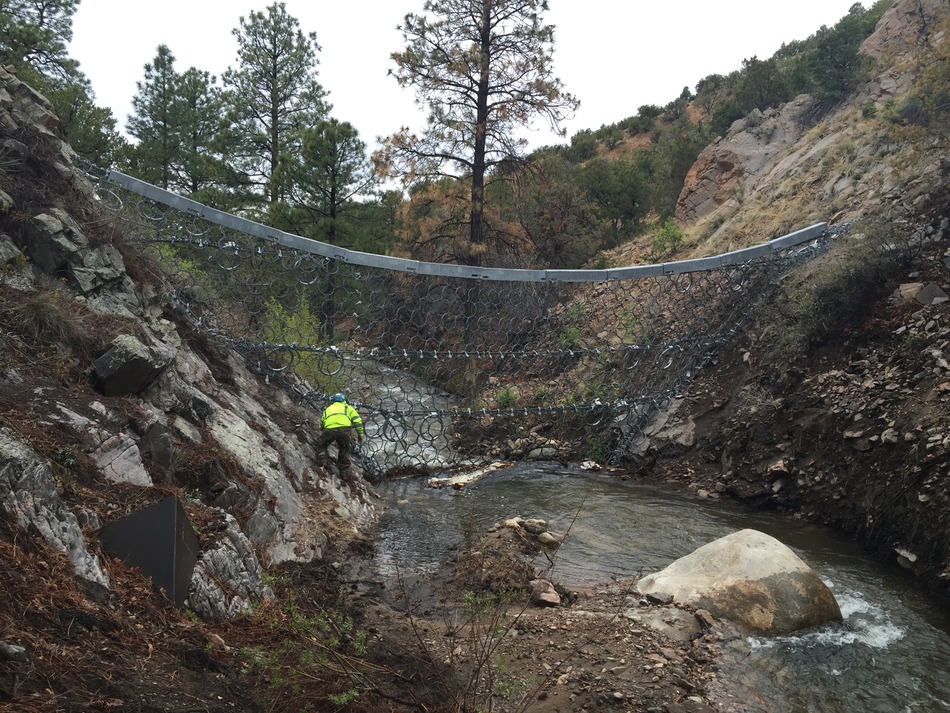
Debris flow barriers use ring-net or cable-panel systems mounted on reinforced steel posts to intercept and contain the full debris flow mass. Unlike rockfall barriers, these systems are designed for the sustained loading and hydrostatic pressure that debris flows produce.
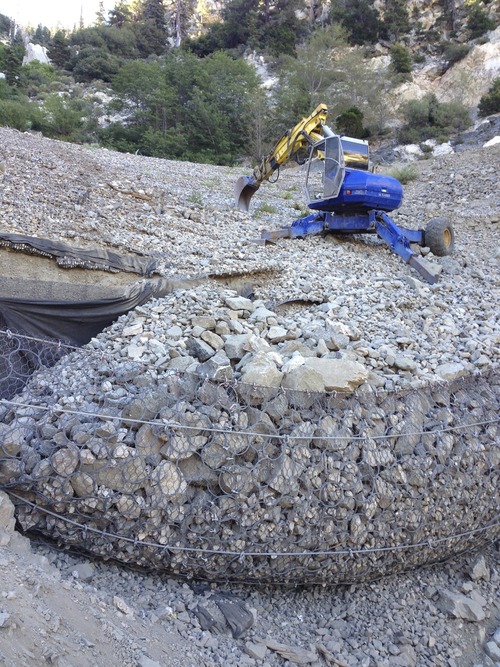
Check dams are stepped barrier installations placed at intervals along a debris flow channel — each dam captures a portion of the flow, reducing the energy and volume that reaches the next structure downstream.
Deflection structures redirect debris flows away from infrastructure when direct containment is not feasible — channeling the flow to a designated deposition area.
Access Limited's Cementon Road Bridge project showcased the specialized capability PennDOT corridors demand.
See why PennDOT, Pennsylvania Turnpike Commission, Norfolk Southern and CSX rail, mining operators, and utility providers trust Access Limited for debris flow mitigation and rockfall mitigation across Pennsylvania.
Access Limited delivers specialized debris flow mitigation across Pennsylvania's rockfall corridors. Complete the form to request an assessment or call our team directly.