The Badlands expose banded sedimentary formations, including clay, lignite, and sandstone layers of different strength, producing complex erosion patterns distinct from the state's flat agricultural plains.


North Dakota's Badlands region exposes banded sedimentary formations that erode distinctly from the flat agricultural plains covering most of the state, while expansive clay found statewide stresses retaining structures more uniformly than the concentrated hazards found in mountain states. Freeze-thaw cycling compounds both conditions across North Dakota's long, harsh winters.
NDDOT and local owners both recognize this Seepage and Internal Erosion Problems pattern when it appears.
North Dakota's primary drivers span erosion control, retaining systems, ground settlement. GeoStabilization International addresses these through solutions ranked by relevance to the state's terrain and climate.
Across North Dakota, Badlands banded sedimentary formation erosion causes this. GSI treats it with coastal and bluff stabilization.
This stems from statewide expansive clay pressure in North Dakota. GSI's fix is tiebacks.
expansive clay affecting agricultural plains foundations is the driver here. GSI addresses it in North Dakota through underpinning and foundation support.
The Badlands expose banded sedimentary formations, including clay, lignite, and sandstone layers of different strength, producing complex erosion patterns distinct from the state's flat agricultural plains.
Expansive clay found statewide creates consistent pressure on retaining structures, a more uniform risk than the concentrated hazards found in mountain or coastal states.
Yes, generally tied to the same expansive clay affecting retaining structures, producing foundation movement across the state's agricultural plains.
North Dakota's long, harsh winters intensify both Badlands erosion and statewide clay-related movement beyond what milder climates would produce.
Yes, GSI maintains emergency response for North Dakota's seasonal and river flooding events.
GSI's design in the Badlands accounts for the specific weak clay and lignite layers driving erosion, rather than a uniform treatment applied regardless of layer strength.
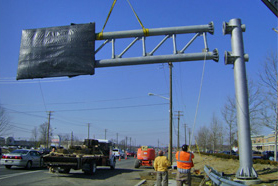
Corridors prone to washouts and scour often need updated warning signage alongside the structural repair. RoadGuard installs highway signage and sign structures built to the same standards as the roadway itself.
From erosion control to ground settlement, GSI's engineers are ready to assess your North Dakota site.