Montana's western Rocky Mountain terrain produces rockfall and landslide risk, while the eastern plains present expansive soil challenges unrelated to the mountains, and wildfire-driven debris flow adds a third consideration across both regions.

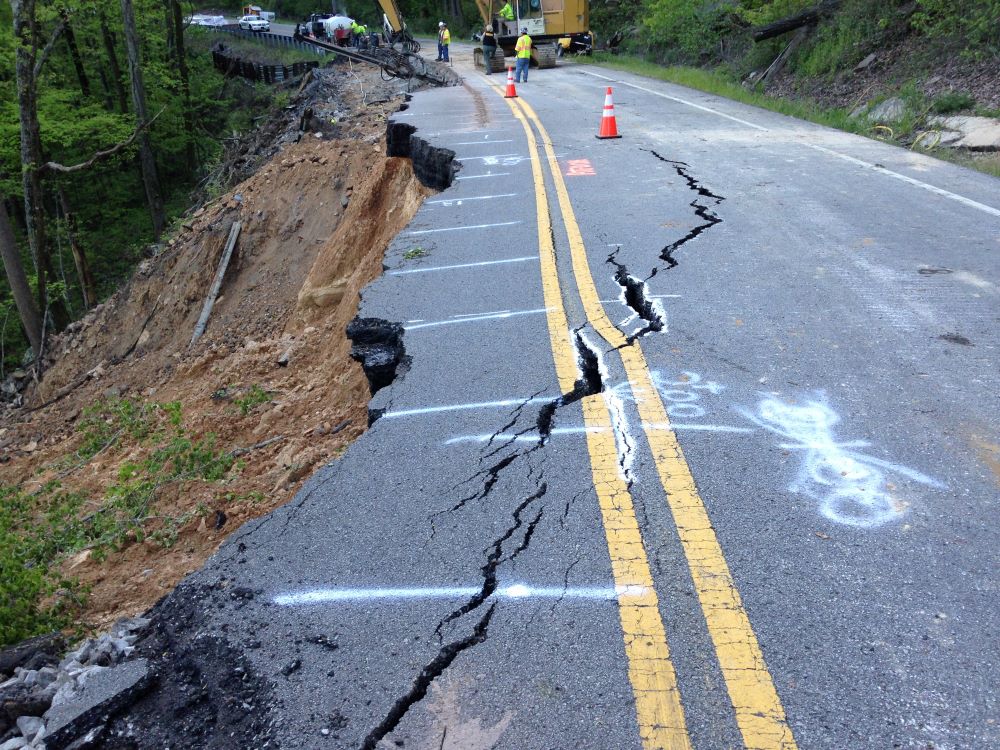
Montana's Rocky Mountain terrain, including Glacier National Park's Going-to-the-Sun Road, produces rockfall and landslide risk through the same freeze-thaw and seismic-adjacent mechanisms found throughout the Rocky Mountain region. The state's eastern plains present an entirely different condition, expansive soils that stress highway infrastructure in ways unrelated to the mountainous west, while wildfire-driven post-fire debris flow adds a third, increasingly frequent risk.
GSI addresses Montana's rockfall risk, slope instability, erosion control exposure with solutions ranked against the state's actual terrain and climate.
Glacier National Park's Going-to-the-Sun Road argillite cliffs is the driver here. GSI addresses it in Montana through rockfall barriers.
Driven by wildfire-driven post-fire debris flow risk, this shows up across Montana. GSI's response is soil nailing.
Montana sees this where expansive soils across the eastern plains. GSI resolves it with underpinning and foundation support.
Montana's western Rocky Mountain terrain produces rockfall and landslide risk, while the eastern plains present expansive soil challenges unrelated to the mountains, and wildfire-driven debris flow adds a third consideration across both regions.
The road crosses Glacier National Park's argillite cliff terrain, combining extreme grade with environmental sensitivity that limits the equipment access conventional rockfall mitigation would otherwise use.
Wildfire strips the vegetation anchoring mountain slopes, increasing debris flow risk for several years after a burn event, a growing concern as fire seasons intensify.
The state's eastern plains contain expansive soils that swell and shrink seasonally, stressing highway infrastructure independently of the mountainous west's rockfall and landslide risk.
Yes, GSI maintains emergency response for Montana's landslide, wildfire, and flooding events, including post-fire debris flow response.
GSI's equipment and methods for Montana's national park corridors are selected to satisfy environmental requirements that limit conventional access, not just engineering requirements.

When rockfall mitigation is in place, RoadGuard's highway barriers and cable systems add a second layer of protection for the traveling public, containing vehicles and absorbing impact where debris has historically reached the roadway.
From rockfall risk to erosion control, GSI's engineers are ready to assess your Montana site.