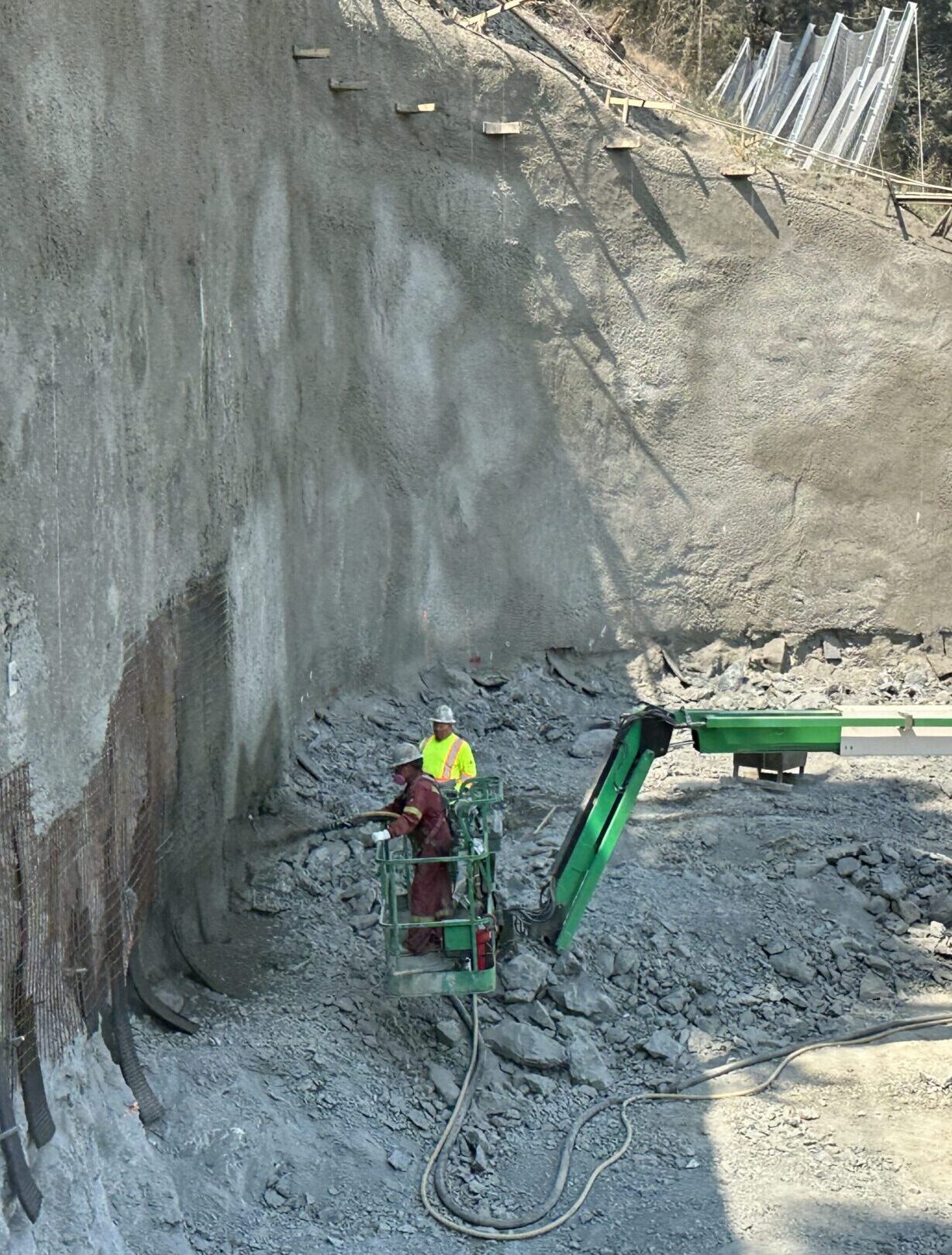
California permanent shoring has to be built for a multi-decade service life that will very likely include a major seismic event before the structure is retired. Caltrans' own seismic design criteria for earth retaining systems allow no more than 5 inches of mean displacement under a Safety Evaluation Earthquake without loss of structural stability, and standard retaining wall plans are limited to sites with a peak ground acceleration of 0.6g or less; anything higher, common near active fault zones like the San Andreas, requires a project-specific seismic design with near-fault adjustment factors built in.
Layered on top of that seismic demand is California's geographic range: coastal structures within roughly 1,000 feet of the ocean fall under Caltrans' marine atmosphere exposure zone, where chloride levels accelerate corrosion, while inland Central Valley and mountain sites face a very different, drier exposure profile. Caltrans and commercial developers both need permanent retention that performs through the state's next major seismic event, not just current static conditions.
GSI's excavation shoring experience shapes how these situations get addressed across the state.
Tieback-anchored permanent walls in California are designed against Caltrans' Safety Evaluation Earthquake criteria, which limits permanent displacement to a 5-inch mean under that load case, with near-fault adjustment factors applied at sites close to active rupture zones. GSI's retaining wall instability solutions experience informs this approach.
Structural facing on California permanent shoring is detailed to the seismic requirements the state's transportation codes require for long-term structural elements, particularly at sites above the 0.6g peak ground acceleration threshold where standard plan walls no longer apply. This draws directly on GSI's earth retention systems work.
Corrosion protection on California's permanent anchors follows Caltrans' marine exposure zones, where any site within roughly 1,000 feet of the ocean or a body of water with 500 ppm or more chloride content requires marine-rated protection, while inland sites are specified differently. GSI's engineers capability supports this step.
Where relevant, GSI's general contractors relationship is factored into the California project plan from day one, with prompt site assessments and fast proposal turnaround so project teams can move from evaluation to design without delay.
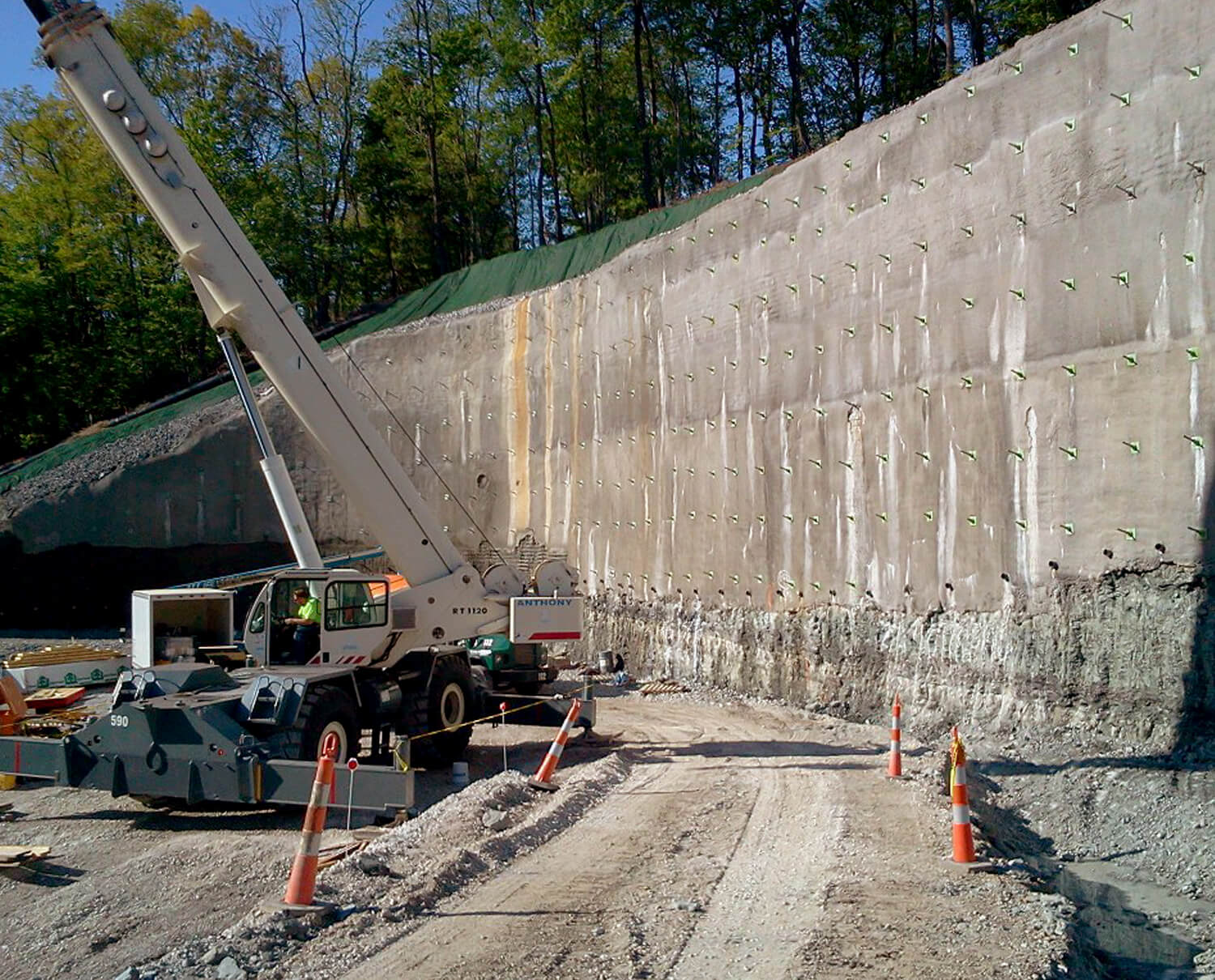
Engineered for California's conditions. GSI's California permanent shoring is engineered for multi-decade seismic performance against Caltrans' Safety Evaluation Earthquake criteria, not just the static loading conditions present at installation. This is reinforced by GSI's work in commercial properties and project managers.
Design/build delivery. Design and build responsibility sit with one team, eliminating coordination gaps between engineering and construction.
Caltrans specification compliance. Engineering documentation and installation practices meet DOT standards from the first review cycle.
Rapid response when conditions demand it. Beyond planned installation work, GSI's emergency response team is available around the clock for sudden seismic damage or ground movement affecting roadways and commercial sites.
GSI's engineers deliver a warrantied, design/build permanent shoring solution engineered to outlast California's next major earthquake and decades of coastal or inland exposure.