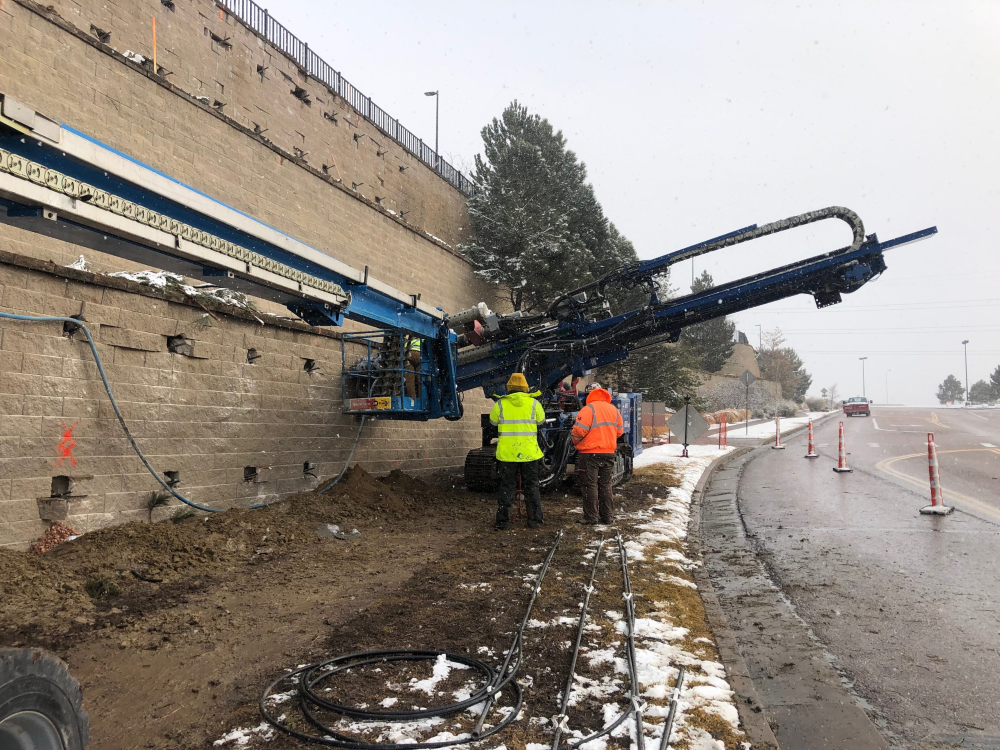
Colorado's retaining walls face the combined stress of Front Range expansive clay and mountain corridor freeze-thaw cycling, and CDOT walls along I-70's mountain sections and Front Range urban corridors show distress from these two distinct but sometimes co-occurring conditions.
It's a recurring example of the Foundation Settlement Issues conditions CDOT and local owners manage statewide.
Soil nailing for Colorado's Front Range walls accounts for expansive clay's swell-shrink behavior, since standard reinforcement patterns assume static soil volume that Colorado's bentonite-rich clays do not provide. This is one application of GSI's broader soil nailing expertise.
Helical tieback and buttress repairs on Colorado's I-70 mountain corridor walls incorporate freeze-thaw-rated hardware, given the extreme temperature cycling this high-altitude corridor experiences annually. GSI's retaining wall instability solutions experience informs this approach.
Drainage correction addresses Colorado's specific combination of clay-related water retention and mountain snowmelt infiltration, two distinct water sources requiring coordinated management. This draws directly on GSI's excavation shoring work.
GSI's engineers experience also informs how these Colorado projects are scoped from the start.
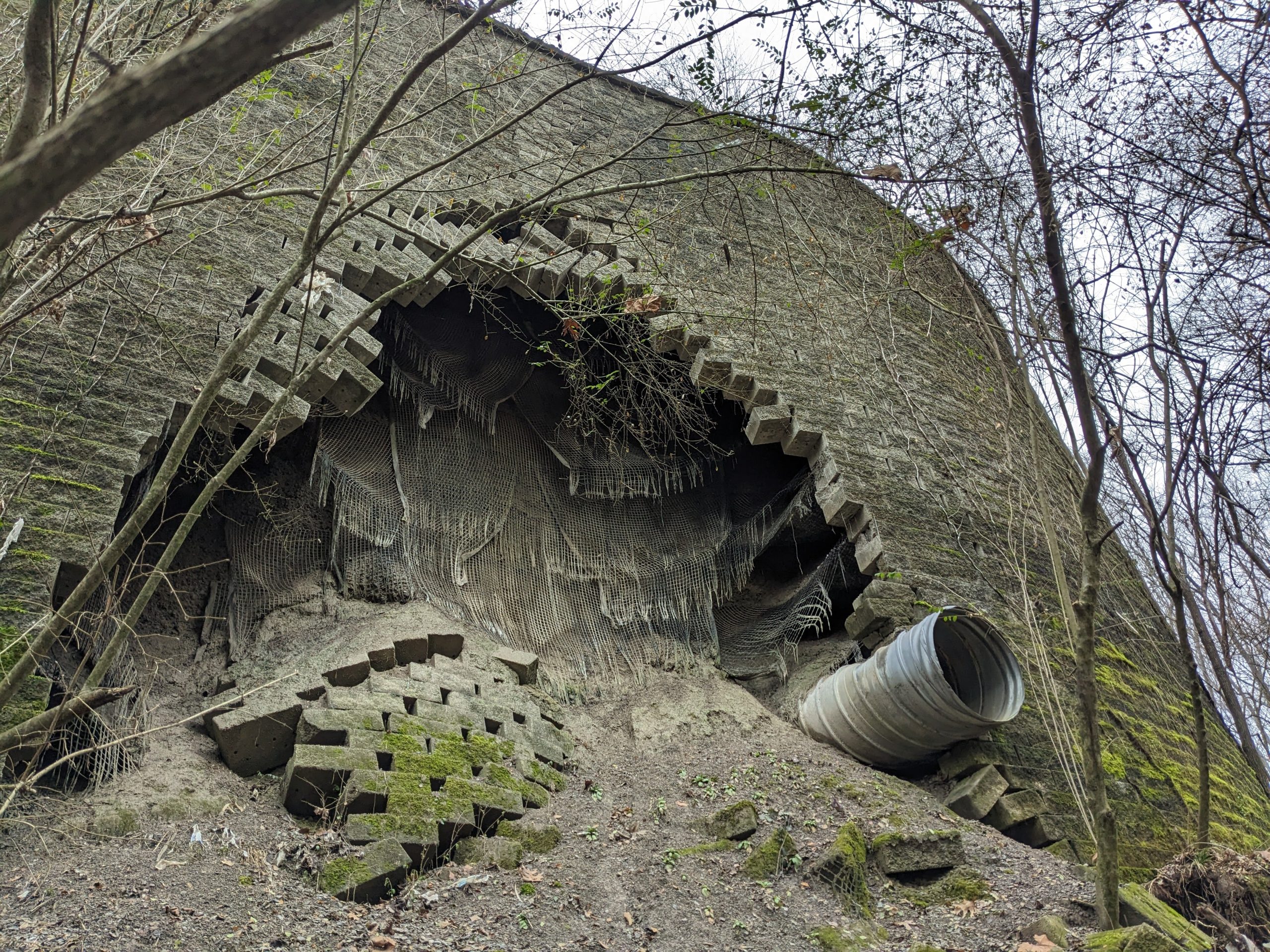
Engineered for Colorado's conditions. GSI's Colorado wall repairs address both Front Range expansive clay and mountain freeze-thaw cycling — distinct conditions the state's geography places within a single DOT's jurisdiction. Supported by general contractors and commercial properties.
Design/build delivery. One team designs and builds — closing the gap between what's designed and what's built.
CDOT specification compliance. Engineering records and field methods satisfy state DOT requirements from initial design submittal.
GSI's engineers are ready to assess retaining wall repair conditions at your Colorado site.