North Carolina's steep slope drilling needs concentrate along the Blue Ridge Parkway and I-40's mountain corridor through the Smokies, where NCDOT manages gneiss and schist faces in terrain that also draws heavy tourism traffic — adding schedule and access constraints beyond the geology itself.
GSI's SPIDER excavator experience shapes how these situations get addressed across the state.
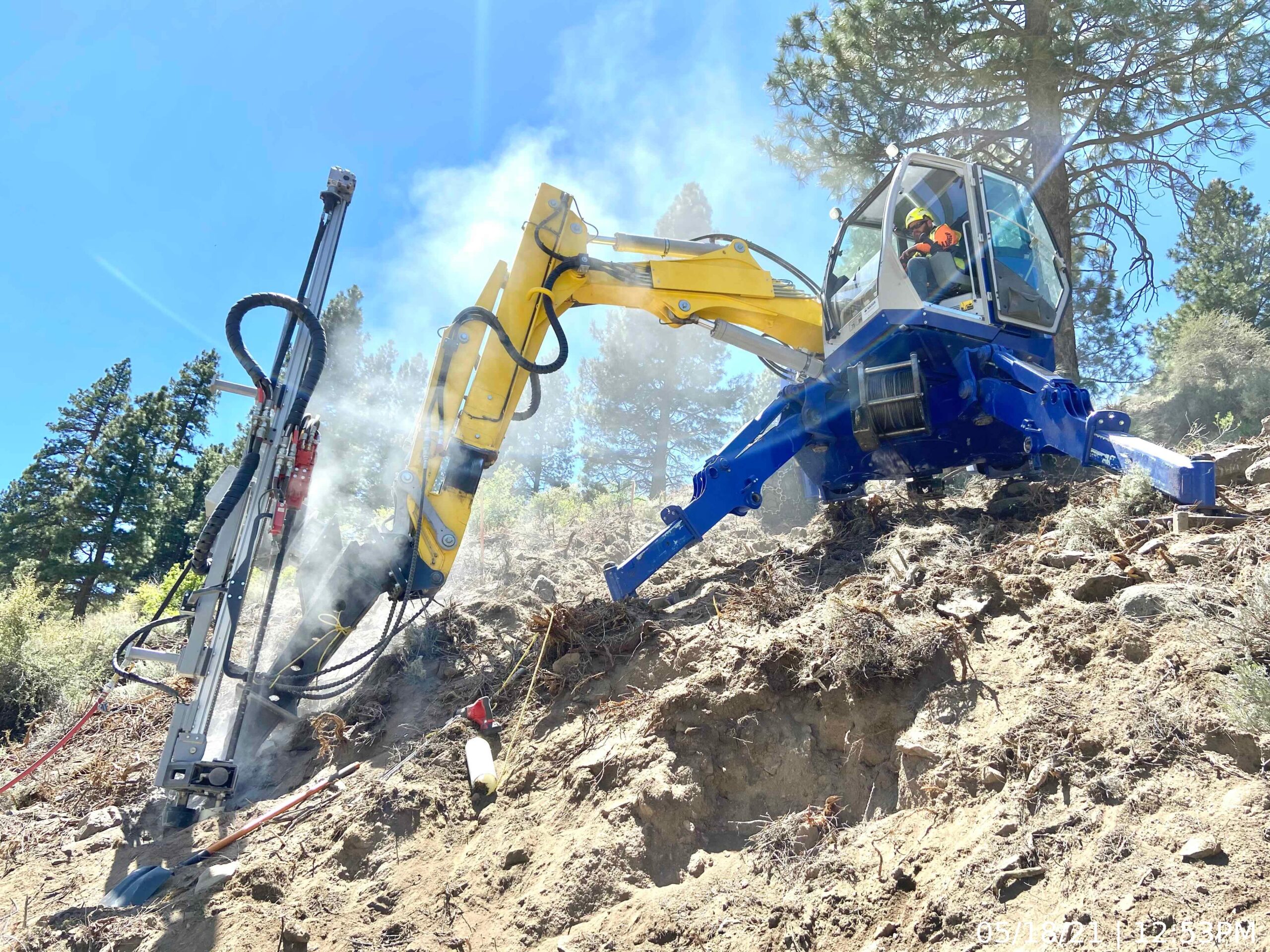
GSI's SPIDER excavators reach North Carolina's Blue Ridge gneiss and schist faces without the extended lane closures conventional equipment mobilization would require on these high-traffic mountain corridors. GSI's Soil Nail Launcher™ experience informs this approach.
Anchored platforms secure to North Carolina's steepest Blue Ridge faces where no natural bench exists, common along the Parkway's most scenic and structurally demanding sections. This draws directly on GSI's soil nailing work.
Rope access technicians drill North Carolina's most extreme Smoky Mountain terrain by hand and pneumatic tools, minimizing the traffic disruption tourism-heavy corridors cannot easily absorb. GSI's engineers capability supports this step.
Where relevant, transportation infrastructure is factored into the North Carolina project plan from day one.
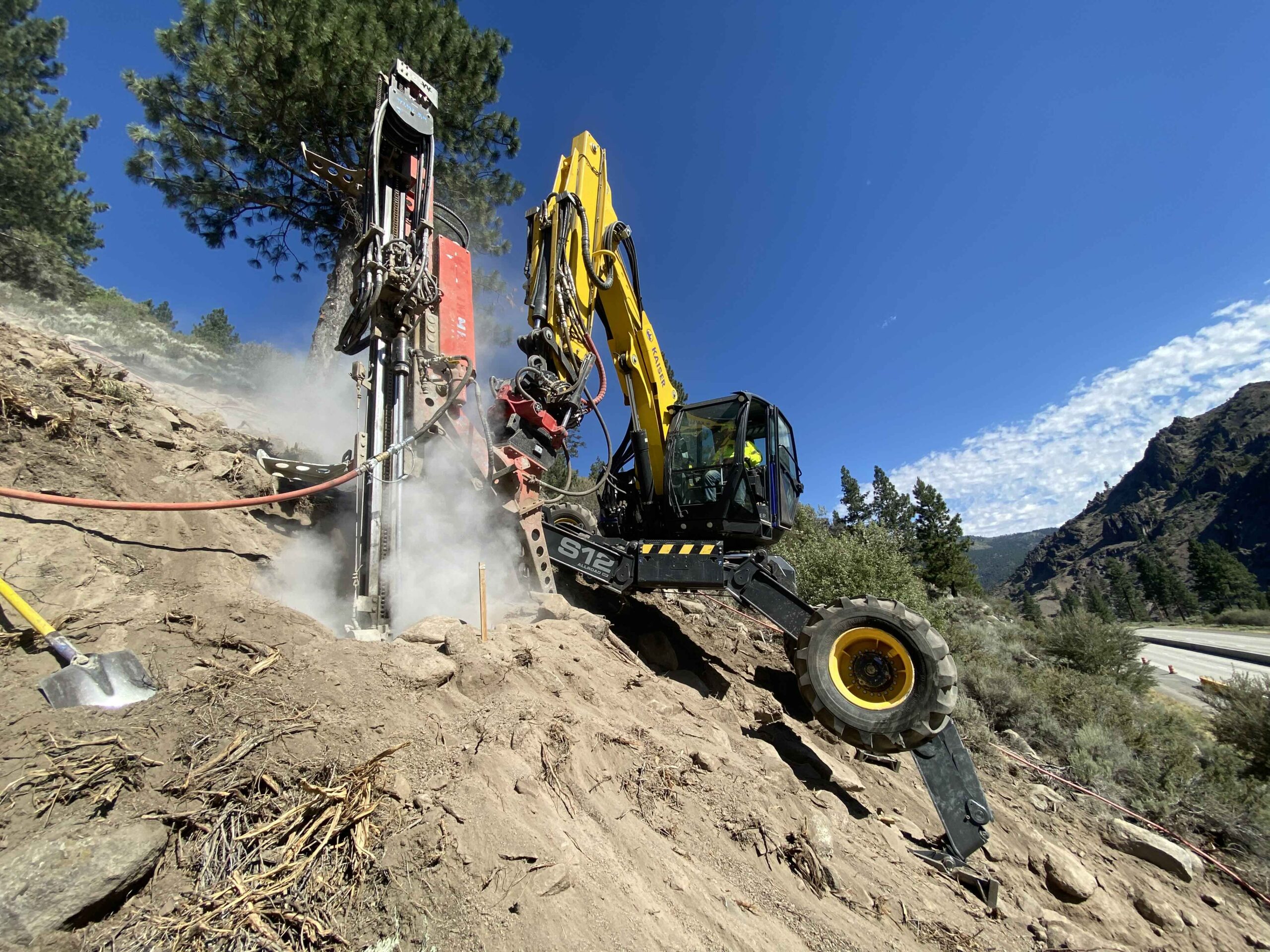
Engineered for North Carolina's conditions. GSI's North Carolina steep slope work is built for both Blue Ridge terrain access and the traffic-sensitive scheduling NCDOT's tourism corridors demand. This is reinforced by GSI's work in general contractors and our case studies.
Design/build delivery. A single team handles design and construction — removing the friction between design and construction phases.
NCDOT specification compliance. Design documentation and construction practices meet DOT specifications starting from first design review.
NCDOT partners and North Carolina infrastructure owners describe GSI's steep slope drilling results.
GSI's engineers are ready to assess steep slope drilling conditions at your North Carolina site.