Sinkhole Repair in Travis County

Sinkhole Repair in Travis County

The unincorporated Hill Country communities west of Austin sit over the same Edwards Aquifer Recharge Zone that produces sinkholes inside the city, often with less developed stormwater infrastructure to manage the runoff that speeds up karst dissolution. GeoStabilization International repairs sinkholes throughout Travis County, working within the environmental constraints the Recharge Zone demands.

Contact Us
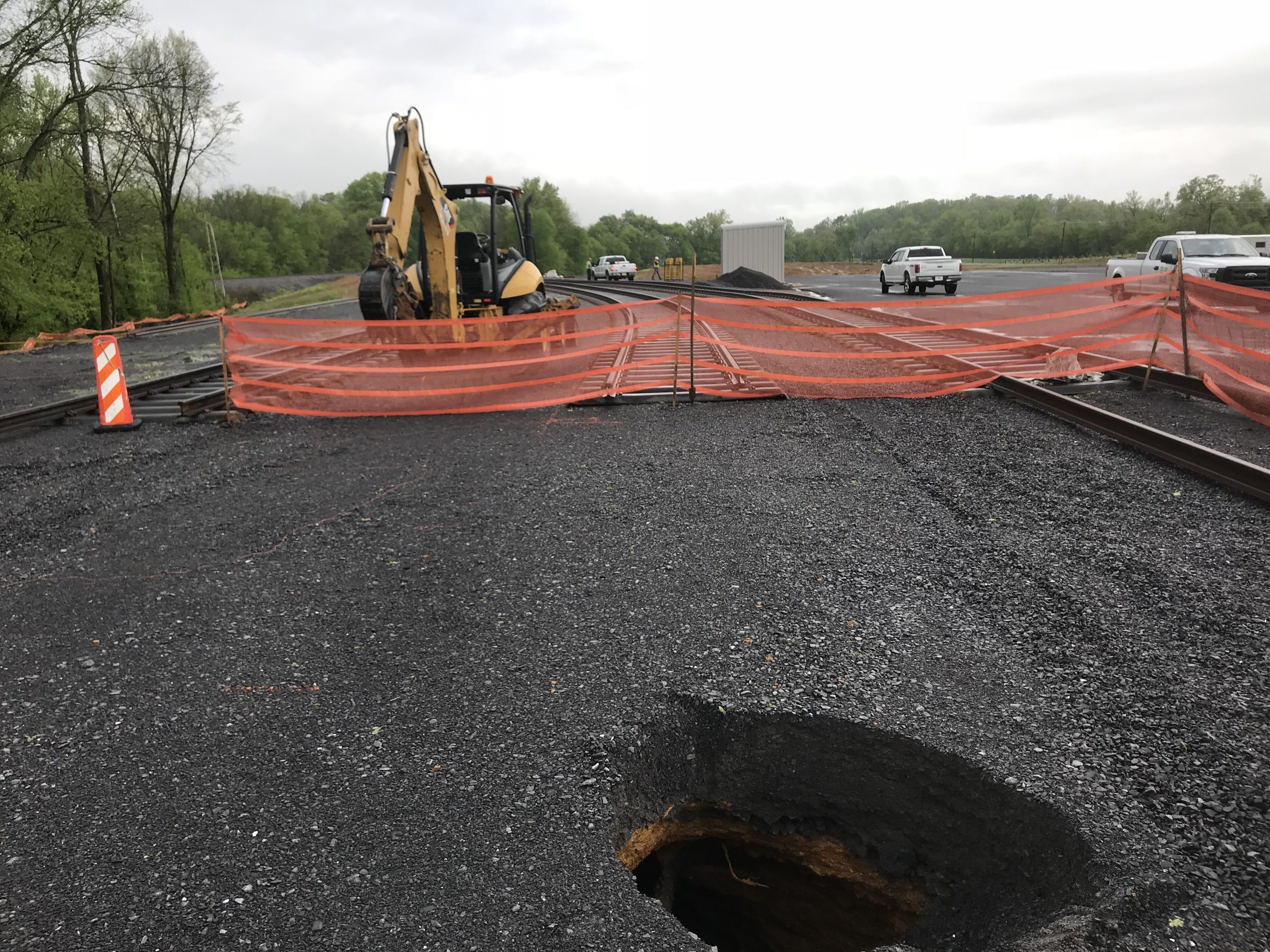
Asphalt sinkhole being excavated for remediation

What Is Sinkhole Repair?

Sinkhole repair starts with identifying which type of failure occurred, a sudden cover-collapse where a void's soil ceiling gives way all at once, or a slower cover-subsidence sinkhole where the ground gradually settles as fines ravel into an underlying karst conduit, before selecting a fix. Repair typically combines excavation and structural backfill, compaction or chemical grouting to consolidate the surrounding soil, and sometimes a soil nail wall where the sinkhole has undercut a slope or roadway edge.

Across Travis County, that repair has to account for the Edwards Limestone's dissolution features throughout the unincorporated Hill Country and for the Barton Springs segment of the aquifer running beneath much of the county's Recharge Zone. GSI's Travis County sinkhole repair work typically includes:

  • Repairing cover-collapse sinkholes over Edwards Limestone voids in unincorporated Hill Country communities
  • Stabilizing slower cover-subsidence sinkholes before they progress to a sudden collapse
  • Grouting to consolidate soil that's raveled into karst conduits beneath a foundation or county road
  • Selecting fill and grout materials compatible with Edwards Aquifer Recharge Zone regulations
  • Installing soil nail walls where a sinkhole has undercut a slope or road shoulder
  • Repairing sinkholes discovered during site development in the Recharge Zone
  • Assessing nearby ground for related voids before they surface as separate sinkholes

Geohazard Mitigation in Texas

Our Sinkhole Repair Process

Every Travis County site brings its own ground conditions, so we verify them before committing to a design.

Step 1

Comprehensive Site Assessment

We inspect the sinkhole and surrounding ground, using subsurface investigation to map the extent of the void and confirm whether it's cover-collapse or cover-subsidence.

Step 2

Licensed Engineering Design

Our PE-licensed engineers design a repair, structural backfill, grouting, or a soil nail wall, sized to the confirmed void and compliant with Recharge Zone environmental requirements.

Step 3

Professional Installation

Crews excavate and stabilize the sinkhole, or inject grout to consolidate the surrounding soil without disturbing the water table above the aquifer.

Step 4

Ongoing Monitoring & Support

We monitor the repaired area for renewed settlement and remain available for follow-up inspection as karst conditions continue to evolve.

Ready to Secure Your Project?

Request Free Estimate

See Our Success Stories

View Project Gallery

Common Questions About Sinkhole Repair

Most repairs complete in 1 to 2 weeks depending on the void's size and whether grouting alone is sufficient or excavation and backfill are needed.

Cost depends on void size, depth, and repair method, which we confirm with subsurface investigation before a fixed-cost proposal.

Yes. We select fill and grout materials and construction methods that meet the environmental requirements governing work within the Recharge Zone.

GSI offers 24/7 emergency response and can mobilize a crew within hours if a sinkhole opens beneath or near a structure, driveway, or roadway.

A localized depression, especially near limestone outcrops or in unincorporated Hill Country areas, that continues to grow or develops a circular pattern warrants inspection before it progresses to a cover-collapse.

Much of the county's western and southwestern unincorporated area sits directly over the karstified Edwards Limestone and its Recharge Zone, where dissolution features form voids other Texas geology doesn't produce.

No. Our repair methods and materials are selected specifically to avoid contaminating or obstructing recharge into the Edwards Aquifer beneath the site.

A properly engineered repair addresses the void and consolidates surrounding soil to prevent recurrence, though we recommend monitoring nearby ground where karst conditions suggest additional cavities may exist.

A Sinkhole Rarely Stays Small

Get Your Free Assessment Today

A cover-subsidence sinkhole in Travis County's karst terrain tends to keep growing until the void beneath it is addressed. Call (855) 599-5217 to get a Travis County sinkhole assessment from a licensed engineer.


    How Can We Help?

    • Personal Info
    • Contact Info
    • Project Info
    ***Fees May Apply For Residential Site Visits***

    How Can We Help?

    • Personal Info
    • Contact Info
    • Project Info

    How Can We Help?

    • Personal Info
    • Contact Info
    • Project Info

    By using this website, you acknowledge and agree to our Privacy Policy.