Tiebacks in Tarrant County

Tiebacks in Tarrant County

Retaining walls and shoring systems across Tarrant County's suburban growth corridors occasionally need more lateral holding capacity than their original design provided, whether from underestimated soil loads or the Blackland clay's persistent push against the structure. GeoStabilization International designs and installs tieback anchors throughout Tarrant County to add that reinforcement.

Contact Us
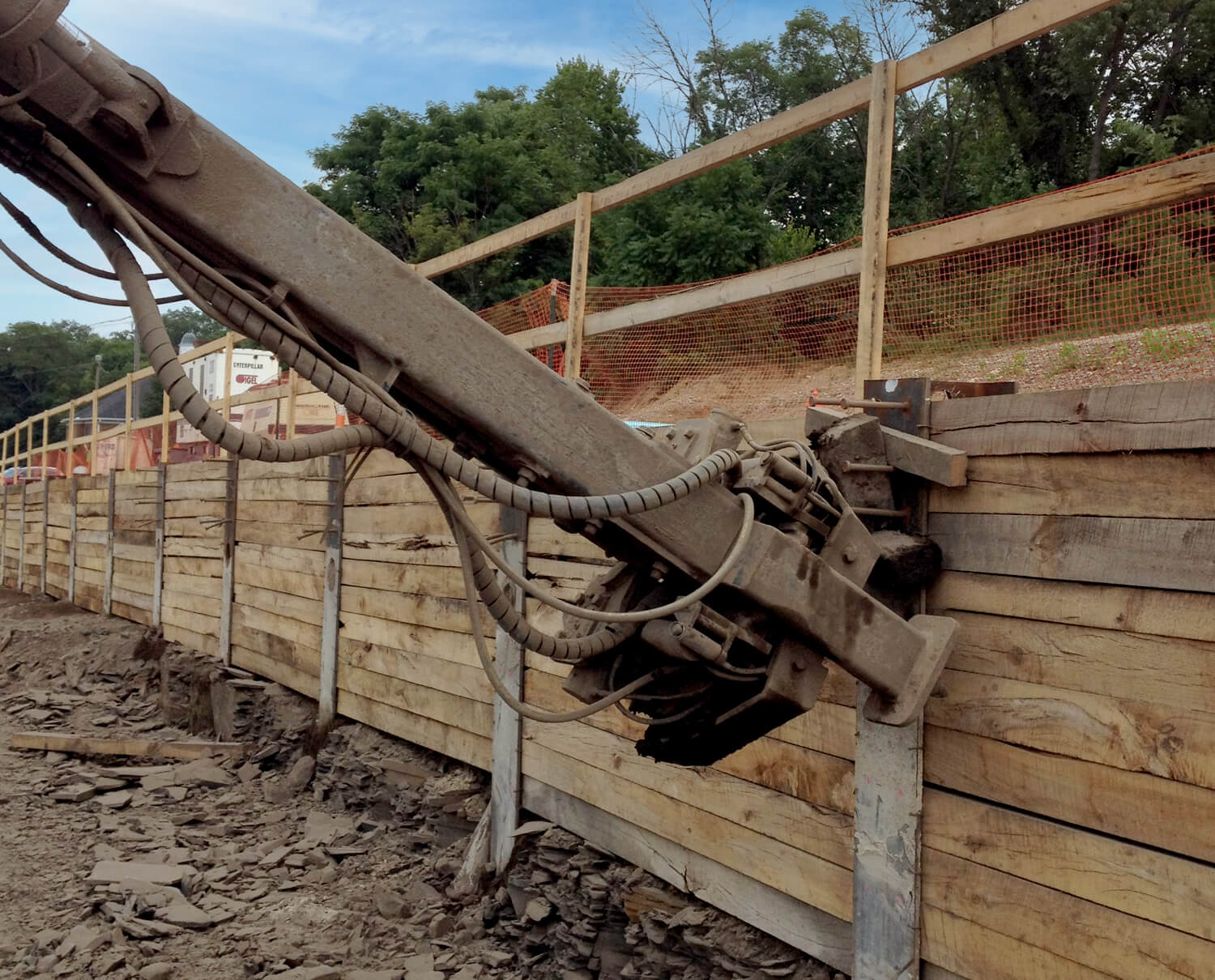
Tieback drilling operation on slope stabilization project

What Are Tiebacks?

Tiebacks are post-tensioned ground anchors drilled through a wall or shoring face into competent soil or rock beyond it, then tensioned to lock in a specified holding load. A properly installed tieback carries lateral load past the structure's face and into ground stable enough to resist it long-term.

Across Tarrant County, that stable ground is typically the Goodland Limestone or comparable Fredericksburg Group rock beneath the surface clay, giving a tieback a dependable bond zone once the borehole reaches it. GSI's Tarrant County tieback work typically includes:

  • Reinforcing retaining walls bulging or leaning under clay pressure
  • Adding lateral support to excavation shoring for below-grade suburban construction
  • Stabilizing sheet pile walls where a deeper anchor zone improves performance
  • Supporting commercial foundation walls near active construction sites
  • Anchoring walls into Goodland Limestone bedrock where it's reachable
  • Reinforcing walls originally under-designed for current structural loads
  • Supporting walls at suburban and institutional development sites countywide

Geohazard Mitigation in Texas

Our Tiebacks Process

Every Tarrant County site brings its own ground conditions, so we verify them before committing to a design.

Step 1

Comprehensive Site Assessment

We confirm the depth to competent bearing ground, typically limestone, and the wall's current condition before sizing the anchor.

Step 2

Licensed Engineering Design

Our PE-licensed engineers design tieback length, angle, and holding capacity to the confirmed load and Texas Building Code requirements.

Step 3

Professional Installation

Crews drill and grout each tieback, then stress and lock it to the specified holding load.

Step 4

Ongoing Monitoring & Support

We verify each anchor's performance with load testing and remain available for follow-up inspection.

Ready to Secure Your Project?

Request Free Estimate

See Our Success Stories

View Project Gallery

Common Questions About Tiebacks

Installation typically runs 1 to 2 weeks depending on anchor count and wall length, with each tieback individually load-tested before being locked off.

Cost depends on anchor length, required holding capacity, and how many anchors the wall needs, which our engineers determine from confirmed loads.

Yes. Every design is stamped by a licensed Professional Engineer and meets IBC and Texas Building Code requirements.

GSI offers 24/7 emergency response and can mobilize a crew within hours if a wall needs immediate lateral reinforcement.

A tieback resists lateral loads on a wall or shoring face, while a helical pier typically carries vertical loads for a foundation.

We confirm the depth to limestone or other competent bearing ground with test borings, then load-test every installed anchor before it's put into service.

Tieback drilling is comparatively low-disturbance versus excavating behind a wall to add a buttress.

Yes. Tiebacks are one of the two most common in-place repair methods for a distressed retaining wall, along with a buttress system.

Lateral Pressure Doesn't Ease Up Over Time

Get Your Free Assessment Today

A wall under more lateral pressure than it was designed for keeps moving until something gives. Call (855) 599-5217 to get a Tarrant County tieback assessment from a licensed engineer.

    How Can We Help?

    • Personal Info
    • Contact Info
    • Project Info
    ***Fees May Apply For Residential Site Visits***

    How Can We Help?

    • Personal Info
    • Contact Info
    • Project Info

    How Can We Help?

    • Personal Info
    • Contact Info
    • Project Info

    By using this website, you acknowledge and agree to our Privacy Policy.